
Sort by
13 products










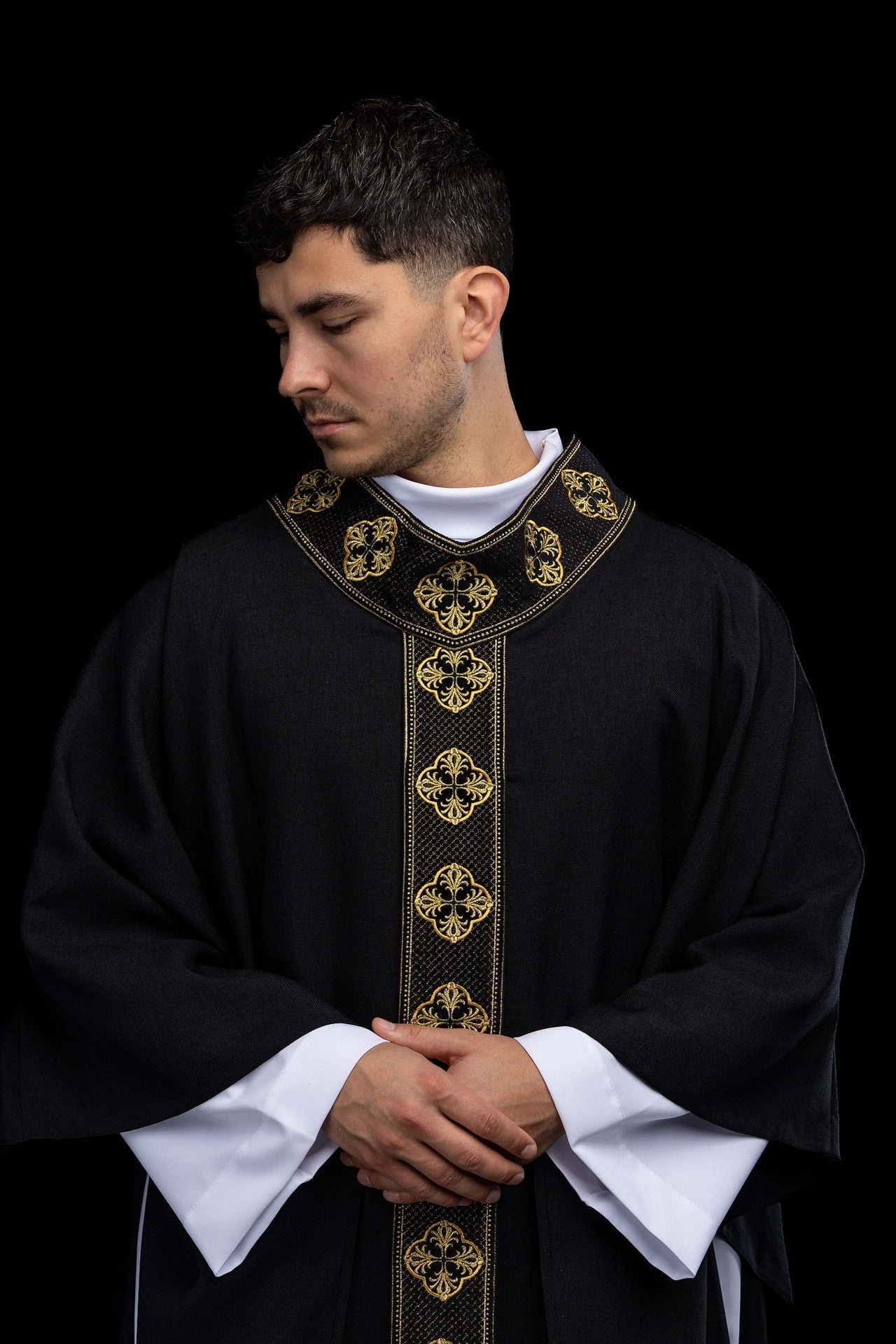



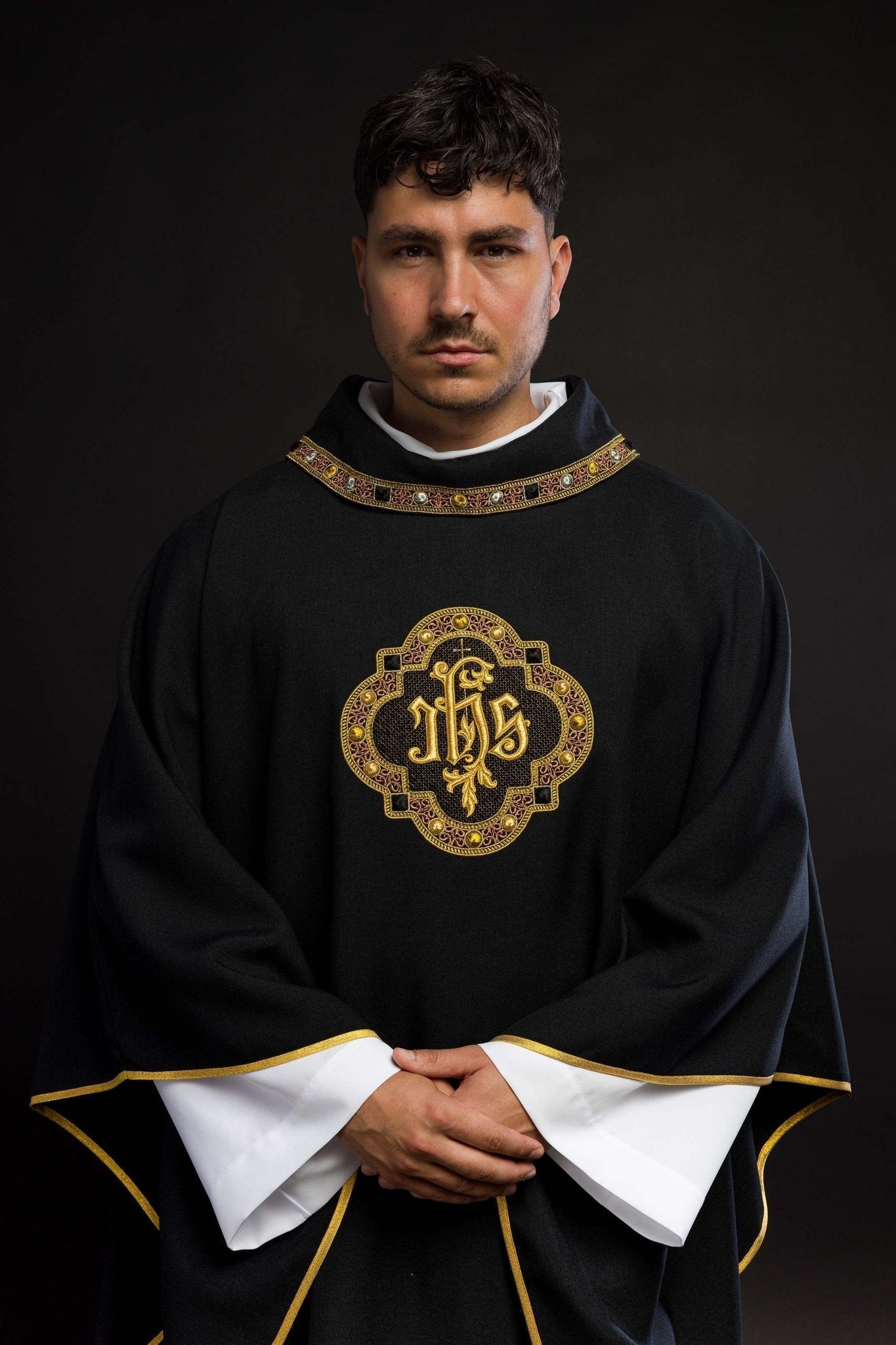
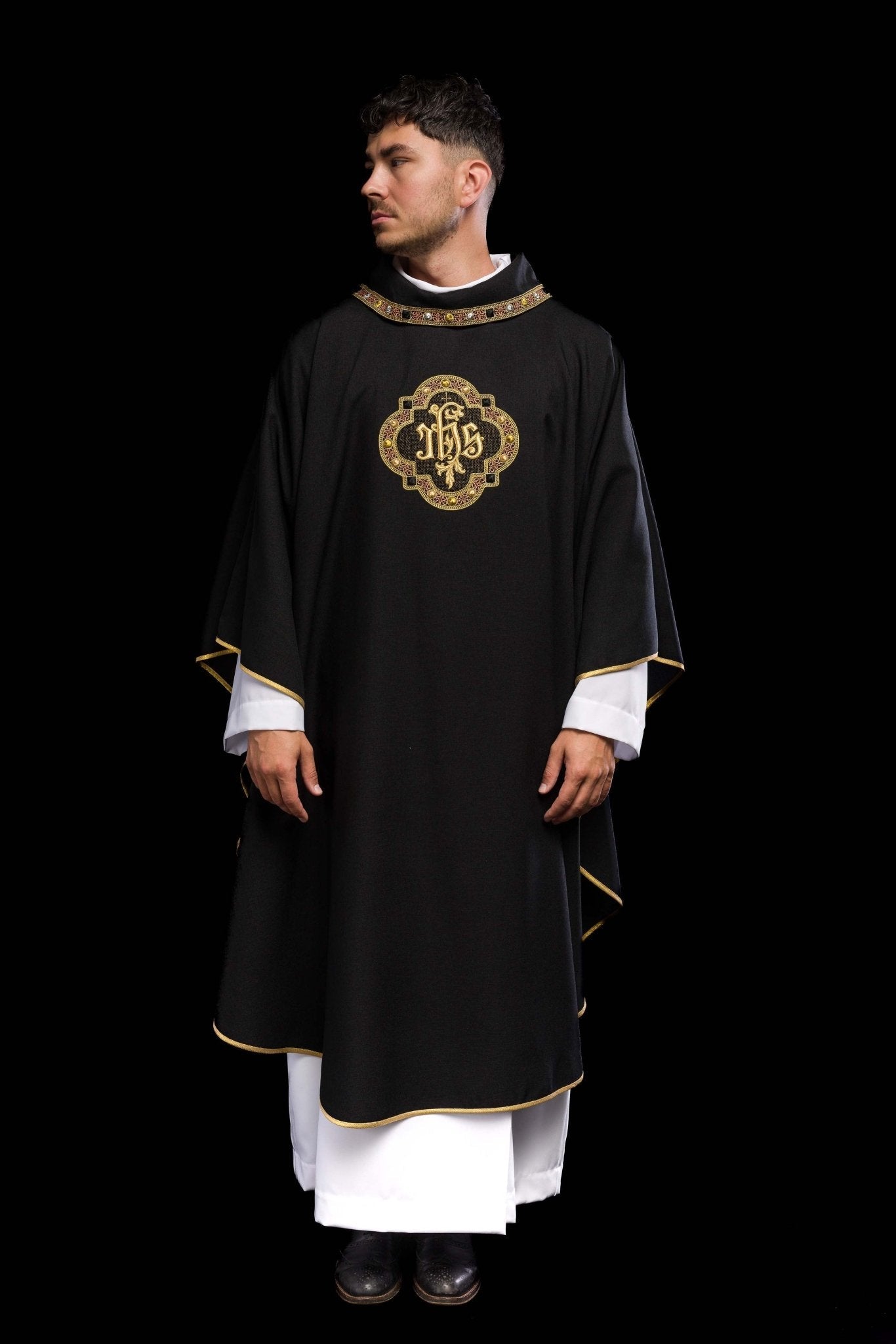
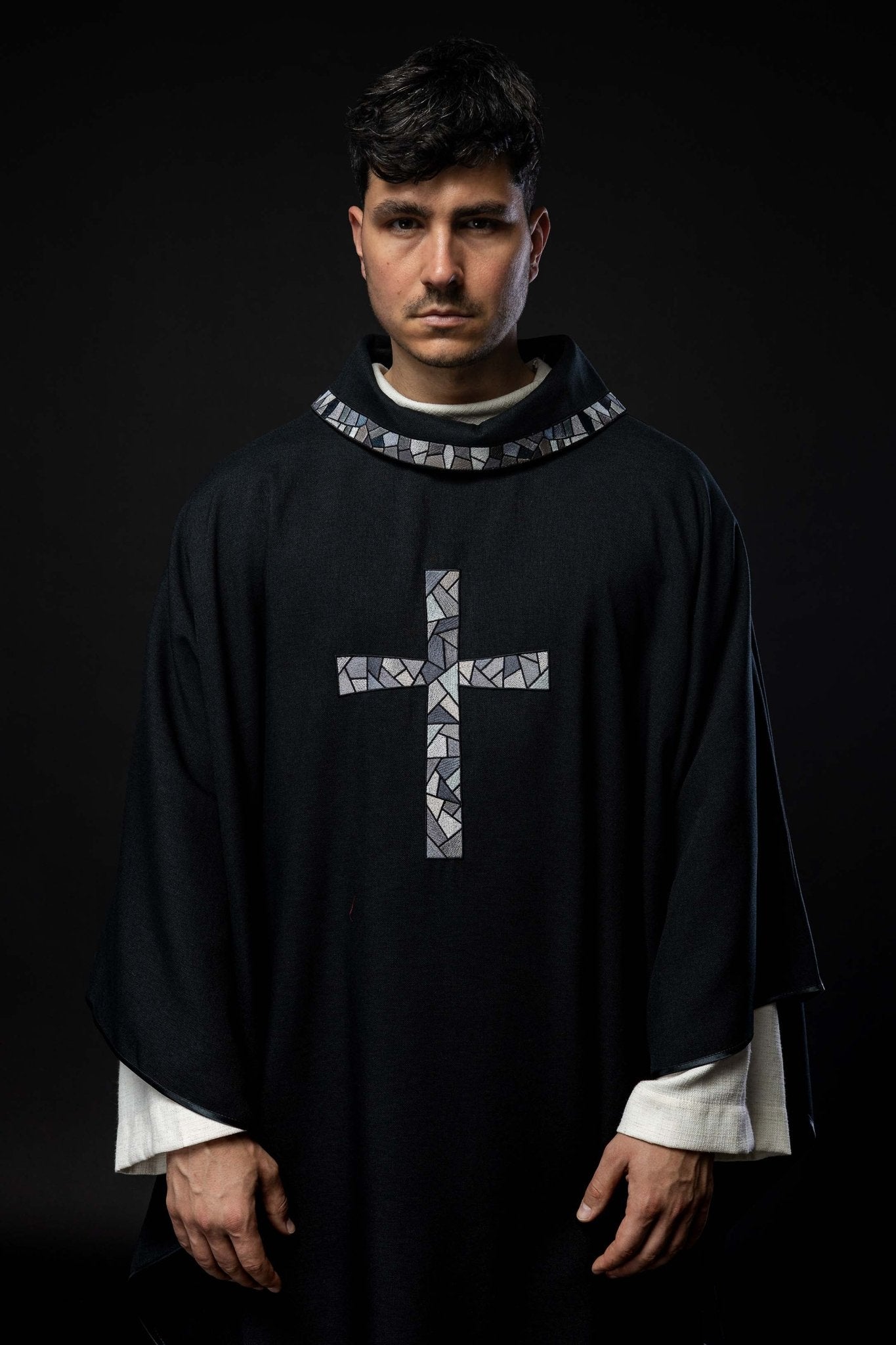





Black Chasubles
Black Chasuble: A Symbol of Mourning, Remembrance, and Solemnity
Introduction to Liturgical Vestments
Liturgical vestments are a foundational element of the Catholic Church’s worship, worn by priests and clergy during the liturgy to symbolize their sacred role and the significance of each celebration. Each vestment, including the chasuble, is carefully chosen to reflect the theme and message of the Mass, using specific colors and styles to convey deeper spiritual meanings. The black chasuble, for example, is worn as a powerful reminder of mourning, prayer, and hope, especially during funerals and Requiem Masses. Through these vestments, the Church visually expresses its faith and invites the congregation to enter more fully into the mysteries being celebrated. The variety of colors, from black to white, purple, and gold, helps to mark the different seasons and feasts, making each liturgical moment distinct and meaningful. In this way, liturgical vestments not only serve a practical purpose but also symbolize the dignity, faith, and hope that are central to Catholic worship.
Understanding the Significance of Black Chasubles
In the rich tapestry of liturgical vestments, the black chasuble holds a unique and profound significance. Unlike the vibrant colors associated with celebration and feast days, the black chasuble is primarily reserved for moments of mourning, remembrance, and solemn reflection within the Catholic Church and other Christian traditions. Its somber hue serves as a visual representation of grief, loss, and the contemplation of mortality, reminding both clergy and congregation of the gravity of the occasion. Being aware of sin, judgment, and the need for prayer is central to the use of black in liturgy, as it calls the faithful to reflect on spiritual realities and the hope for souls in purgatory.
The use of black vestments dates back to the early centuries of the Church, gradually becoming standardized over time. While the specific regulations regarding its use may vary slightly depending on the denomination and local custom, the underlying symbolism remains consistent: a visual expression of sorrow and a call to prayerful remembrance. Black is sometimes misunderstood as representing only negativity, but in fact, it points to deeper spiritual interest and meaning, including hope and the need for prayer for the deceased. Black vestments also symbolize the reality of sins and the need for repentance, encouraging humility and reflection. In some dioceses, the norm has shifted to using white or violet for funerals, but black remains a powerful symbol in many places.
History of Black Vestments
The tradition of black vestments in the Catholic Church has deep historical roots, originating in the early centuries of Christianity. Black was adopted as a symbol of mourning, penance, and the reality of death, and its use became closely associated with funerals, Requiem Masses, and Good Friday. Over time, black vestments became an established part of the Church’s liturgical practice, serving as a visible sign of prayer and remembrance for the souls of the dead. The use of black during these solemn occasions is a powerful reminder of the need to pray for the departed and to reflect on the mysteries of life and death. In many countries and dioceses, black vestments remain an important symbol, acknowledging the sorrow of loss while also pointing to the hope of resurrection. The continued use of black vestments in the liturgy underscores the Church’s commitment to honoring the dead and supporting the faithful in times of mourning.
When are Black Chasubles Worn?
The primary occasions for wearing black chasubles are funerals and Requiem Masses (Masses for the Dead). During these services, the black chasuble serves as a powerful symbol of mourning for the deceased and a reminder of the hope for eternal life. The priest, vested in black, leads the congregation in prayers for the departed soul, interceding on their behalf before God. The choice of vestment color may be influenced by the wishes of the family of the deceased or by parish tradition, with local customs and cultural considerations often playing a significant role.
In some traditions, black chasubles may also be worn on All Souls’ Day (November 2nd), a day dedicated to the commemoration of all the faithful departed. This day provides an opportunity for the Church to remember and pray for all those who have died, especially those whose names are unknown or who have no one else to pray for them. There are options for vestment colors on this day, including violet and white, depending on parish preference, family requests, and local custom.
While less common, black chasubles may occasionally be used during penitential seasons like Lent or Advent, particularly on days of fasting or special solemnity. In these instances, the black vestment serves as a reminder of the need for repentance, humility, and a turning away from sin.
The Symbolism Embedded in the Black Color
The color black itself carries a wealth of symbolic meaning. It represents not only mourning and sorrow but also death, darkness, and the unknown. However, within the context of Christian liturgy, black also embodies hope. The darkness of death is not seen as an end but as a transition to eternal life in Christ. Black also symbolizes prayer for souls in purgatory and hope for their entrance into heaven, reminding the faithful of the Church’s teaching on the Afterlife. The black chasuble, therefore, becomes a symbol of hope amidst grief, a reminder that even in the face of death, God’s love and mercy endure. The use of black is meant to inspire a hopeful outlook for people mourning a loved one, encouraging trust in God’s promises.
Furthermore, black can also represent humility and self-denial. By wearing black, the priest acknowledges his own unworthiness and dependence on God’s grace. It is a visual expression of the need for repentance and a turning away from worldly distractions in order to focus on the eternal realities. Black vestments remind the faithful to pray for the souls of their loved ones and all people who have died, emphasizing the importance of intercession for those in purgatory and the hopeful journey toward heaven.
Design Variations and Embellishments on Black Chasubles
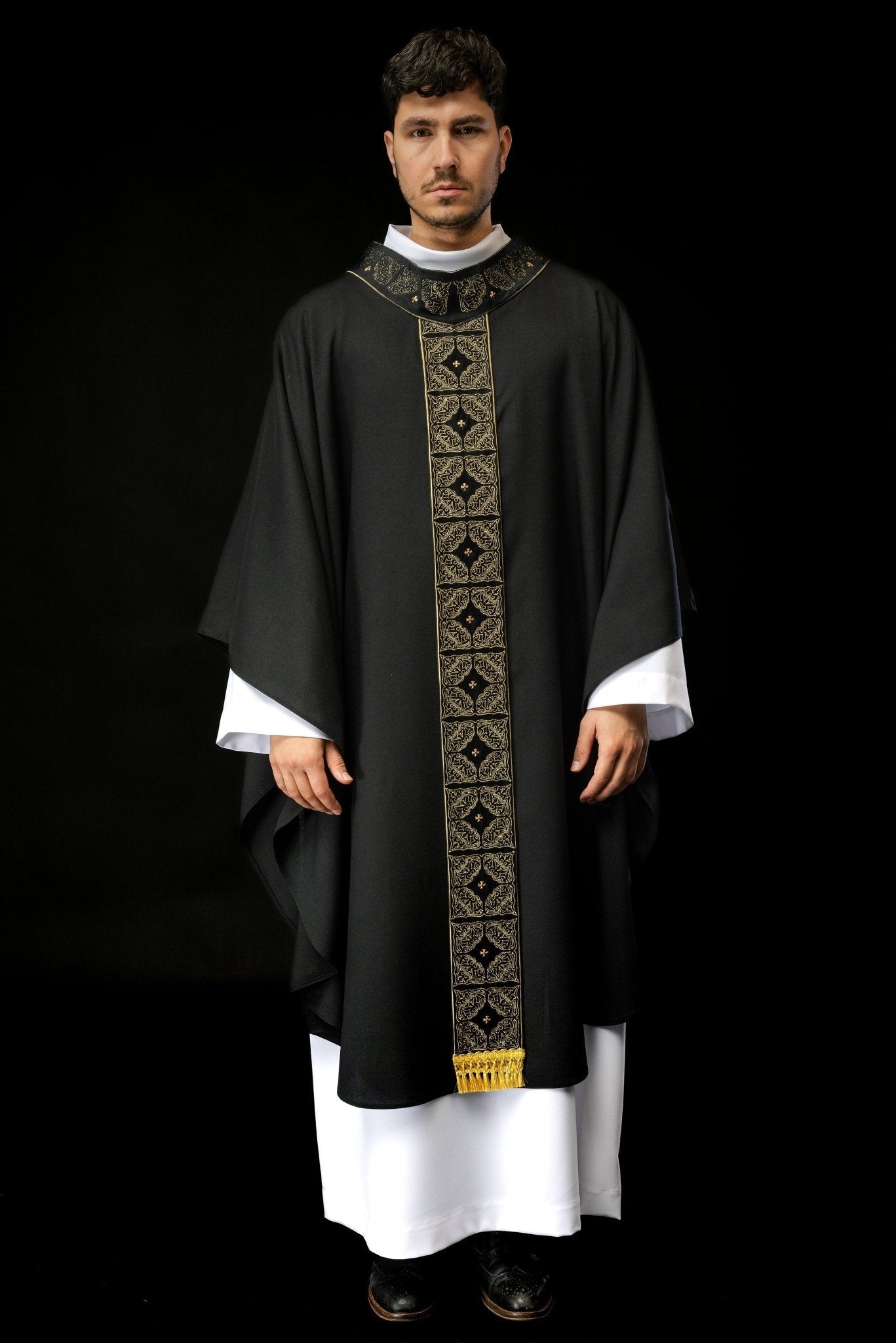
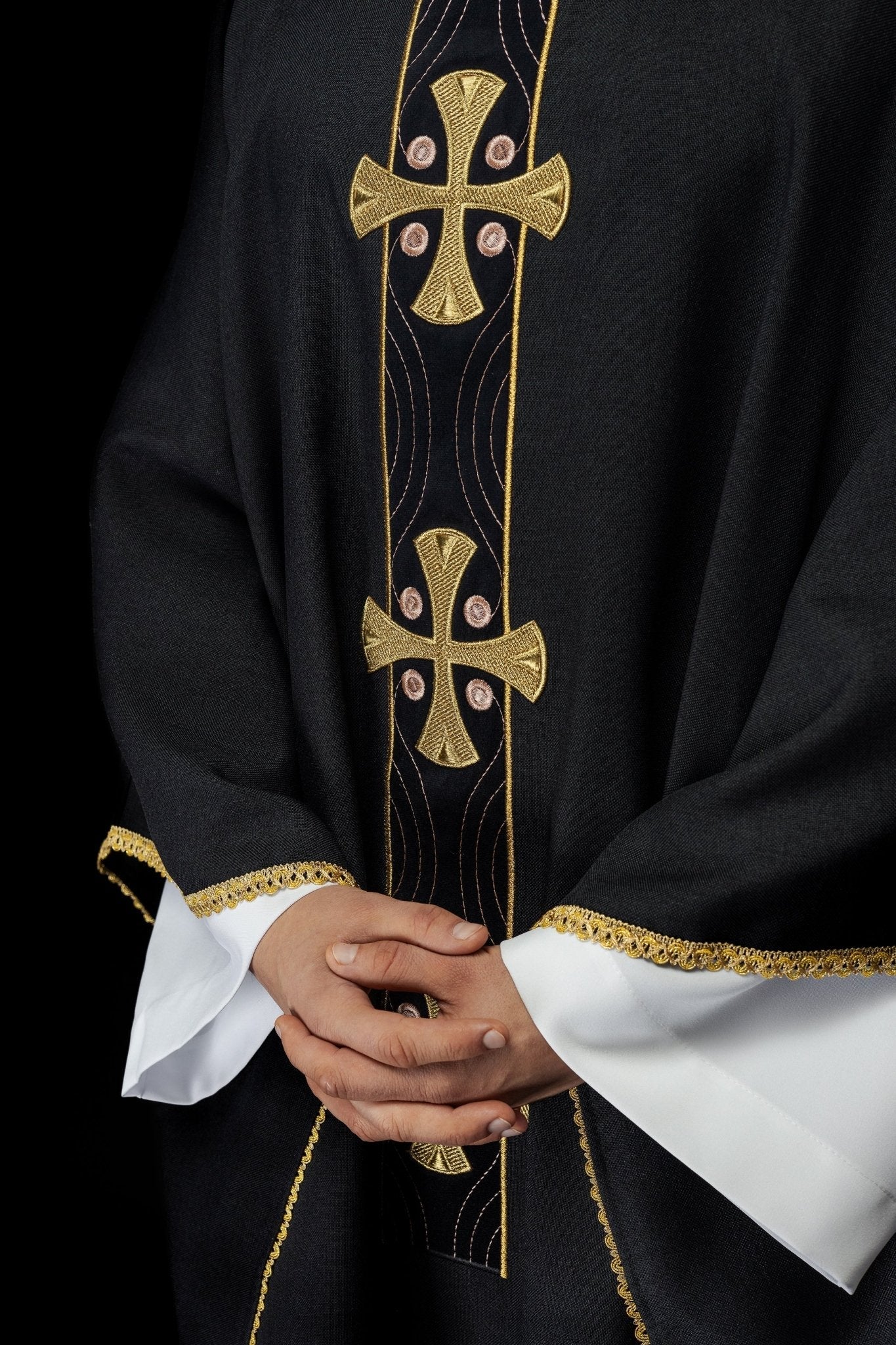
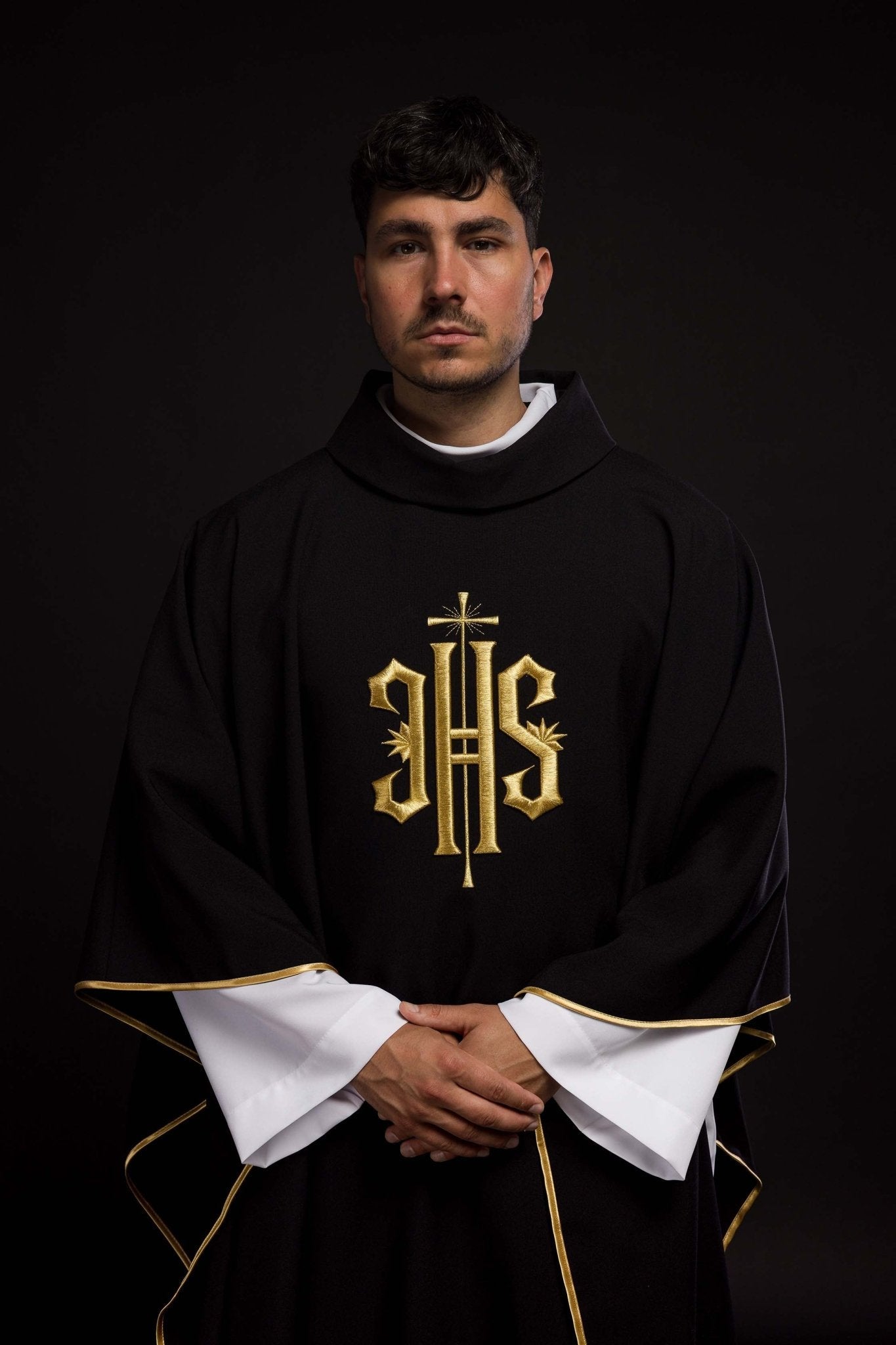
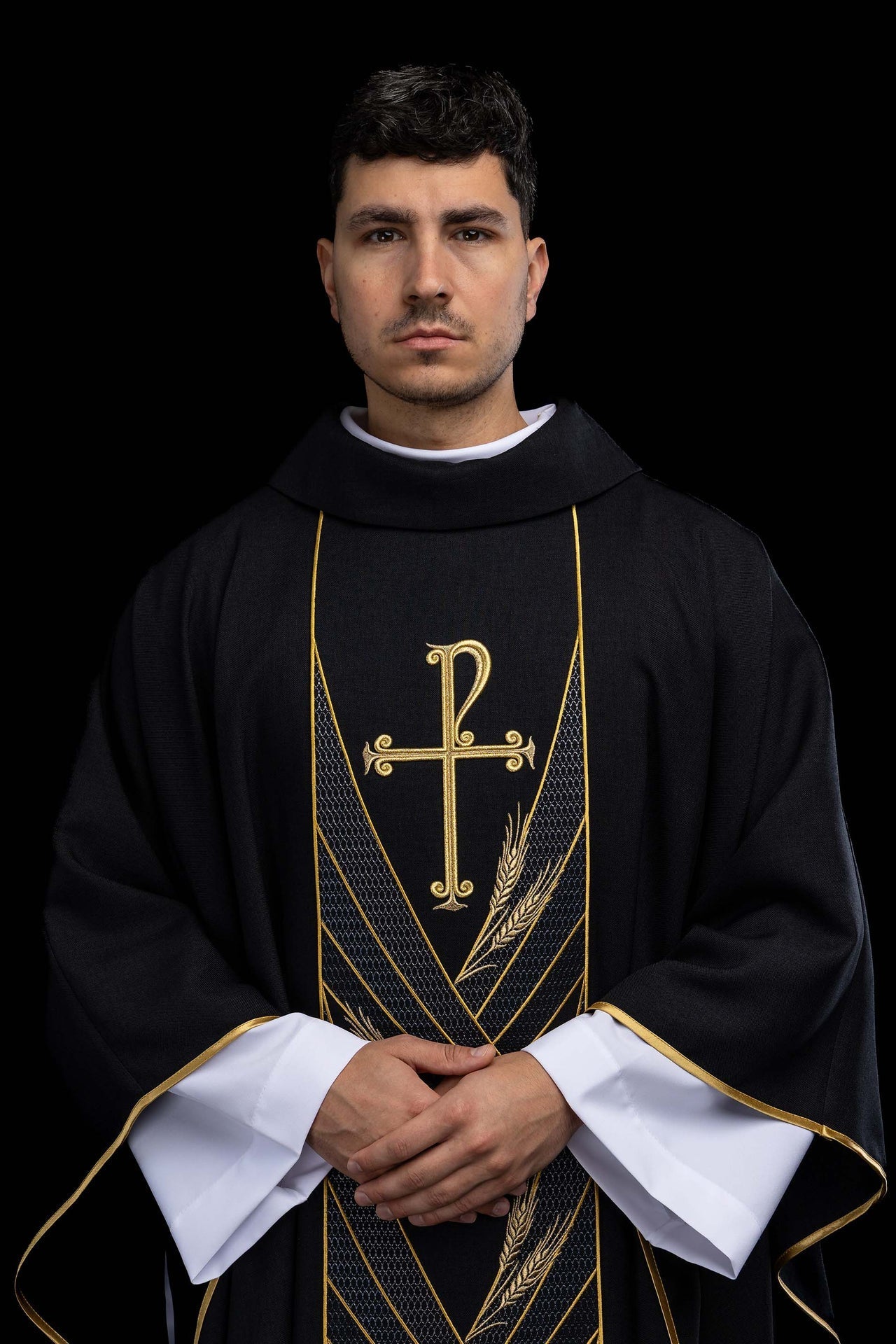
While the color black is the defining characteristic of these vestments, there is still room for variations in design and embellishment. Black chasubles are available in a range of designs, including Roman, Gothic, and monastic styles, each with its own symbolic meaning and decorative approach. Some black chasubles are simple and unadorned, emphasizing the somber nature of the occasion, while others may feature subtle embroidery or appliqués in silver, gold, or even muted shades of purple or gray. These embellishments often depict Christian symbols such as the cross, the Lamb of God, or images of saints. The decorations and symbols on black chasubles are packed with meaning, giving the vestment its rich symbolic significance.
The cut and style of the chasuble can also vary. Some are made in the traditional Gothic style, with a wide, flowing shape, while others are crafted in the Roman style, which is more fitted and streamlined. Monastic styles are characterized by simplicity and minimal ornamentation, reflecting humility and traditional austerity. The choice of style is often a matter of personal preference or local custom.
The work of embroidery and ornamentation on black chasubles reflects the ongoing spiritual work of prayer and remembrance.
Gothic Chasuble Style
The Gothic chasuble style is renowned for its elegant, flowing silhouette and rich decorative elements, making it a favored choice among clergy in the Catholic Church. Characterized by its wide, draping shape and often adorned with intricate embroidery in gold or silver, the Gothic chasuble brings a sense of dignity and beauty to the liturgy. This style is frequently worn during Requiem Masses, funerals, and other occasions of mourning, where it serves as a visual reminder of Christian hope and the importance of prayer for the souls of the dead. The use of metallic threads and detailed decoration highlights the solemnity of the occasion while also expressing the Church’s faith in the promise of resurrection. The Gothic chasuble’s design not only enhances the visual impact of the liturgy but also reinforces the message of hope, dignity, and remembrance at the heart of Catholic worship.
Materials Used in Crafting Black Chasubles
The materials used to create black chasubles can range from simple, durable fabrics like polyester to more luxurious materials like wool, silk, or velvet. The choice of material often depends on the budget and the desired level of formality. Regardless of the material, it is important that the fabric is of good quality and is properly cared for to ensure its longevity.
Many black chasubles are lined with a contrasting color, such as white or gold. This lining not only adds to the aesthetic appeal of the vestment but also provides additional structure and durability.
The Importance of Proper Care and Maintenance
Like all liturgical vestments, black chasubles should be treated with respect and care. Proper cleaning and storage are essential to maintaining their beauty and ensuring their longevity. It is generally recommended to have chasubles professionally dry-cleaned, as this will help to preserve the fabric and prevent damage to any embroidery or embellishments.
When not in use, black chasubles should be stored in a garment bag or hung in a closet to protect them from dust and moths. It is also important to avoid exposing them to direct sunlight, as this can cause the color to fade over time.
Purchasing a Black Chasuble: Factors to Consider
When purchasing a black chasuble, there are several factors to consider. First and foremost, it is important to choose a chasuble that is made from high-quality materials and is well-constructed. The vestment should be durable and able to withstand regular use.
Secondly, consider the style and design of the chasuble. Choose a style that is appropriate for your personal taste and the liturgical traditions of your church. Pay attention to the details, such as the embroidery or appliqués, and make sure they are well-executed and meaningful.
Finally, consider the price. Black chasubles can range in price from relatively inexpensive to quite expensive, depending on the materials and craftsmanship. Set a budget and stick to it, but don't sacrifice quality for price. A well-made black chasuble is an investment that will last for many years.
Black Chasubles as a Symbol of Hope and Resurrection
While the black chasuble is undoubtedly a symbol of mourning and sorrow, it is also a symbol of hope and resurrection. The Christian faith teaches that death is not the end but a transition to eternal life in Christ. The black chasuble, therefore, serves as a reminder that even in the face of death, God's love and mercy endure.
The priest, vested in black, leads the congregation in prayers for the deceased, interceding on their behalf before God. He proclaims the hope of resurrection and the promise of eternal life. The black chasuble, therefore, becomes a powerful symbol of the Christian faith's triumph over death.
The Black Chasuble and the Cycle of Life
The use of the black chasuble in the liturgy is a poignant reminder of the cyclical nature of life. From birth to death, and from death to resurrection, the Christian life is a journey marked by both joy and sorrow. The black chasuble serves as a visual representation of this journey, reminding us of the importance of both mourning and celebrating, of remembering the past and looking forward to the future.
By embracing the symbolism of the black chasuble, we can gain a deeper appreciation for the mysteries of life and death and a stronger hope in the promise of eternal life.
The Role of Black Chasubles in Different Christian Denominations
While the use of black chasubles is most commonly associated with the Catholic Church, it is also found in other Christian denominations, including some Anglican and Lutheran traditions. The use of black chasubles can vary significantly by country and diocese, as local liturgical customs and diocesan guidelines often influence vestment choices and practices. The specific regulations regarding its use may vary, but the underlying symbolism remains consistent: a visual expression of mourning, remembrance, and solemn reflection.
In some denominations, the use of black vestments has declined in recent years, with some churches opting for alternative colors like purple or dark blue. In many places, black vestments have been replaced by white, violet, or other colors, reflecting shifts in liturgical norms and symbolism. However, the black chasuble remains a powerful and meaningful symbol for many Christians, and its use continues to be an important part of liturgical tradition.
Black Chasubles: A Timeless Symbol of Faith and Remembrance
In conclusion, the black chasuble is a timeless symbol of faith and remembrance. Its somber hue serves as a visual representation of mourning, loss, and the contemplation of mortality. But it is also a symbol of hope, resurrection, and the enduring love of God. Whether worn at funerals, Requiem Masses, or during penitential seasons, the black chasuble reminds us of the importance of remembering the past, embracing the present, and looking forward to the future with faith and hope.

Express Shipping
Delivery within 1-3 days

Free delivery
on orders over 199 USD

Made in Poland, EUROPE
since 1991