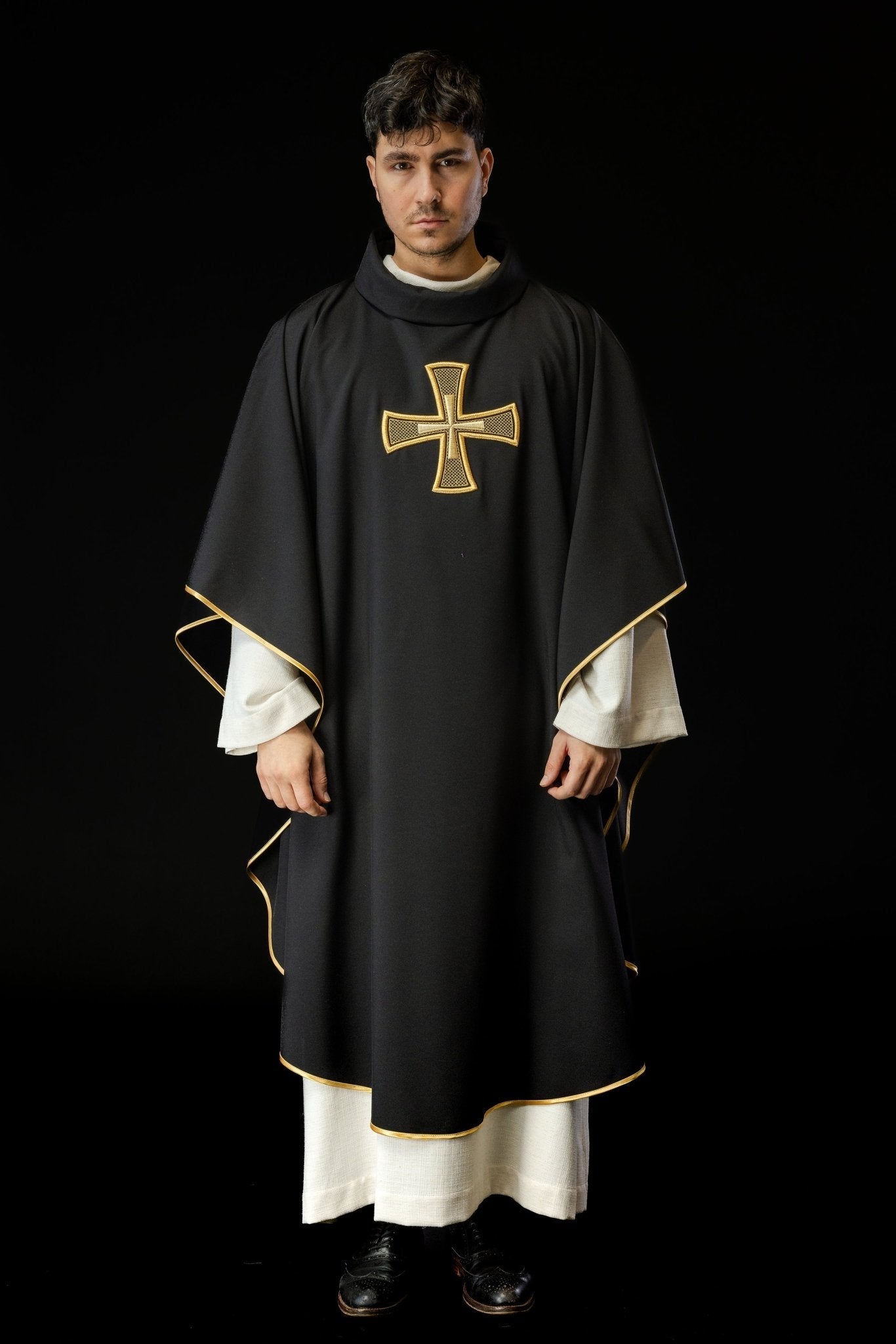
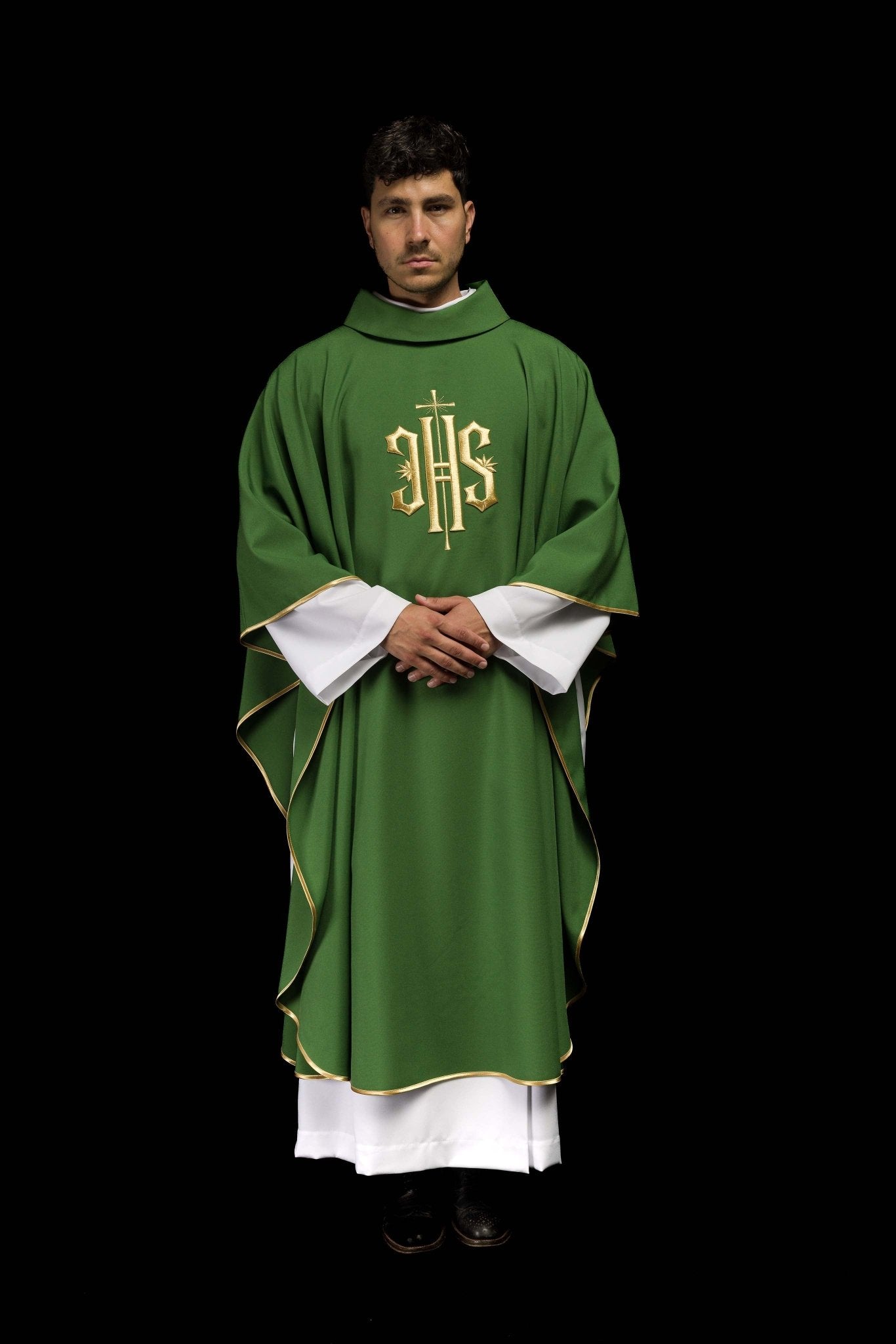
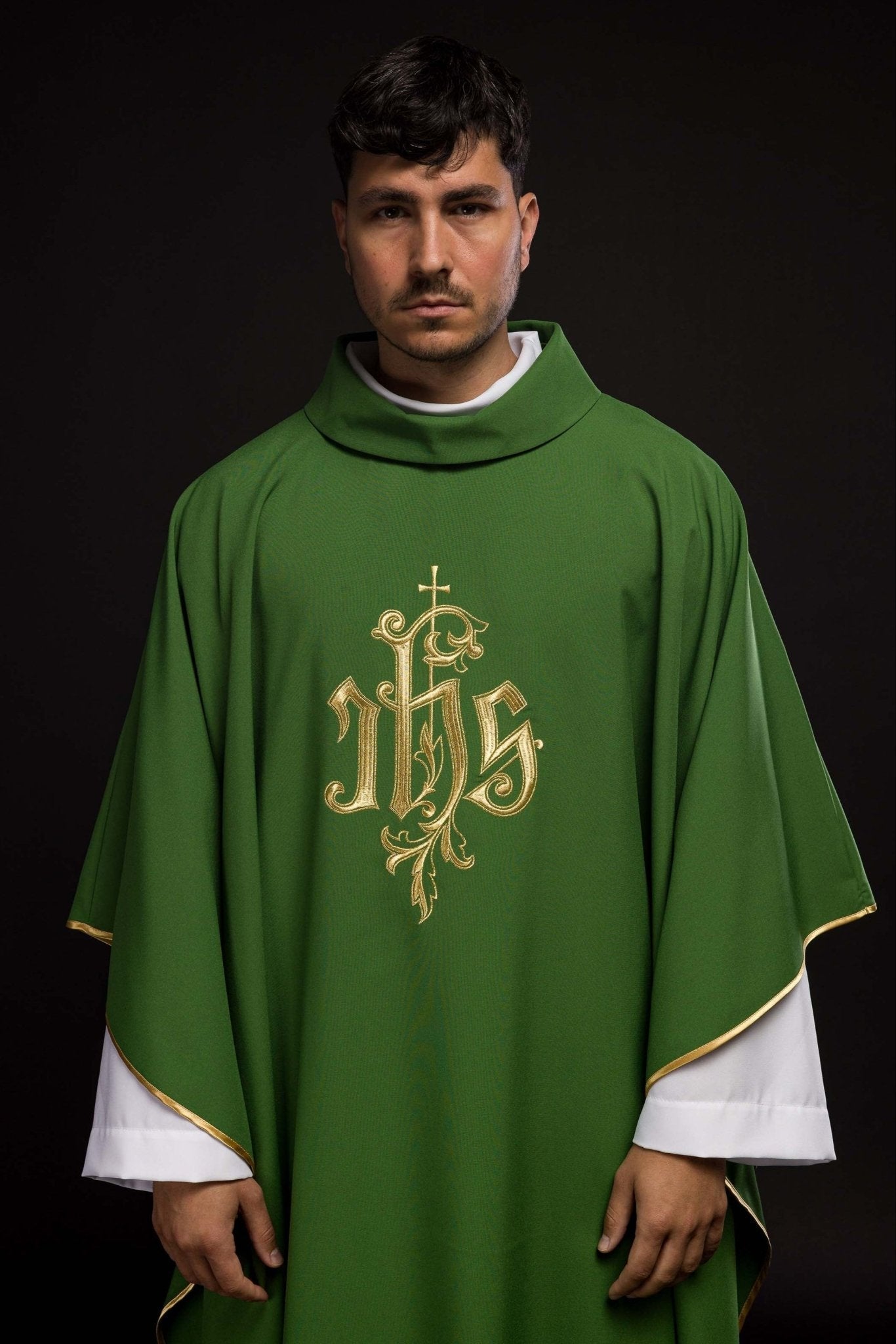
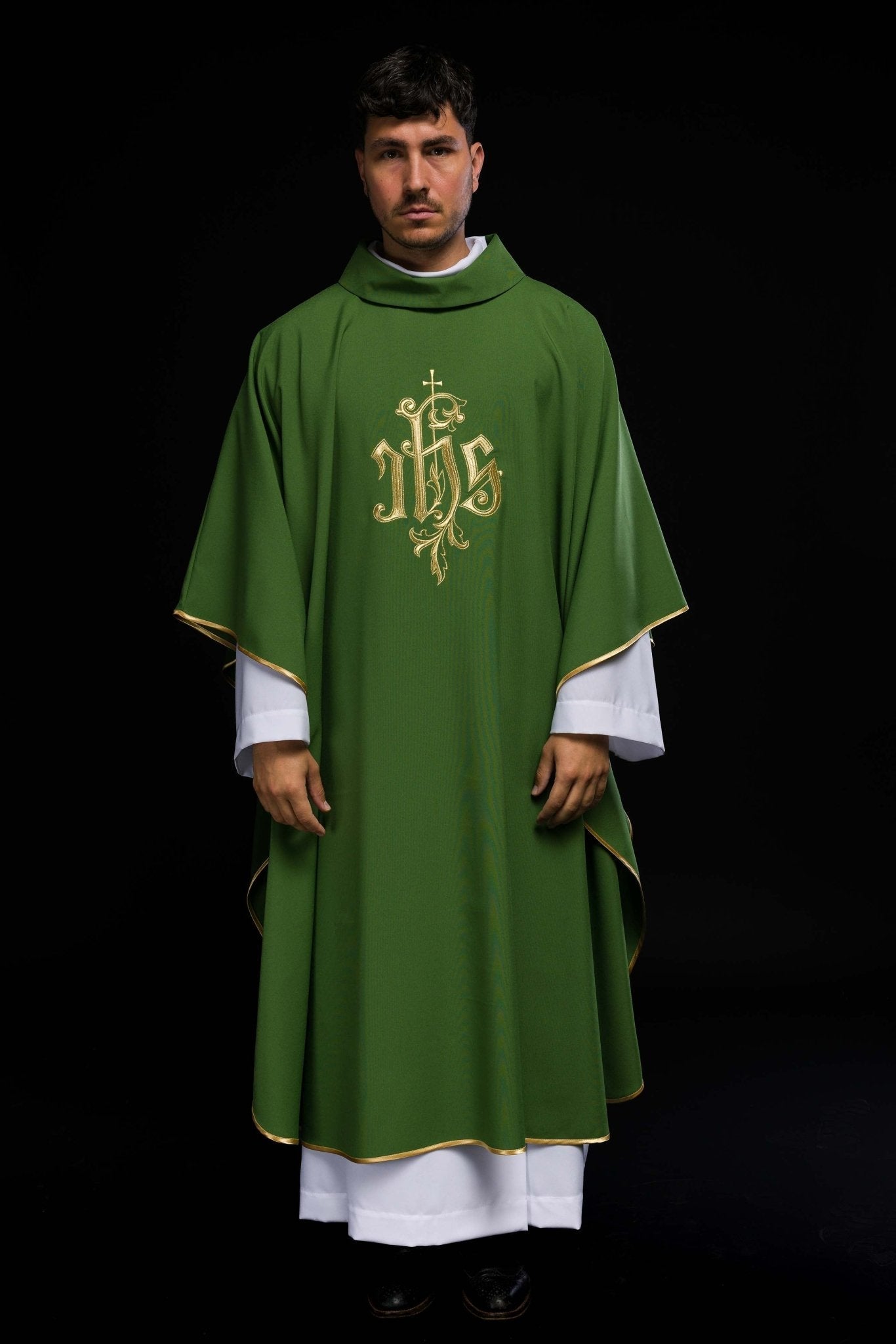
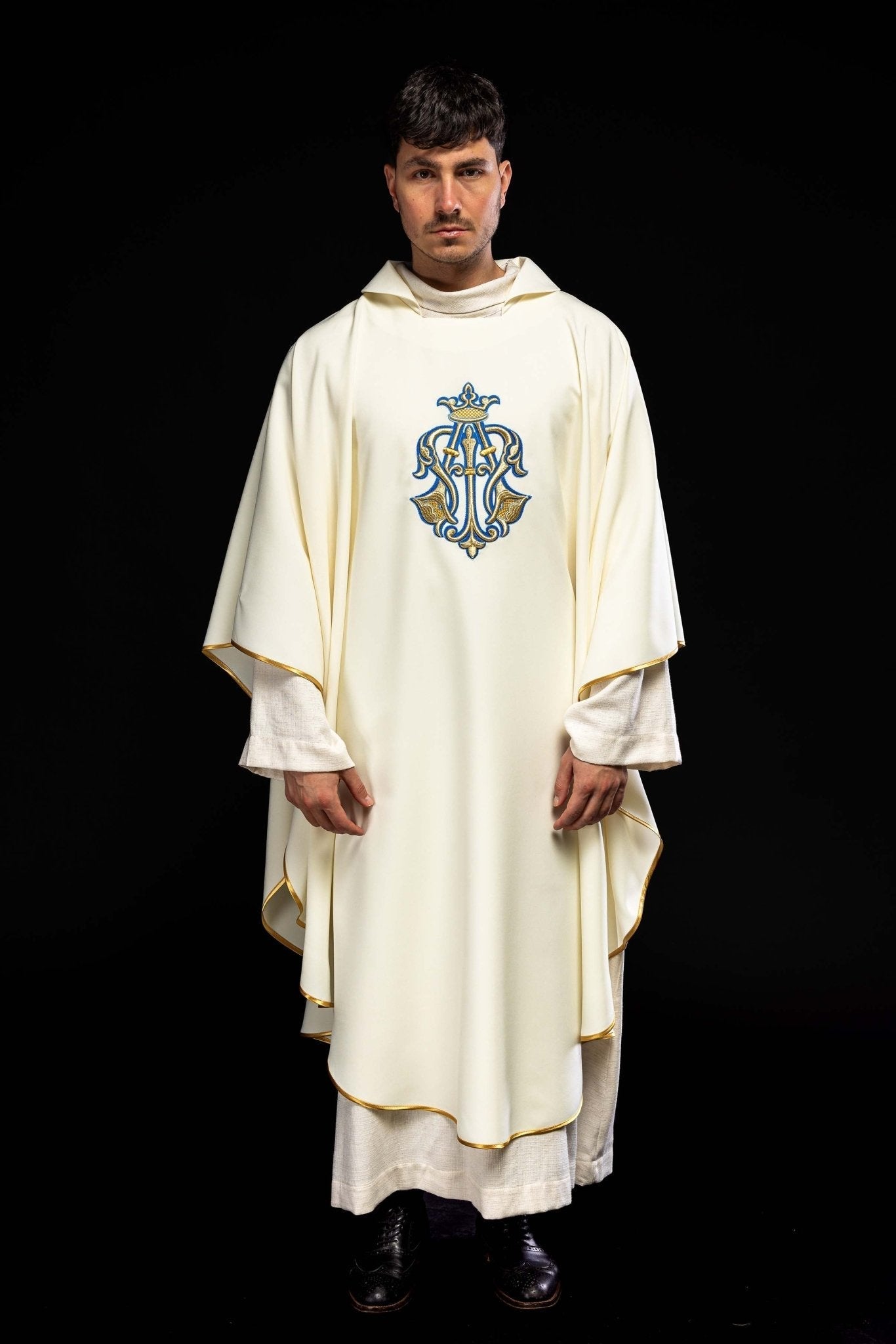
Roman Chasuble: A Comprehensive Guide to Liturgical Vestments
Understanding the Significance of Chasubles
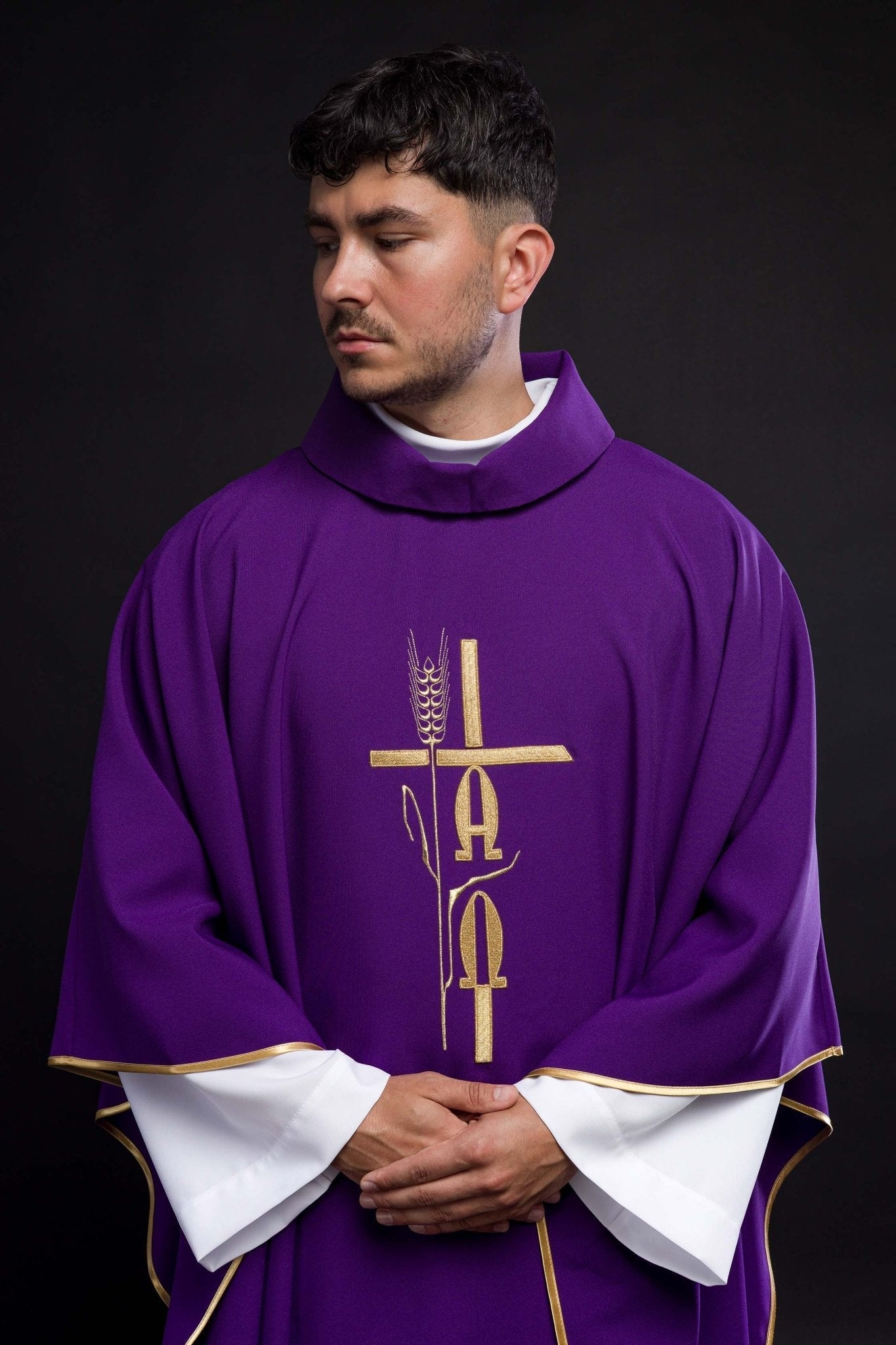
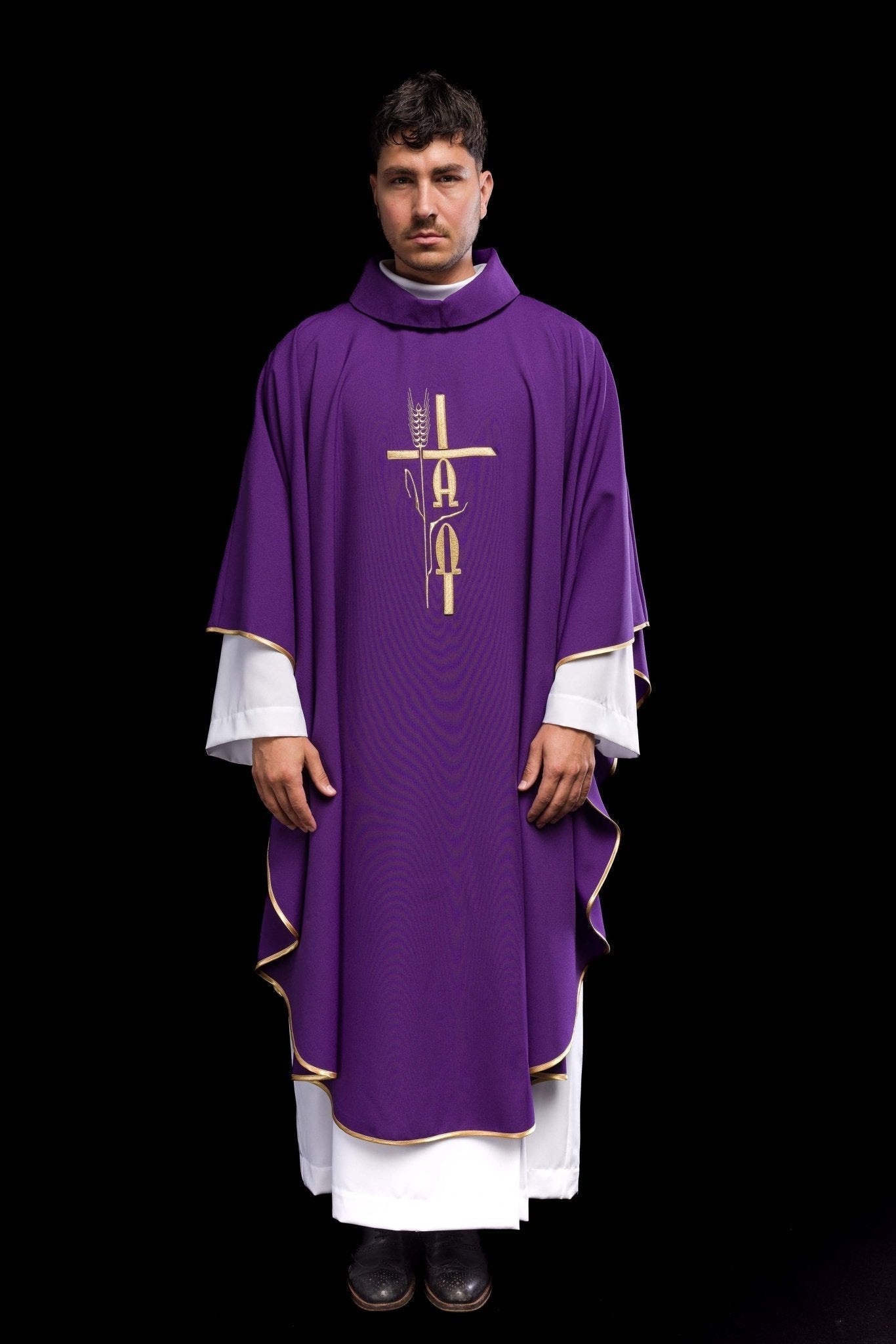
Chasubles are essential liturgical vestments worn by priests during the celebration of the Eucharist in various Christian traditions, including the Roman Catholic, Anglican, and some Lutheran churches, as well as other church communities. These vestments are worn during sacred functions at the altar, highlighting the priest’s role in performing the most important functions of the liturgy. The chasuble’s design, color, and embellishments all contribute to the solemnity and spiritual significance of the liturgical celebration. In prayer, the chasuble is described as the 'yoke of Christ' and is said to represent charity, making it a significant symbol in liturgical practices.
The History and Evolution of Chasubles
The roman chasuble originated as a piece of cloth—a conical poncho known in Latin as a paenula or casula—which was secular attire commonly worn in civil life throughout the late Roman Empire. Nearly all ecclesiologists agree that liturgical vestments, including the chasuble, gradually developed from such secular attire. The original chasuble was called by various names, such as casula, planeta, or amphibalus, and its conception was that of a 'little house' or 'house'—a square or semicircular garment with a central hole for the head, covering all the rest of the vestments and the body, much like a small hut. As purpose garments, these vestments symbolized charity and the yoke of Christ, dressing the priest for sacred functions.
Over time, the design evolved: modifications to the arms, shoulders, and neck were made to allow the priest to be free to perform liturgical actions, with the sides often folded or cut away to keep the arms free. By the fifteenth and sixteenth centuries, the chasuble’s sides no longer reached the ankles, providing greater freedom of movement. The garment was secured in place using cords, rings, or other methods, and directions for wearing and adjusting the chasuble were detailed in liturgical manuals. Chasubles were often richly decorated, with rare ancient examples featuring elaborate embroidery and symbols.
There are two principal types: the Roman and the French chasuble. The Roman type is more ample, while the French type is often artificially stiffened. Chasubles can also be categorized by design, including bell-shaped, fiddleback, and Gothic styles. The term 'fiddleback' arises from the shape of the back panel, which resembles the body of a violin. Roman chasubles are distinct from the longer, more flowing Gothic chasubles. In the 20th century, there was a revival of the ample Gothic form, contrasting with the 'Roman' scapular form that had been prevalent. Today, priests are dressed in these vestments, wearing them as both functional and symbolic purpose garments that cover all the rest of their liturgical attire.
The Symbolism of Chasuble Colors
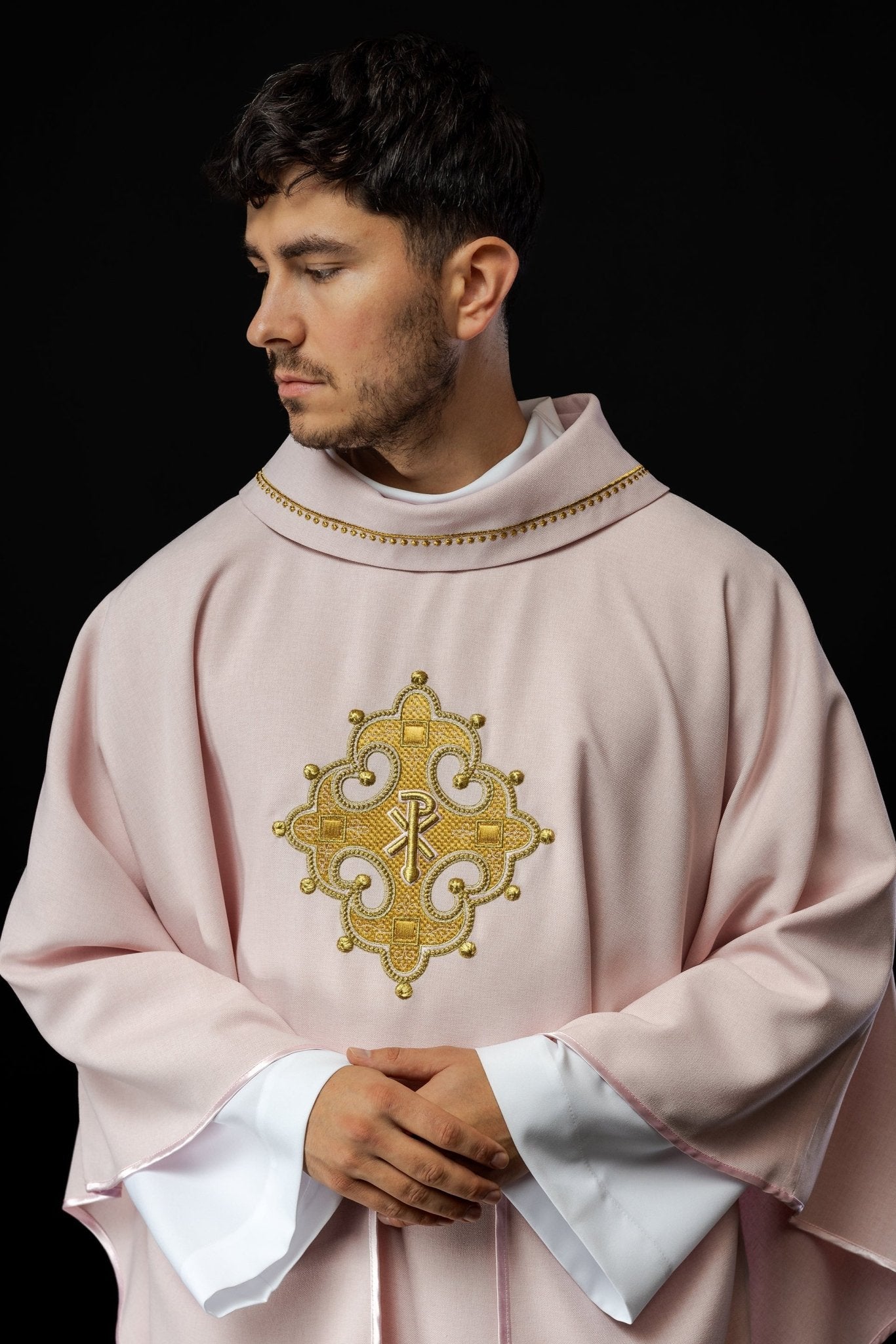
Chasubles are available in various liturgical colors, including green, red, violet, white, rose, and black, each representing different themes and occasions in the liturgical calendar. The color of the chasuble changes with the liturgical season or feast, serving as a visual representation during Mass and other services. For example, white chasubles are often worn for sacraments such as baptism, symbolizing purity. The proper use of liturgical colors enhances the visual and spiritual experience of worship, helping to convey the themes and mysteries of the Christian faith.
Green Chasubles
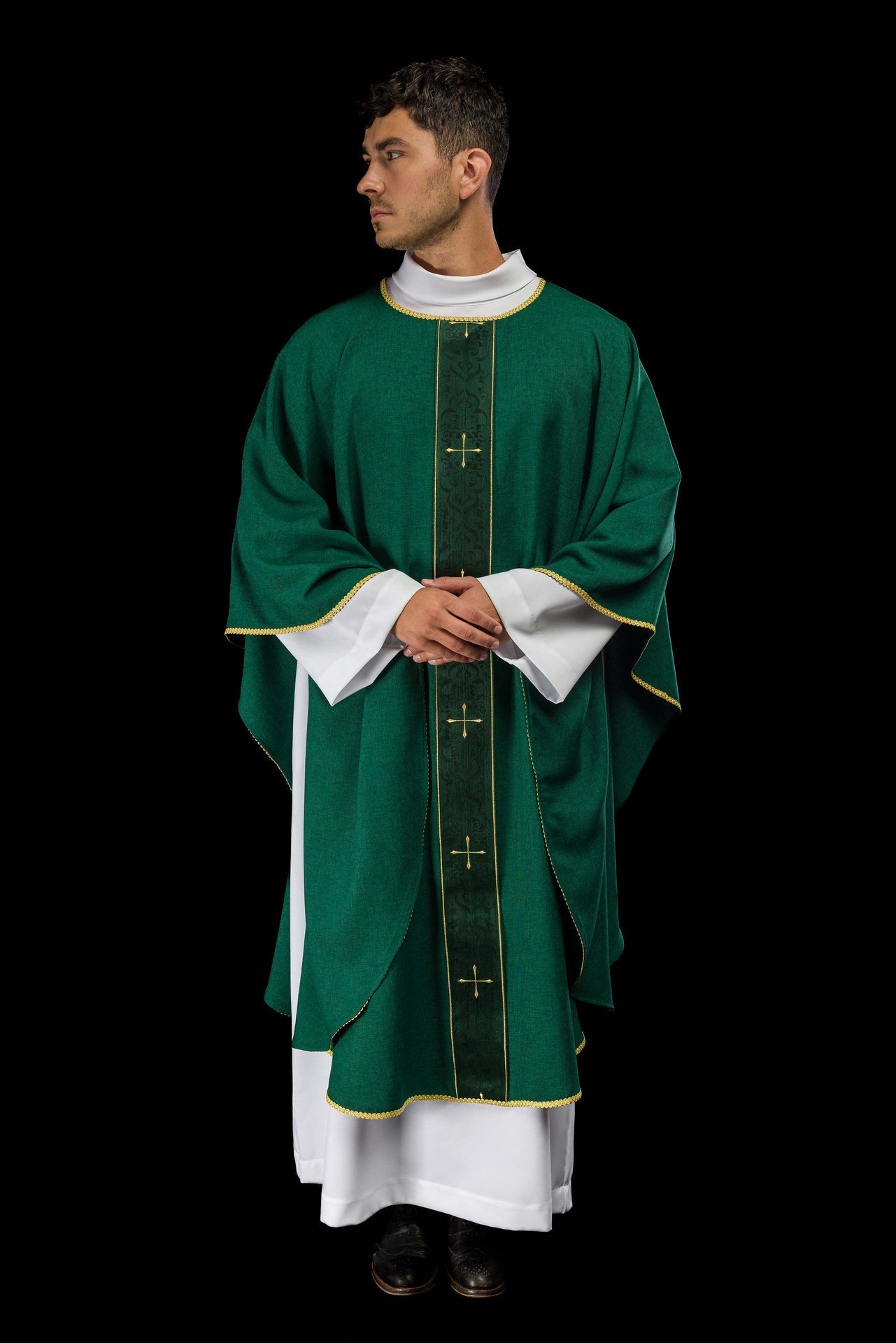
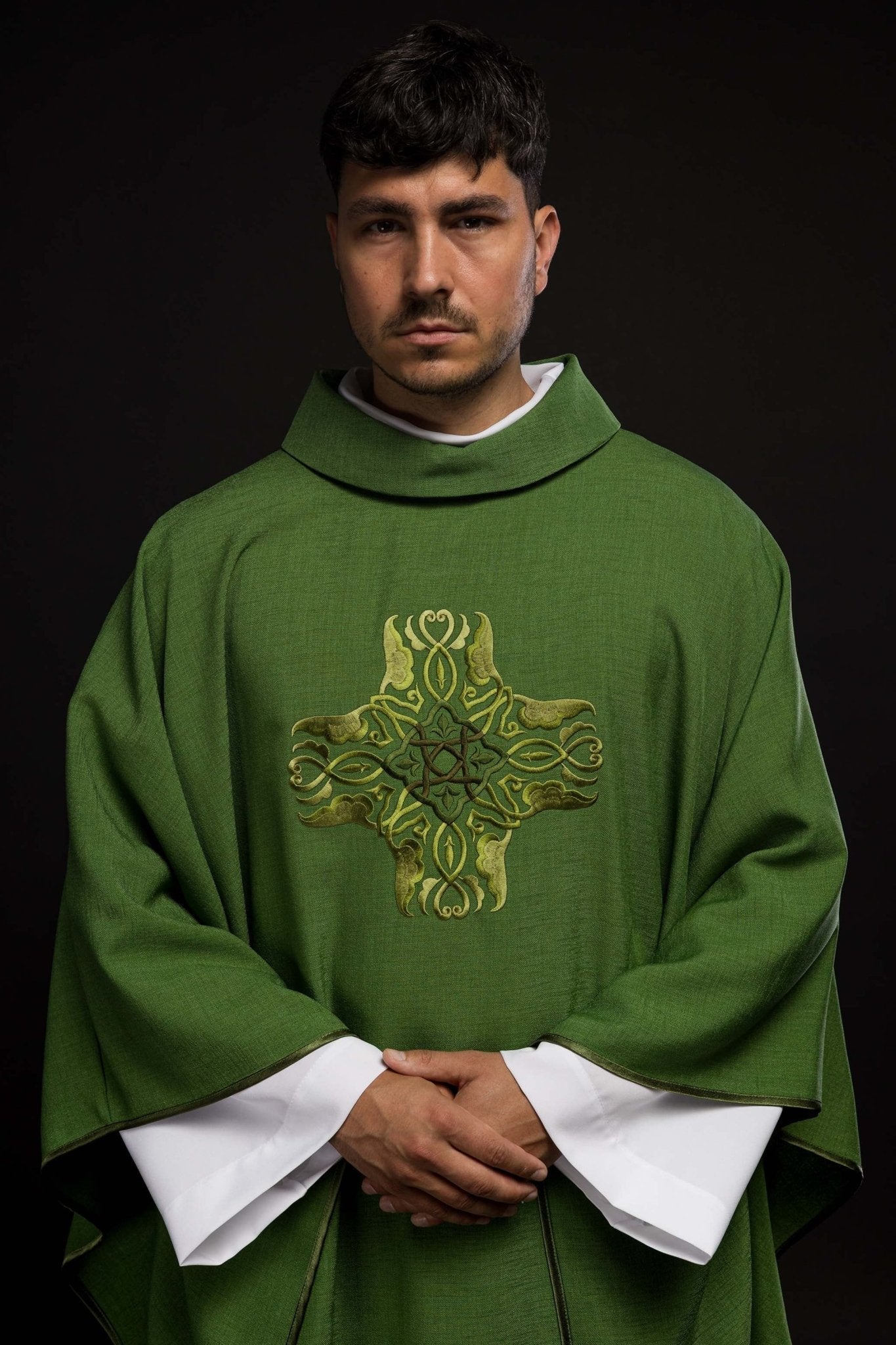
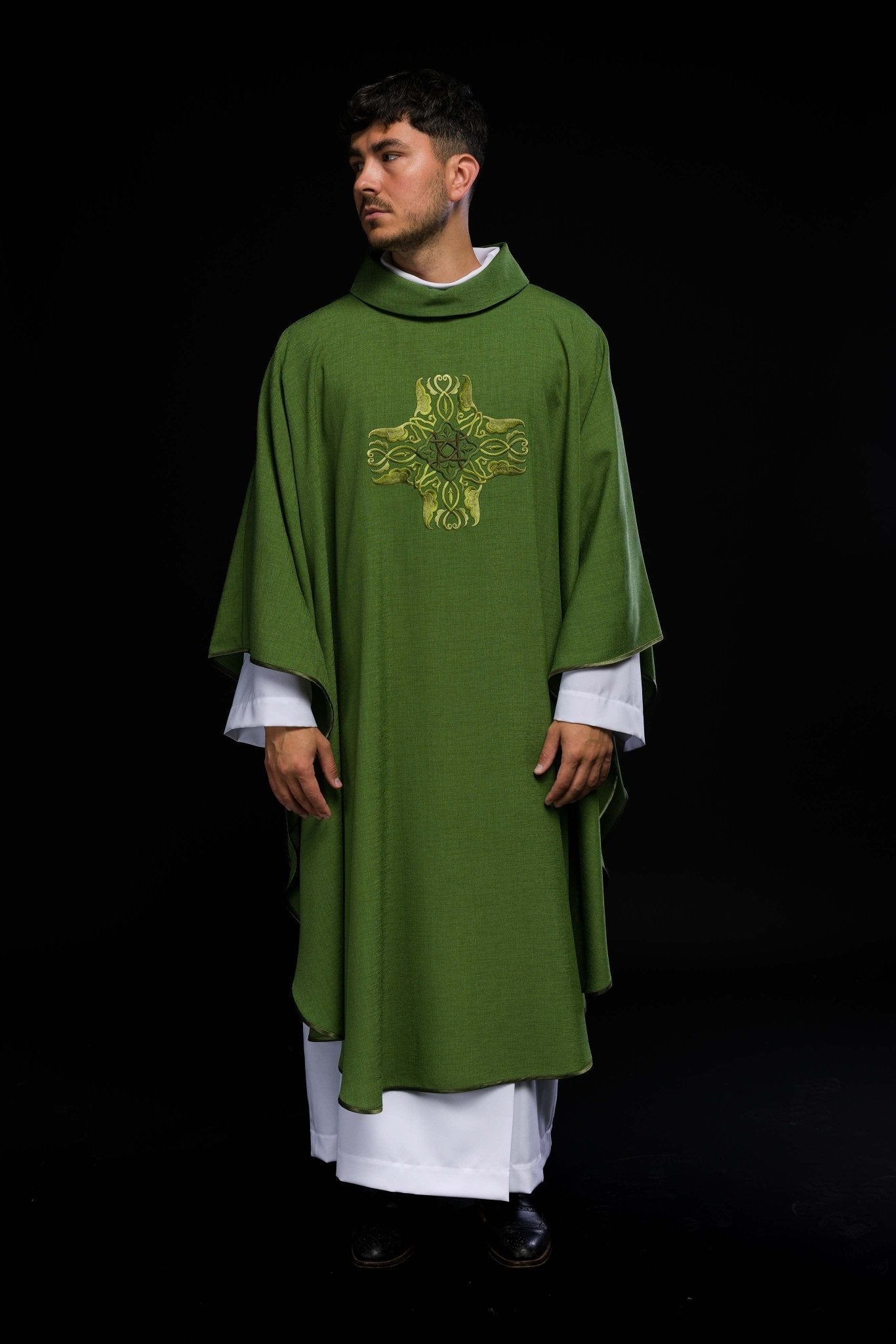
Green is the color of Ordinary Time, the longest period in the liturgical year. It symbolizes hope, life, and spiritual growth. Green chasubles are worn during the weeks between the Christmas and Lenten seasons, and between the Easter and Advent seasons.
Red Chasubles
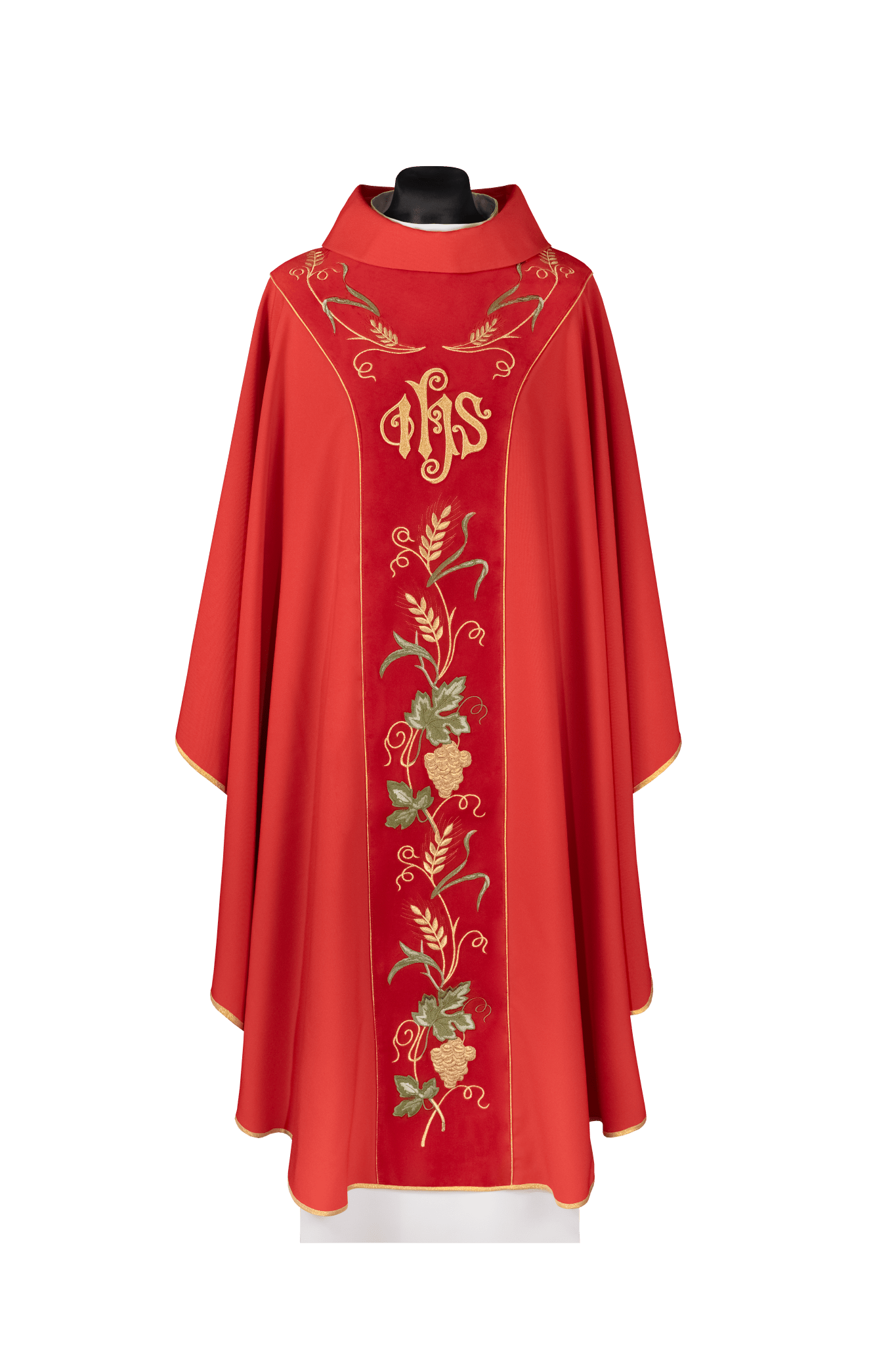
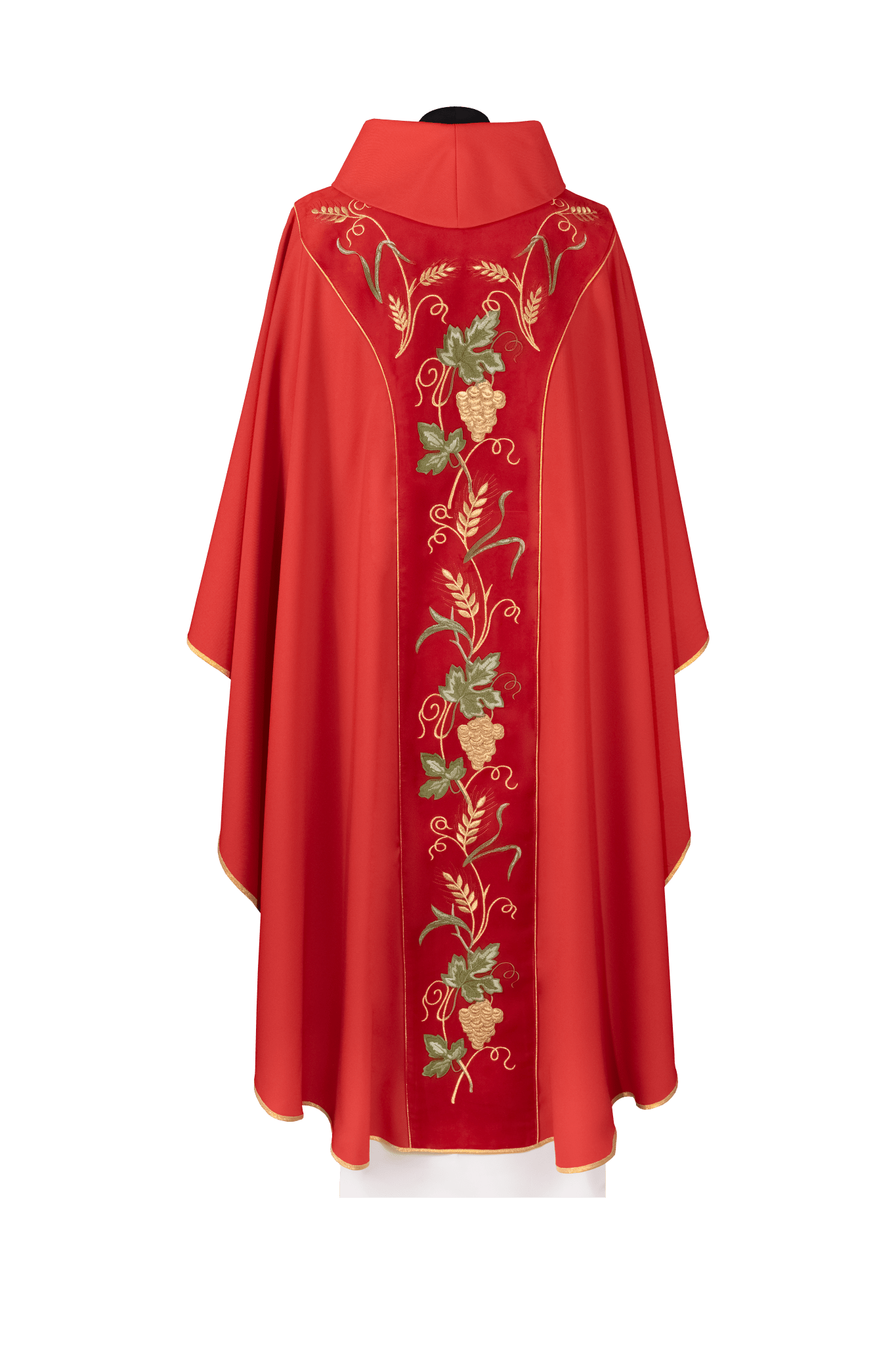
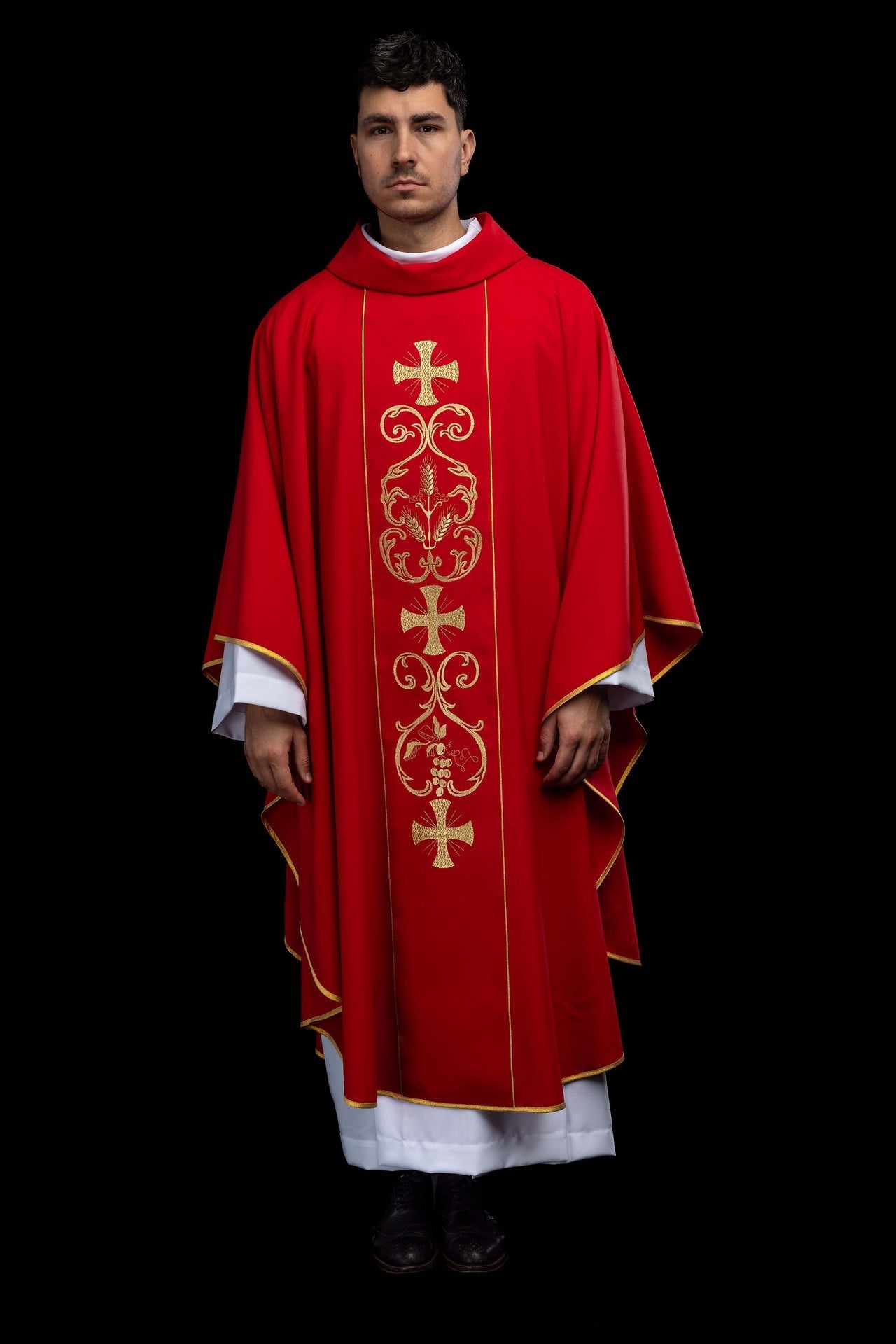
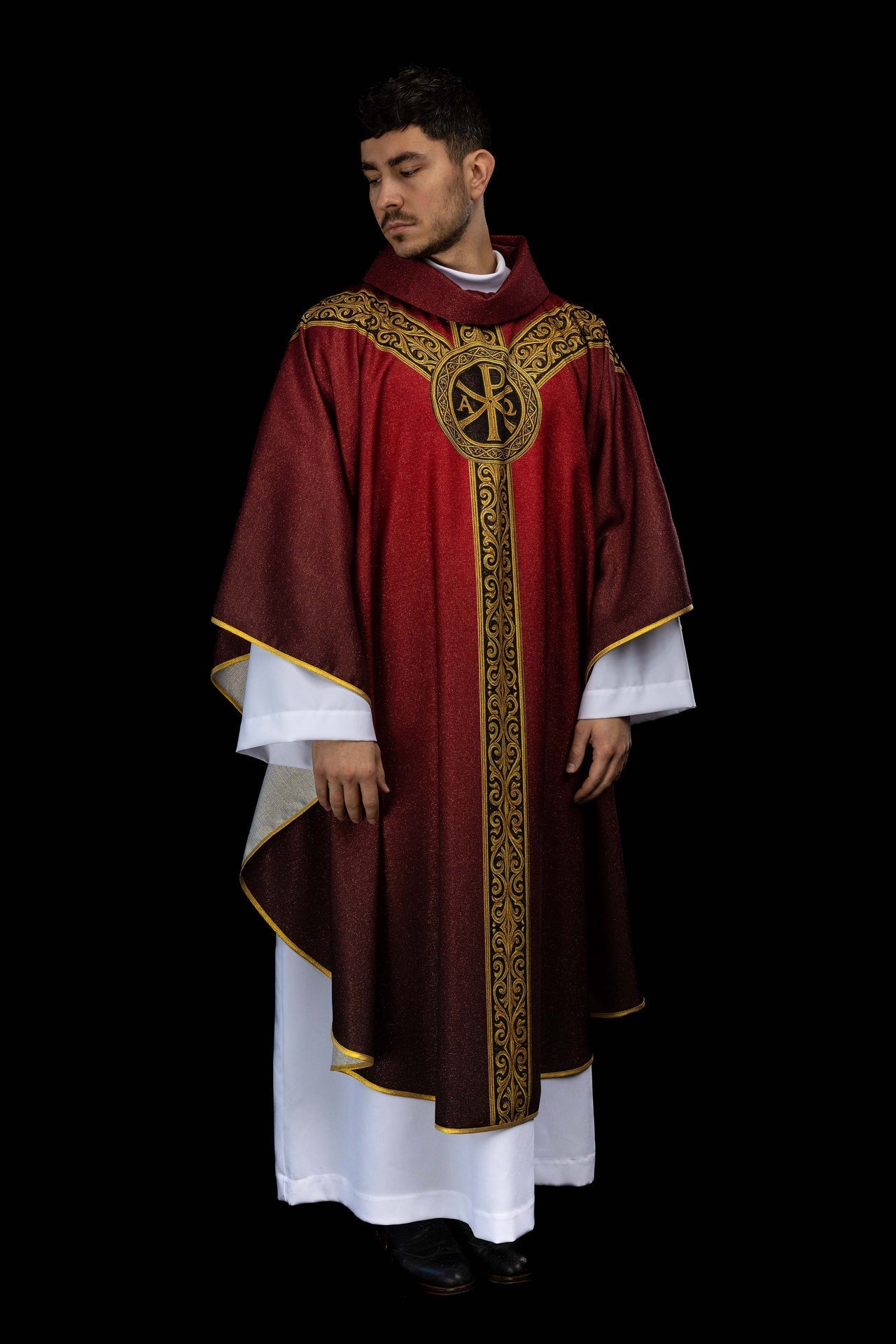
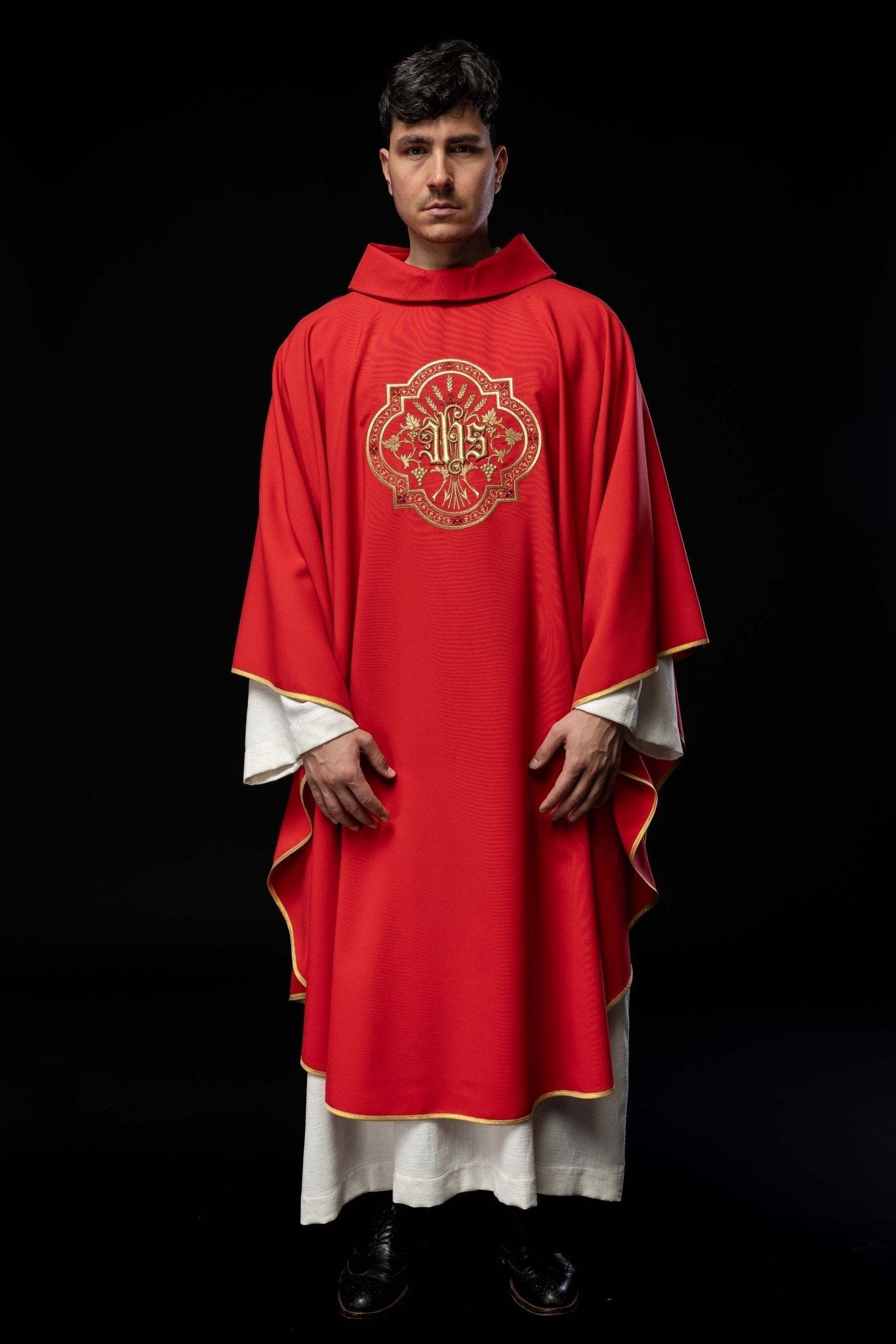
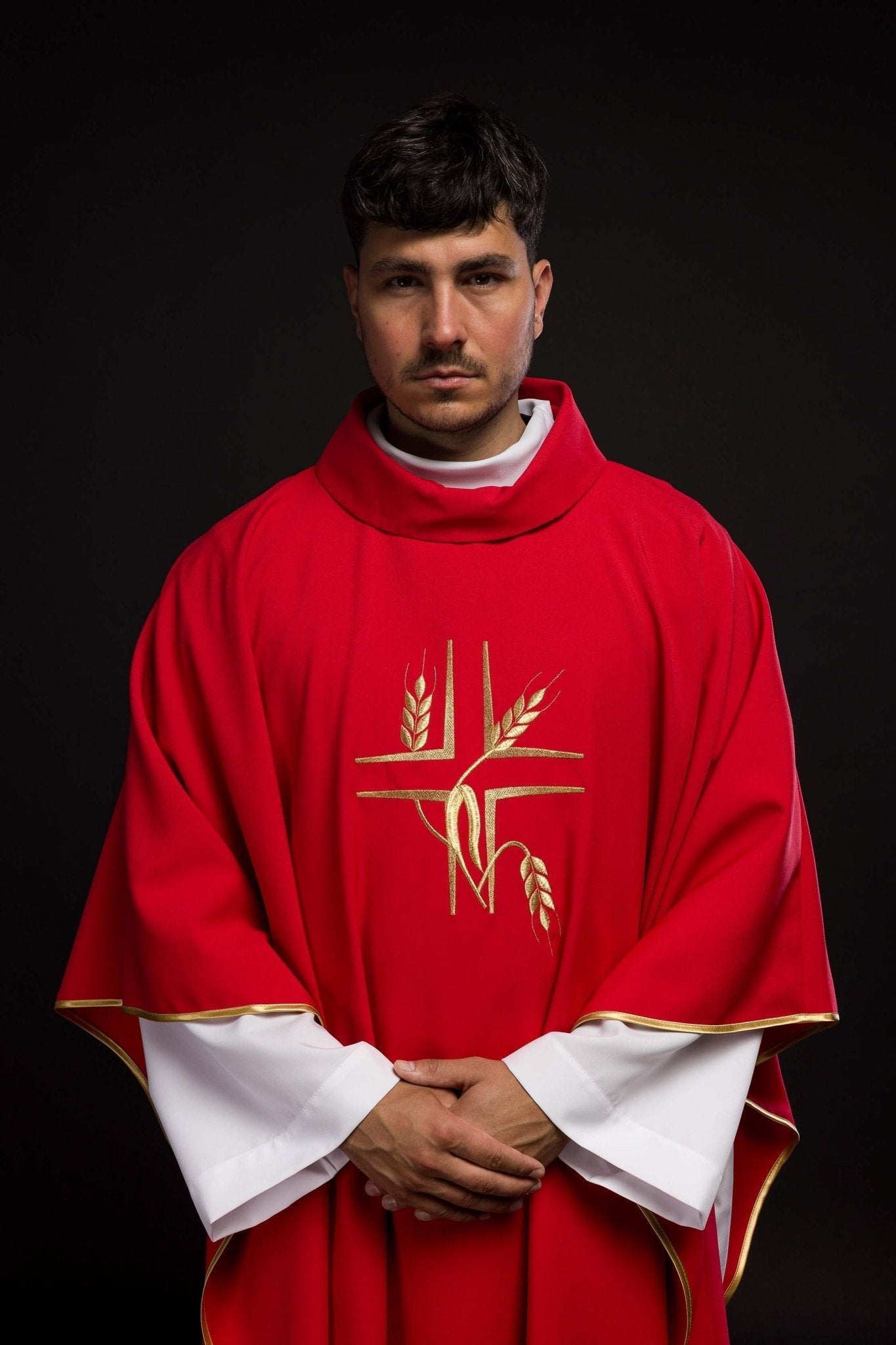
Red signifies passion, sacrifice, and the Holy Spirit. Red chasubles are worn on feasts of martyrs, Palm Sunday, Good Friday, Pentecost, and celebrations of the Holy Spirit.
White Chasubles
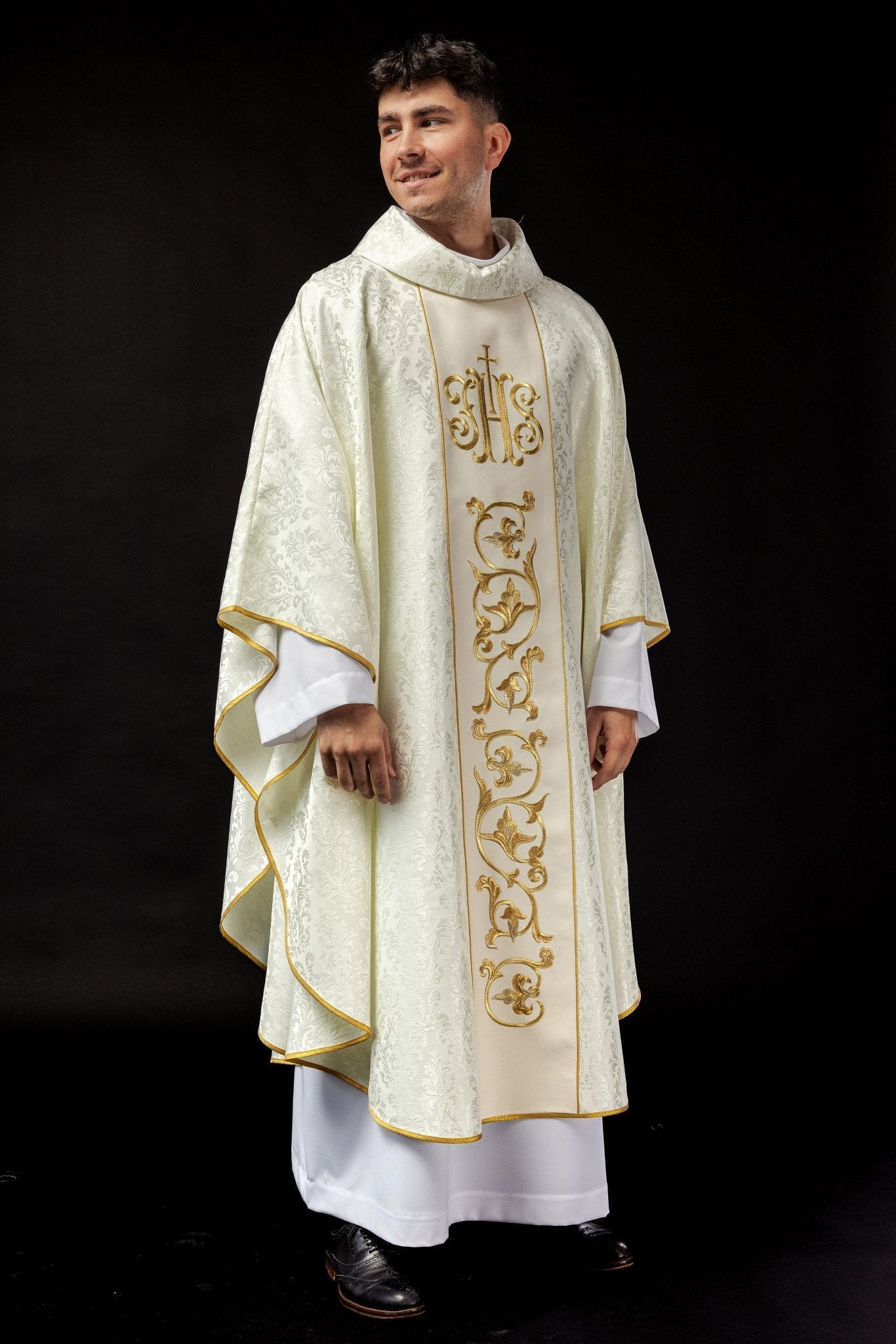
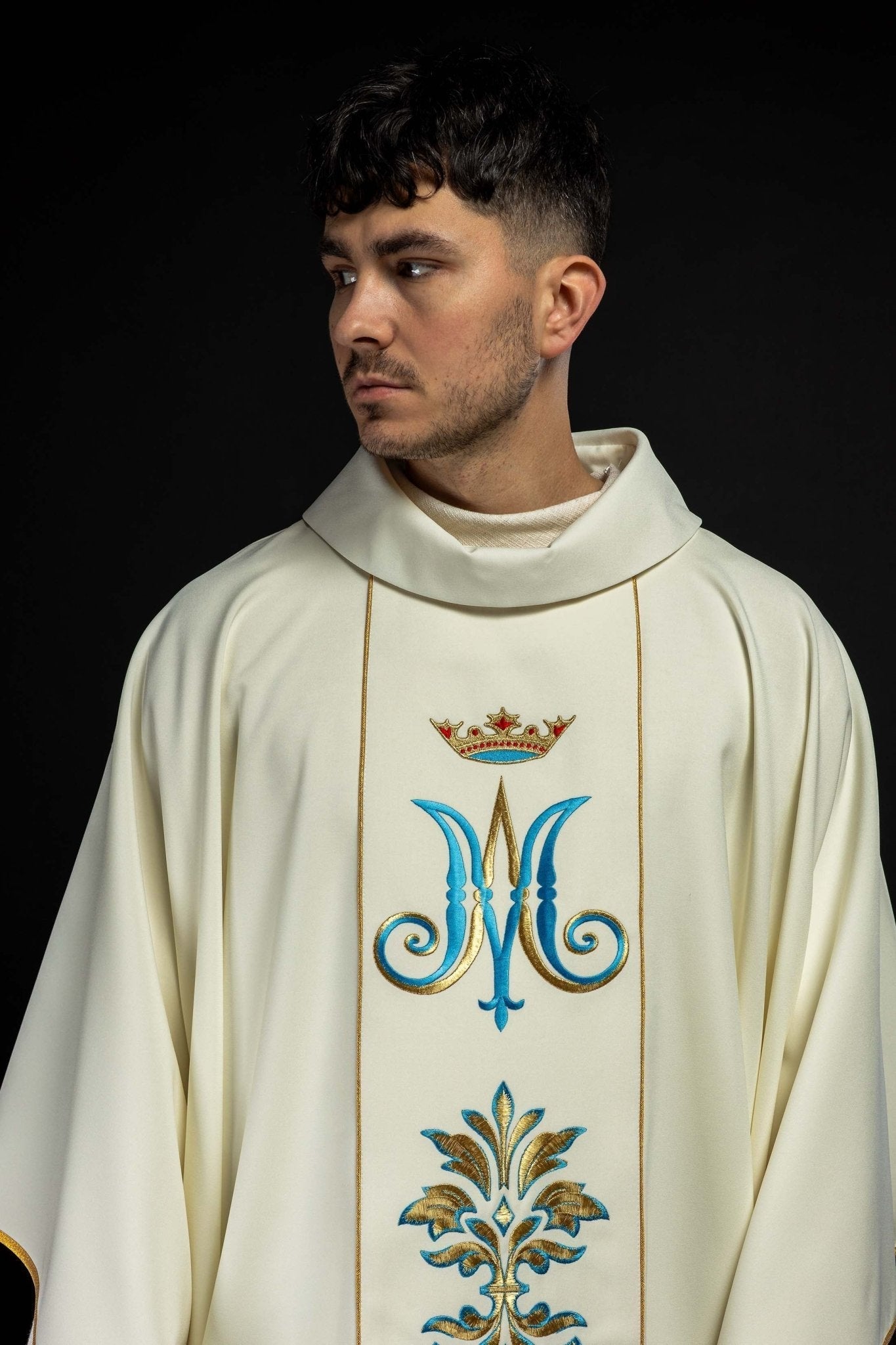
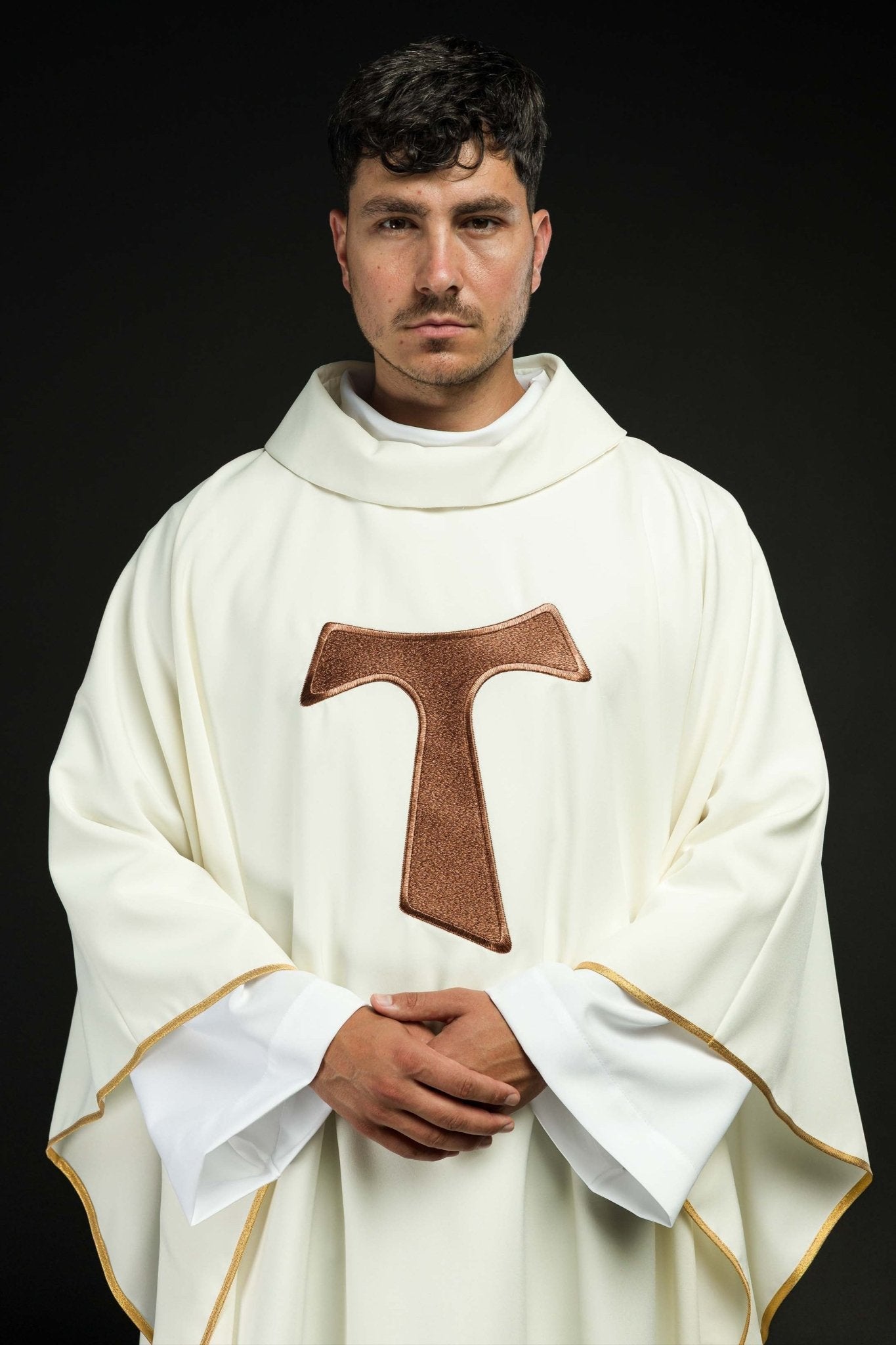
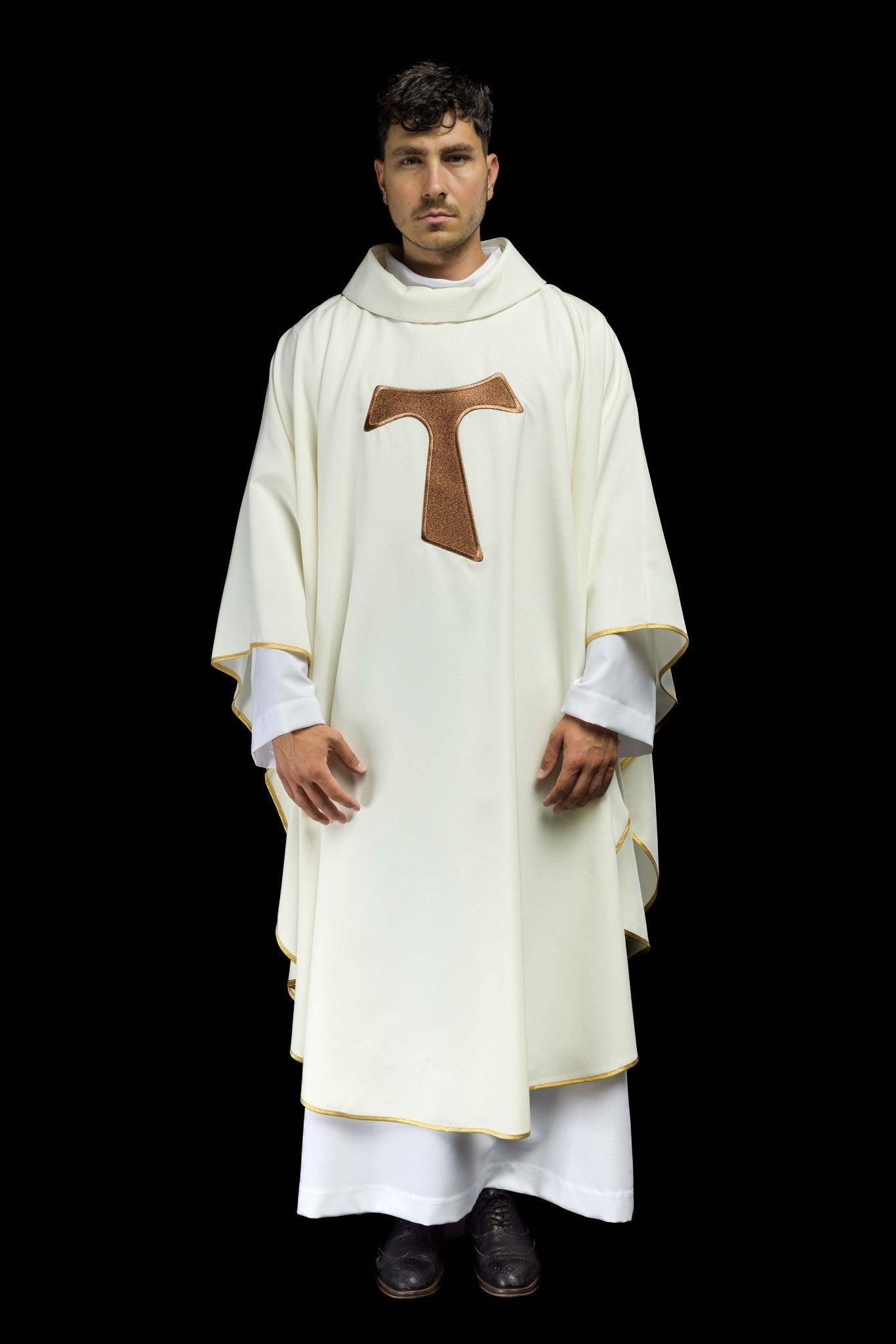
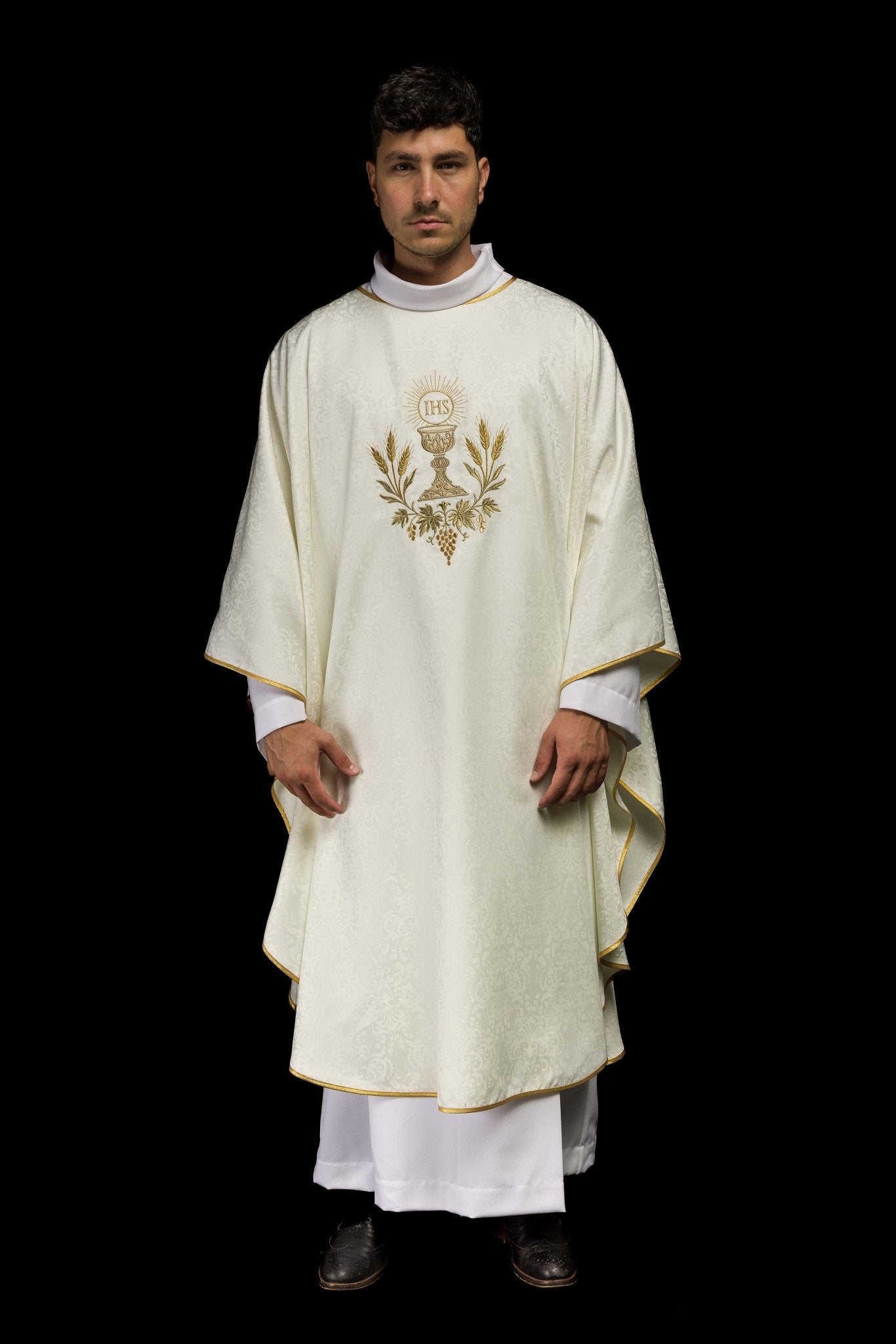
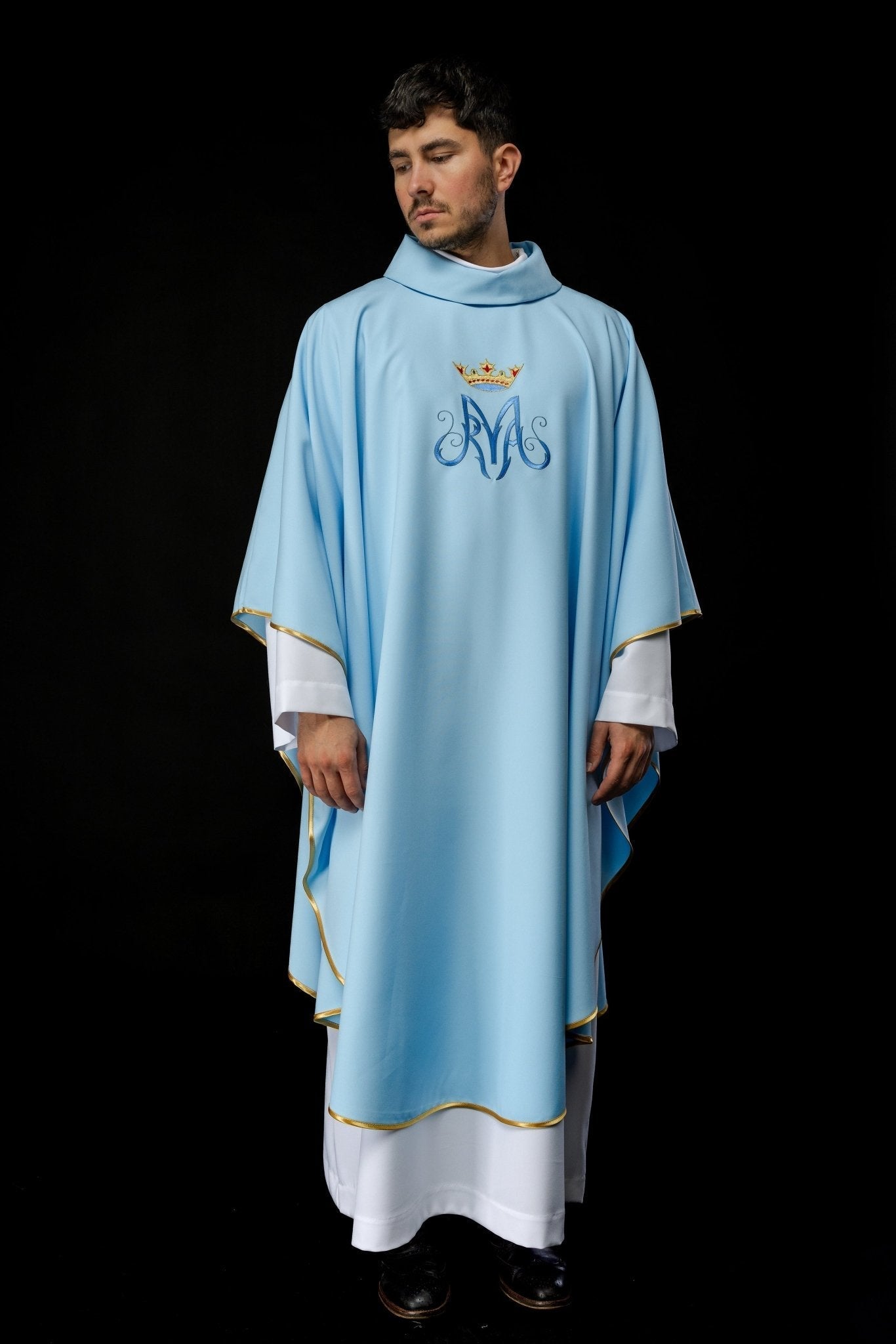
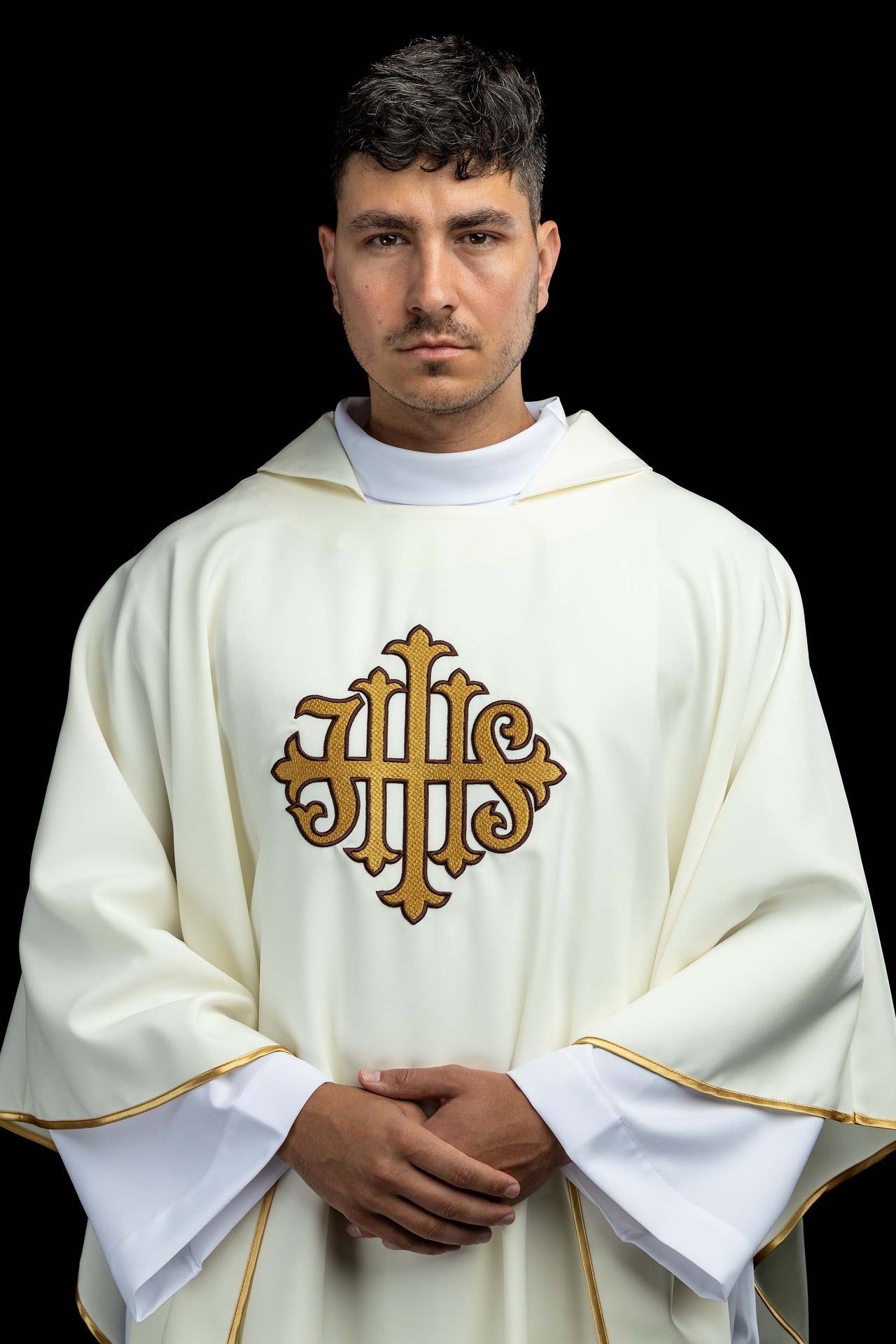
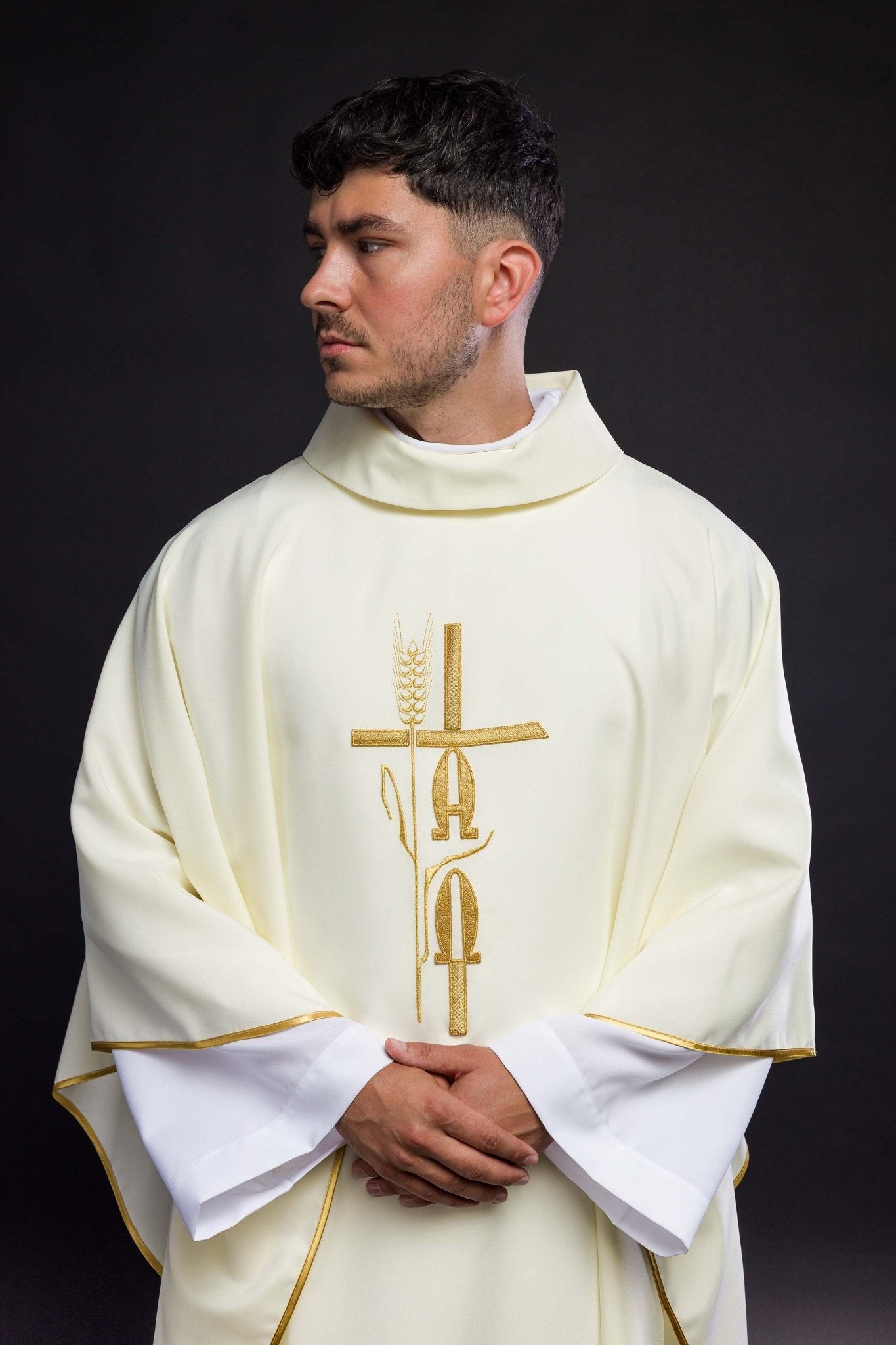
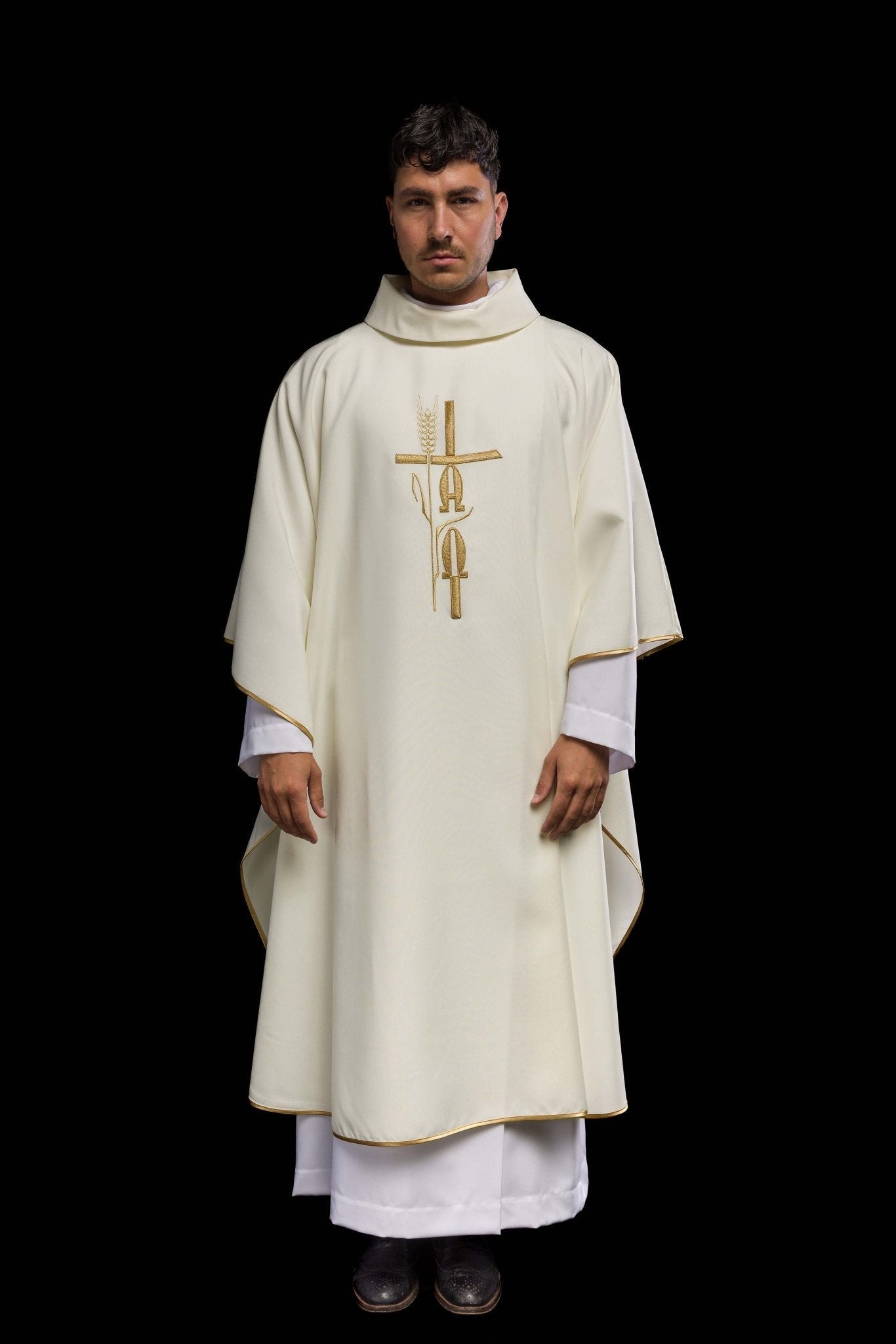
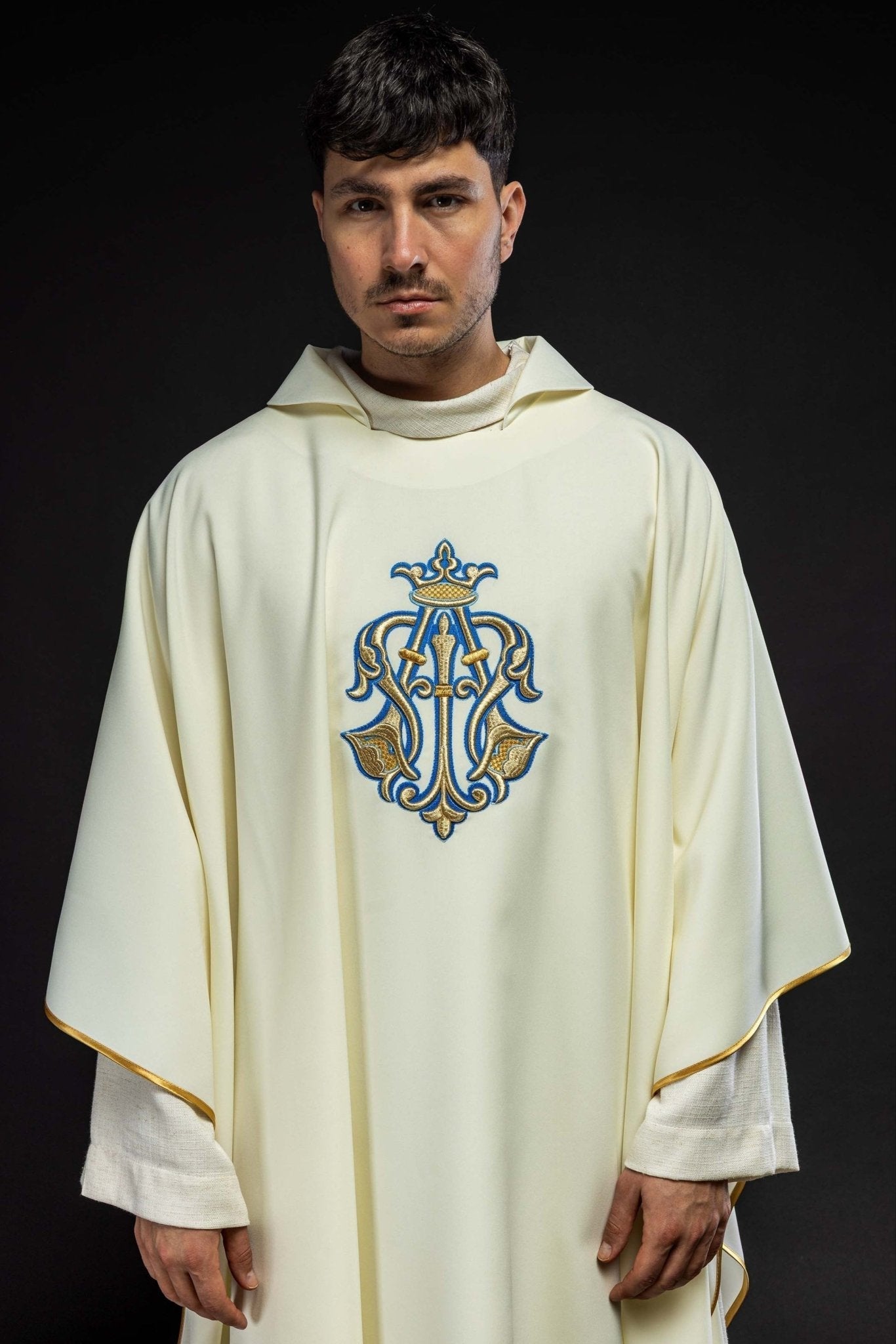
White represents purity, joy, and glory. White chasubles are worn during the Christmas and Easter seasons, on feasts of the Lord (except those relating to His Passion), feasts of the Blessed Virgin Mary, angels, and saints who were not martyrs, and also during the sacrament of baptism, symbolizing purity.
Violet/Purple Chasubles
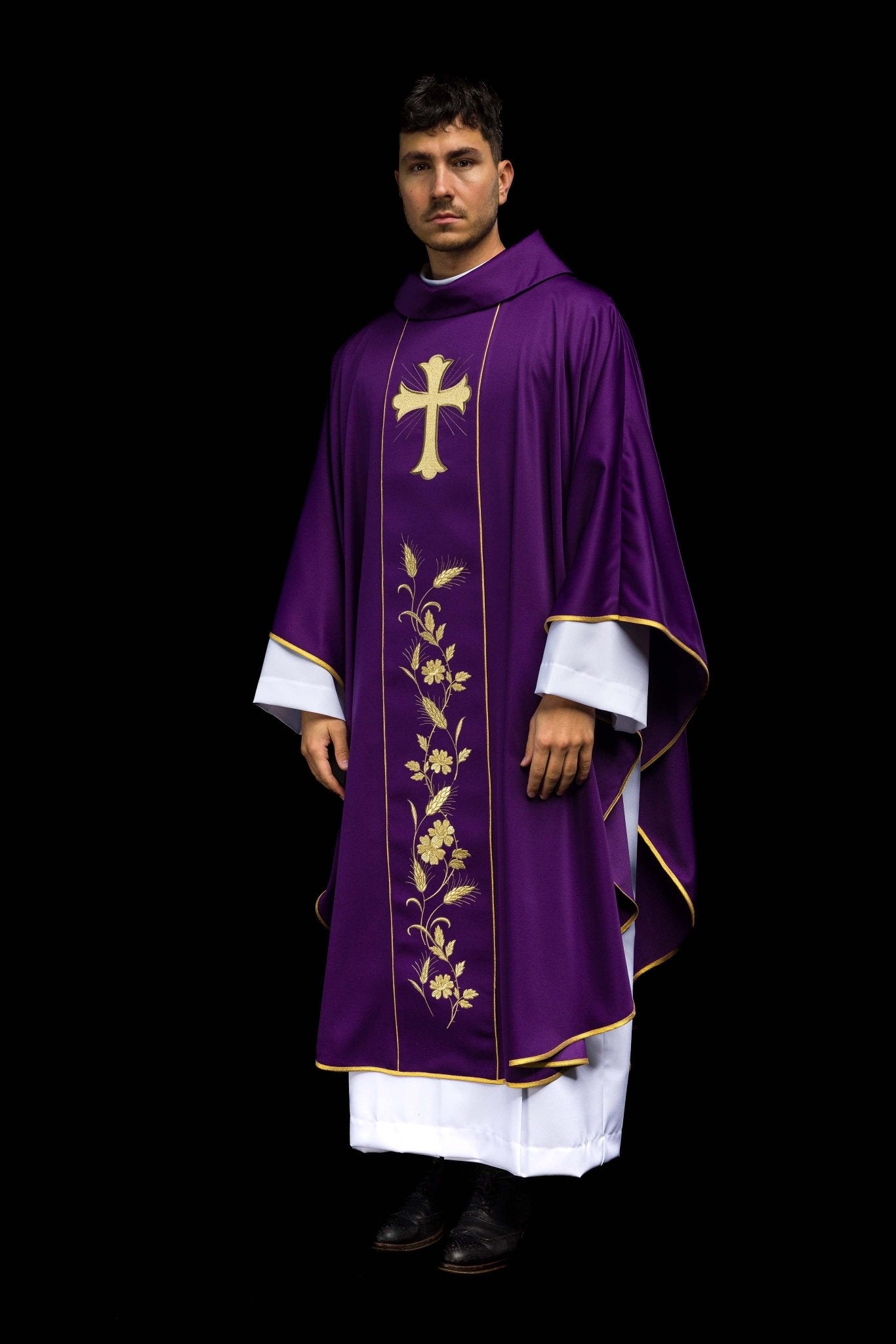
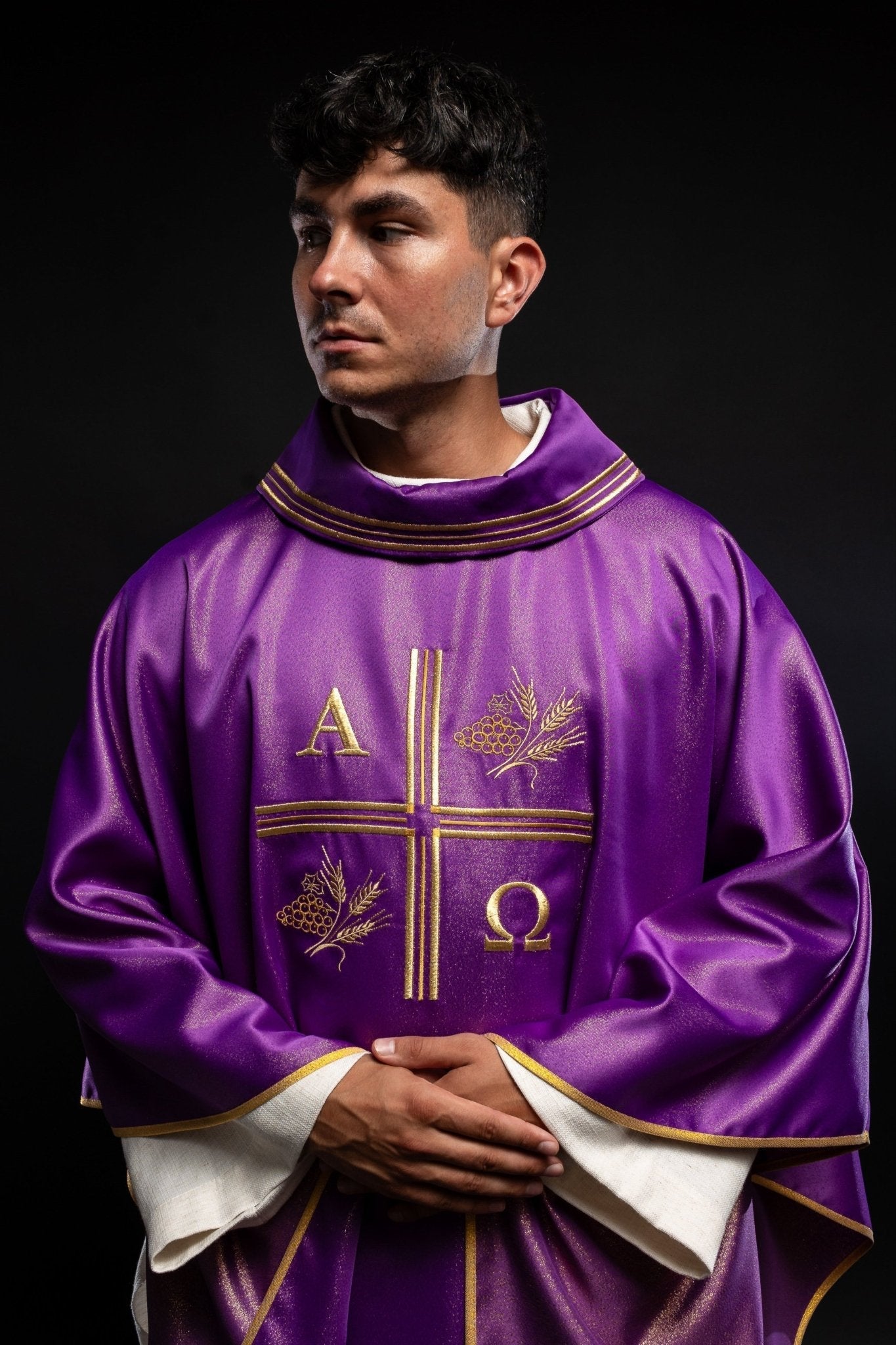
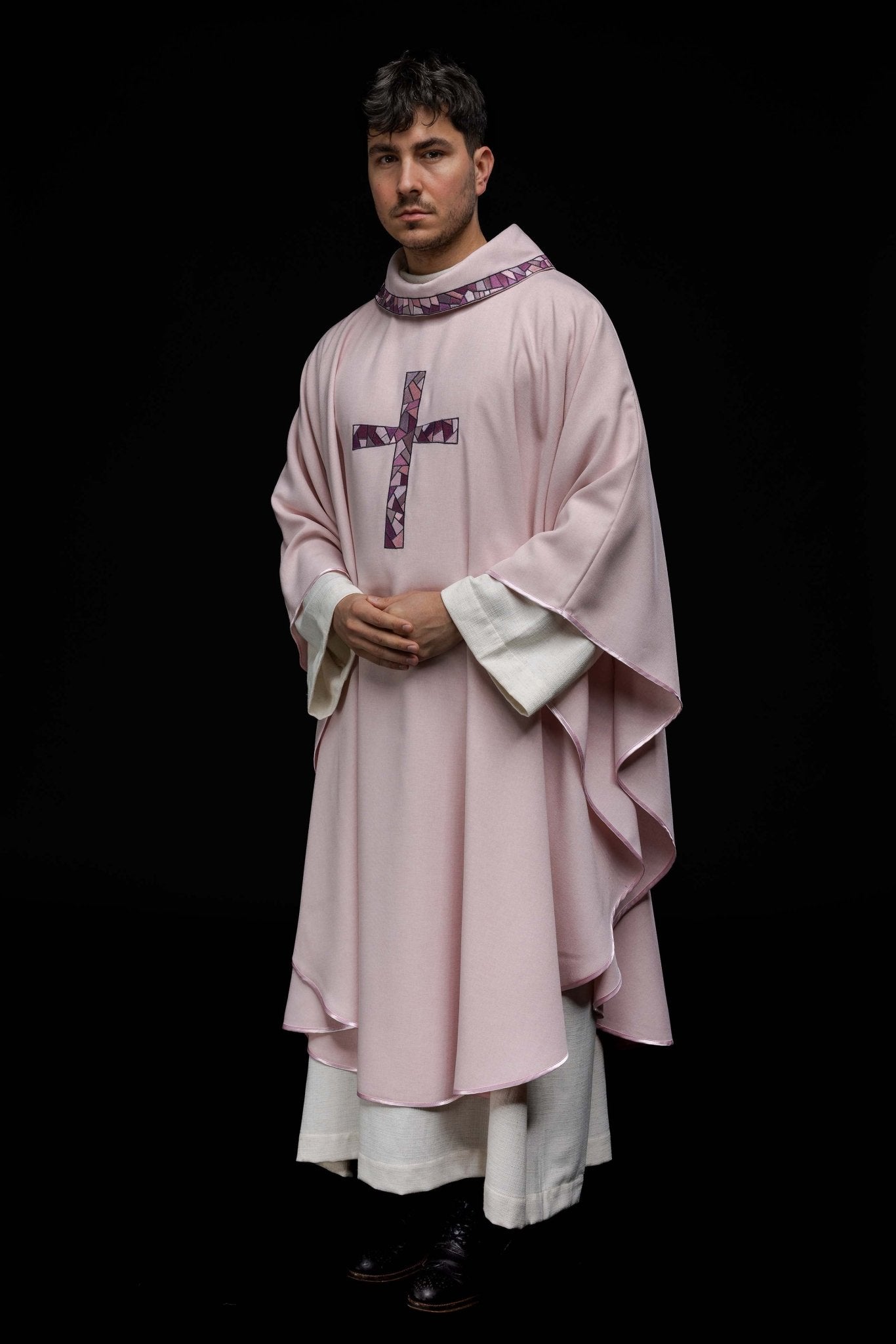
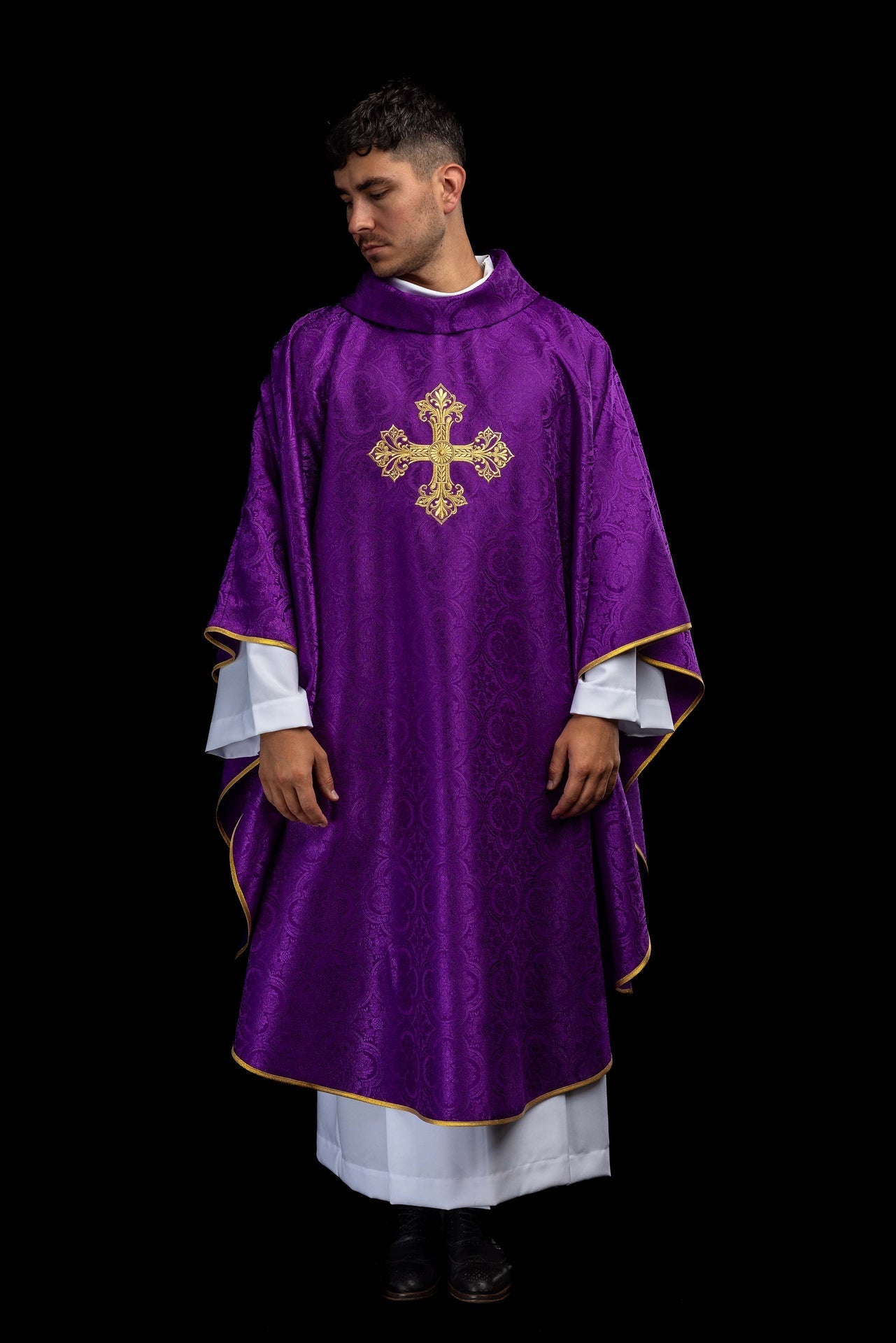
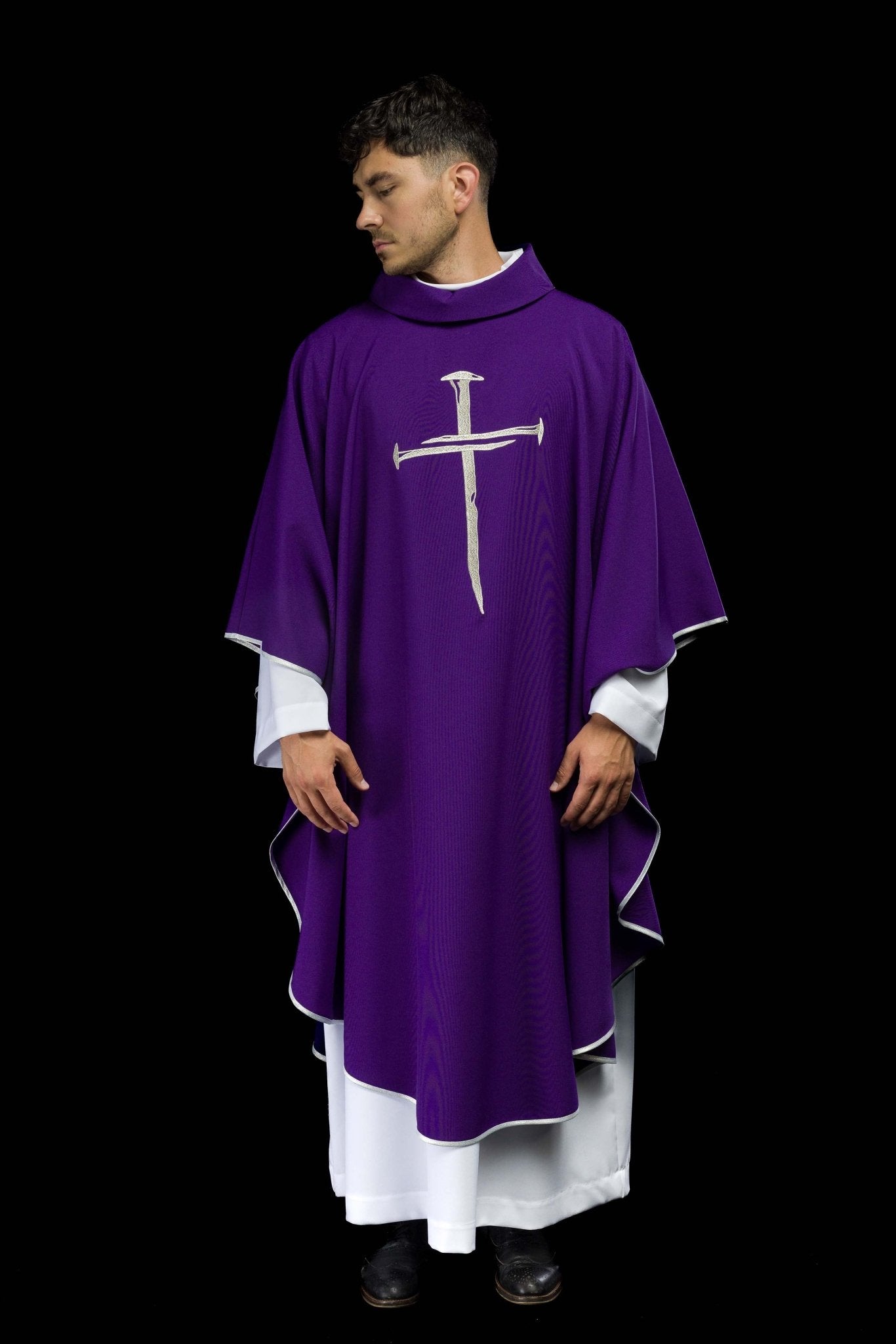
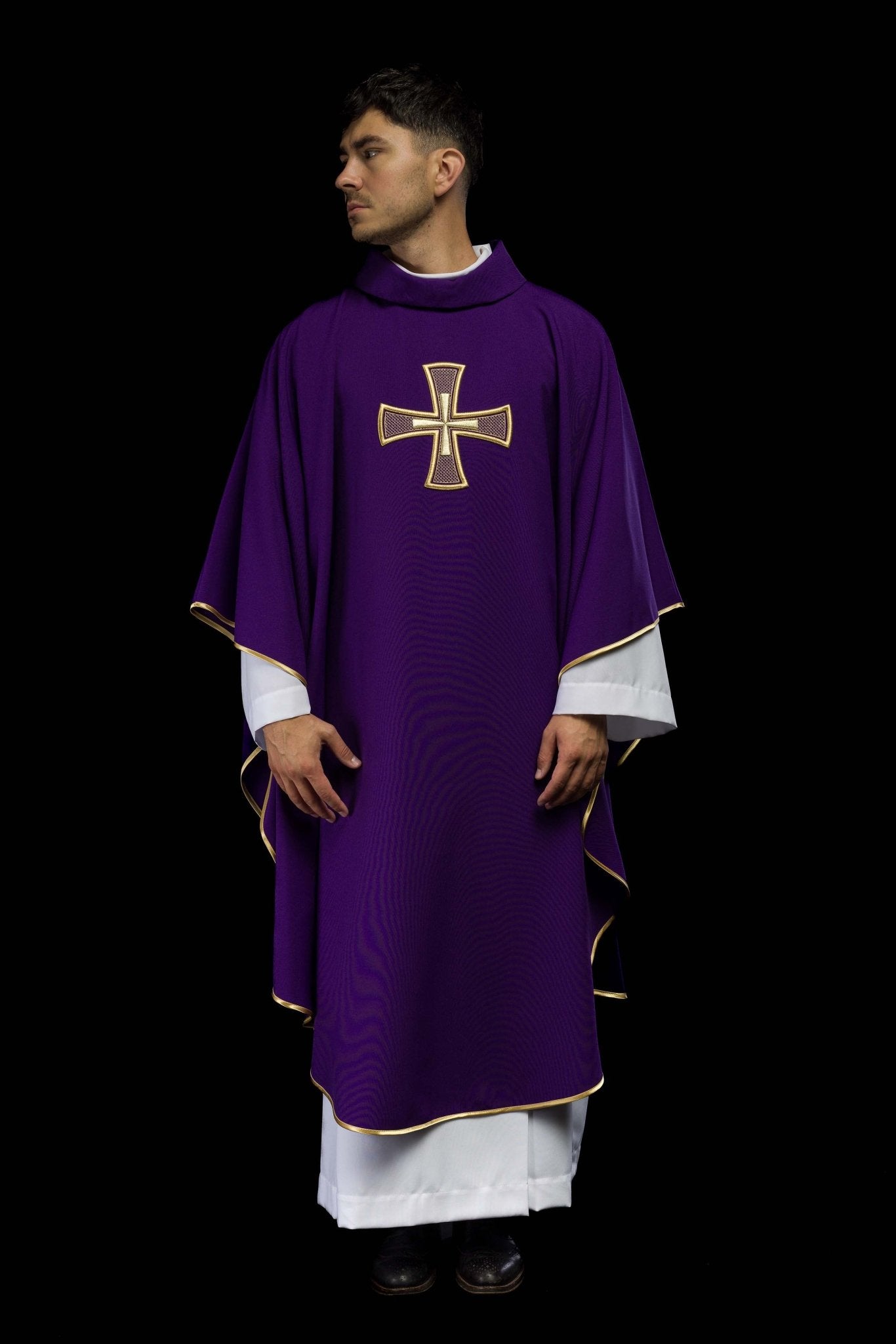
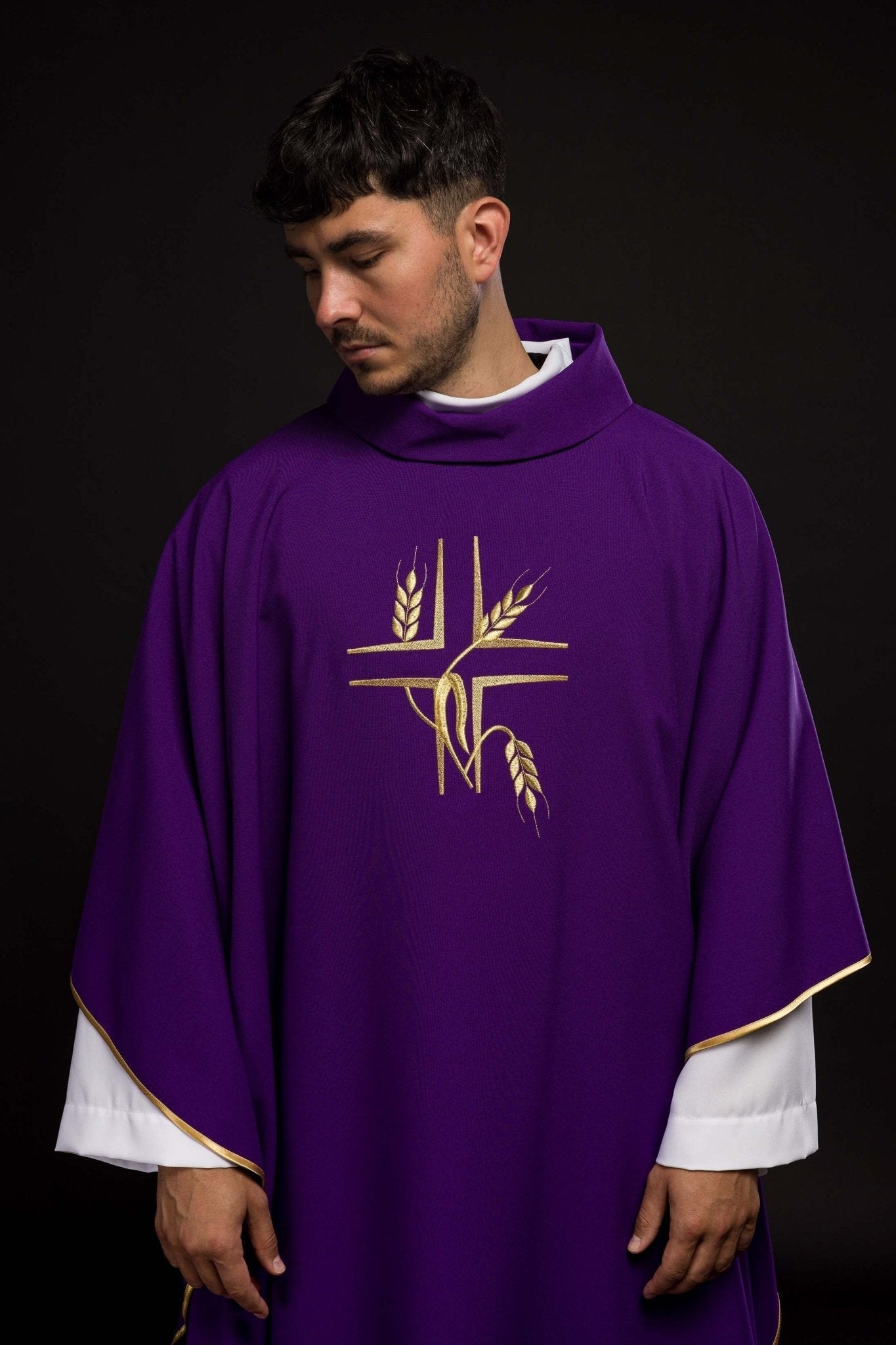
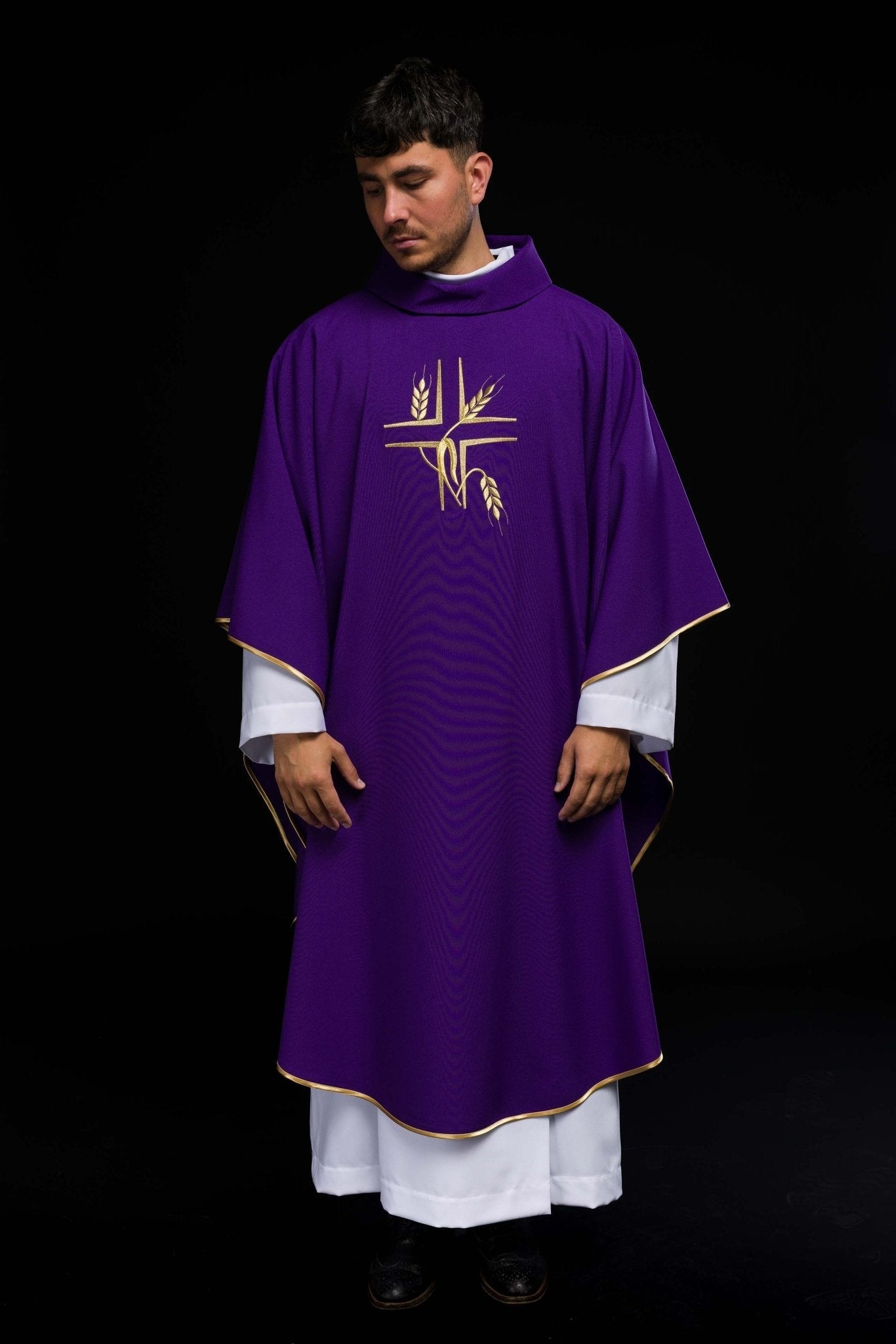
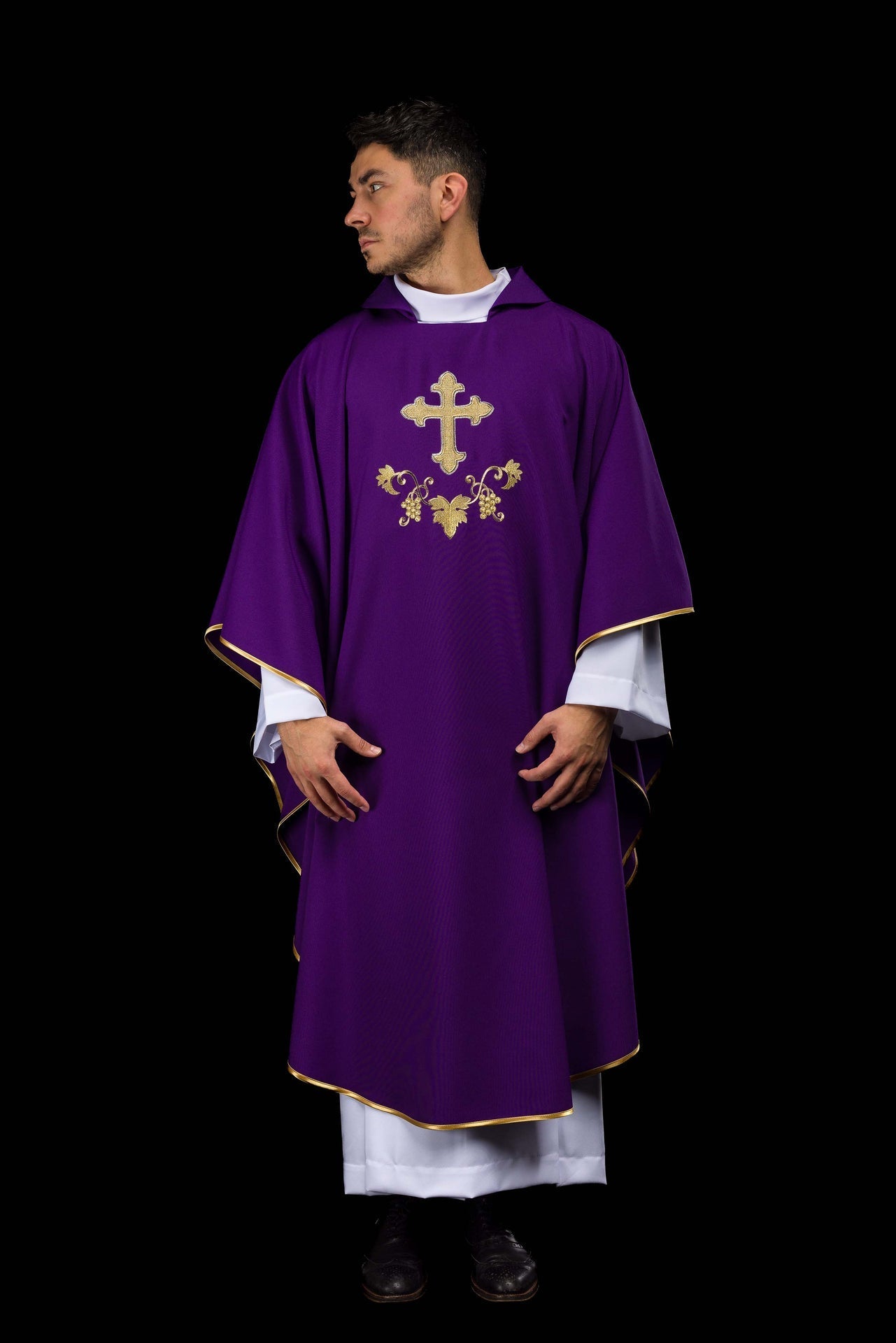
Violet or purple symbolizes penance, humility, and preparation. Violet chasubles are worn during Advent and Lent, seasons of reflection and spiritual renewal. They may also be worn during Requiem Masses (funerals).
Rose Chasubles
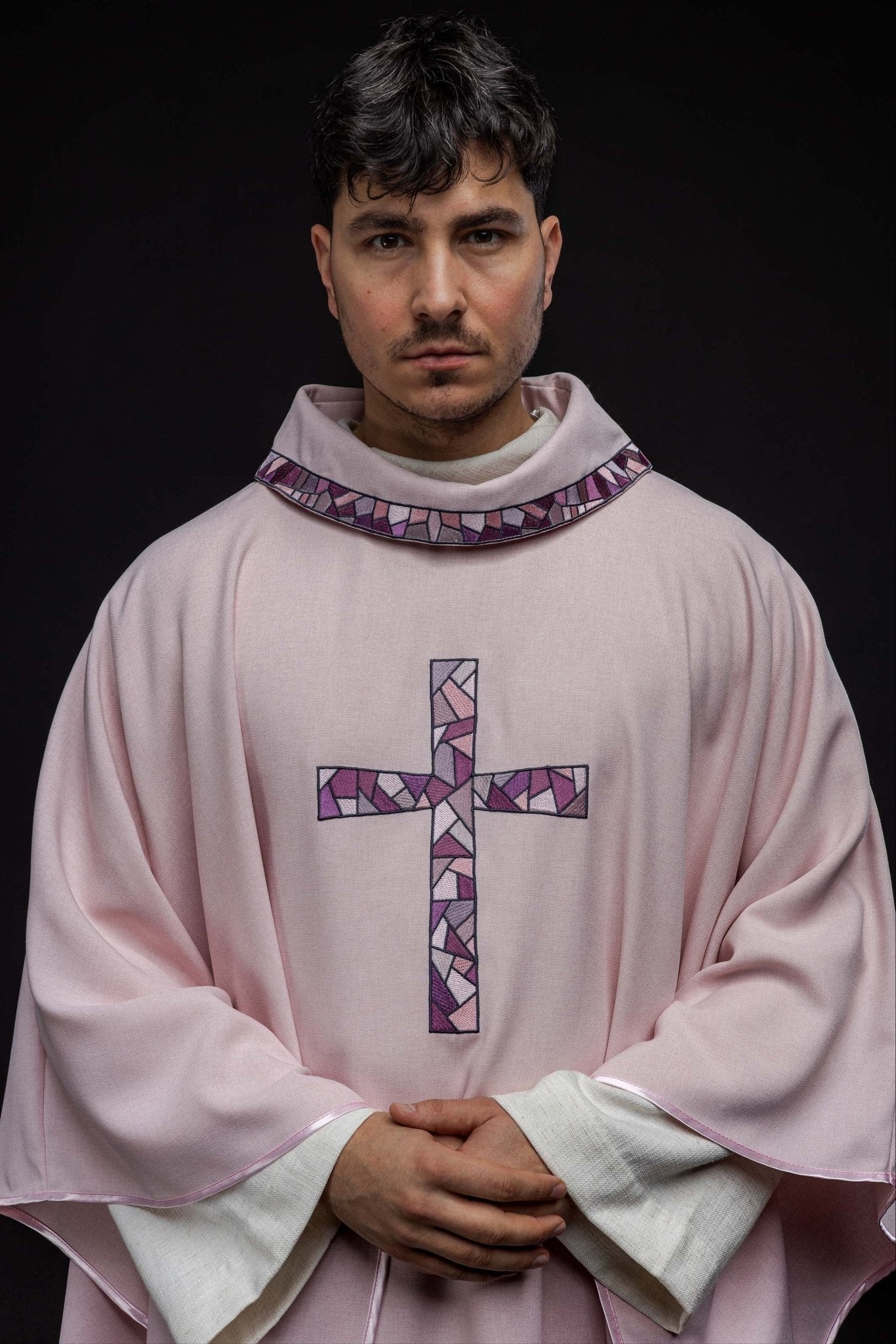
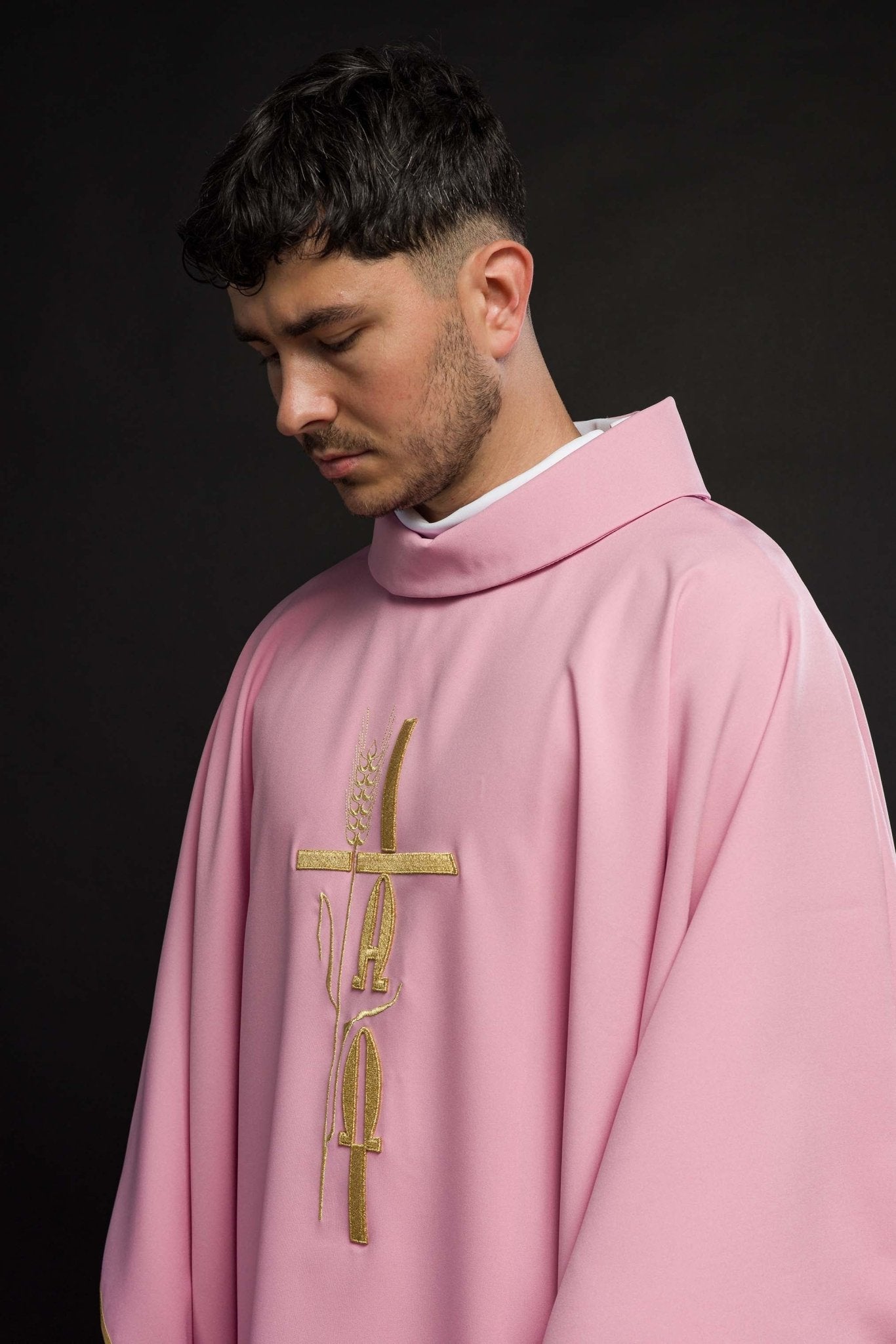
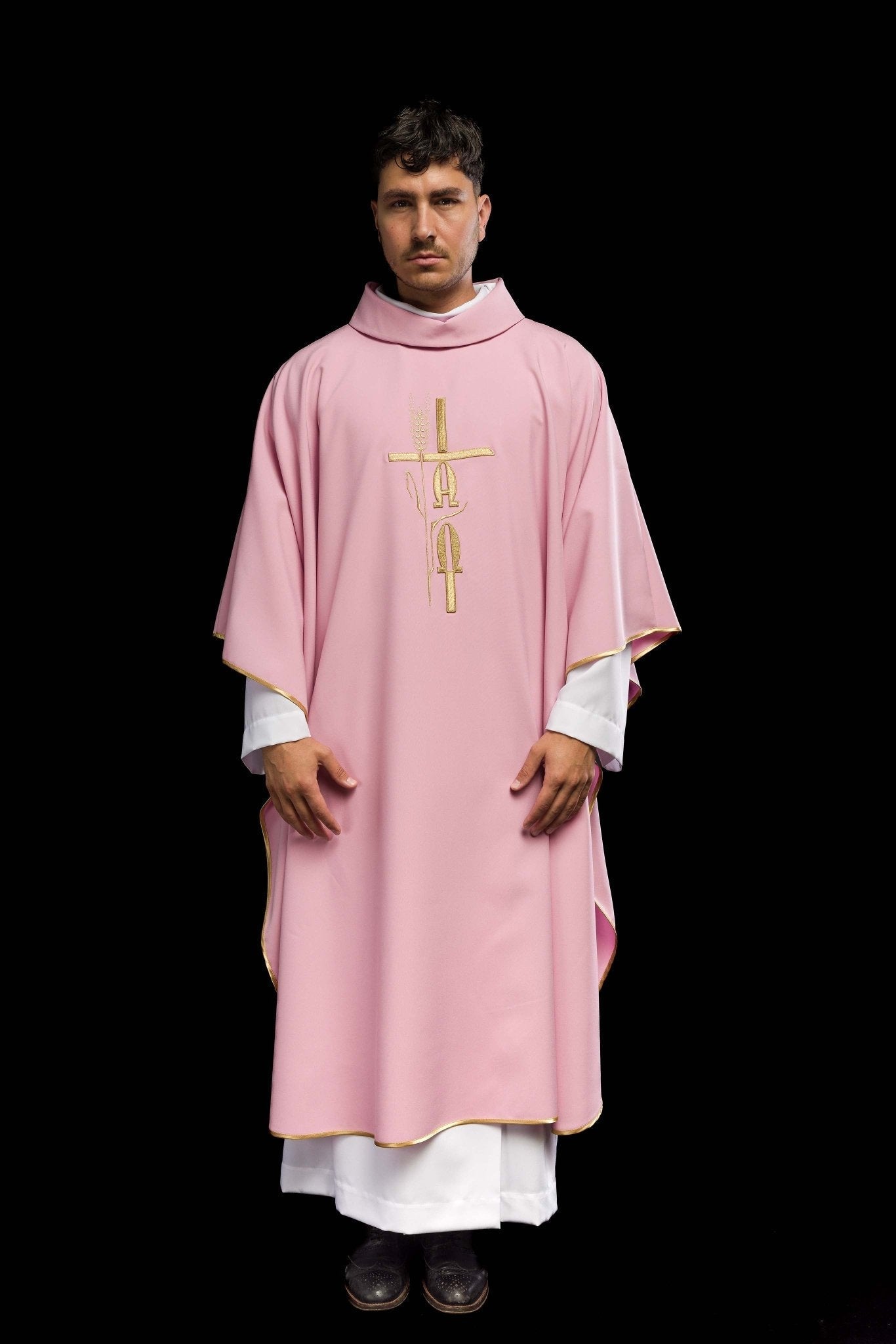
Rose is a color of joy and anticipation, used on Gaudete Sunday (the third Sunday of Advent) and Laetare Sunday (the fourth Sunday of Lent) to mark a pause in the penitential seasons and anticipate the coming feasts of Christmas and Easter.
Black Chasubles
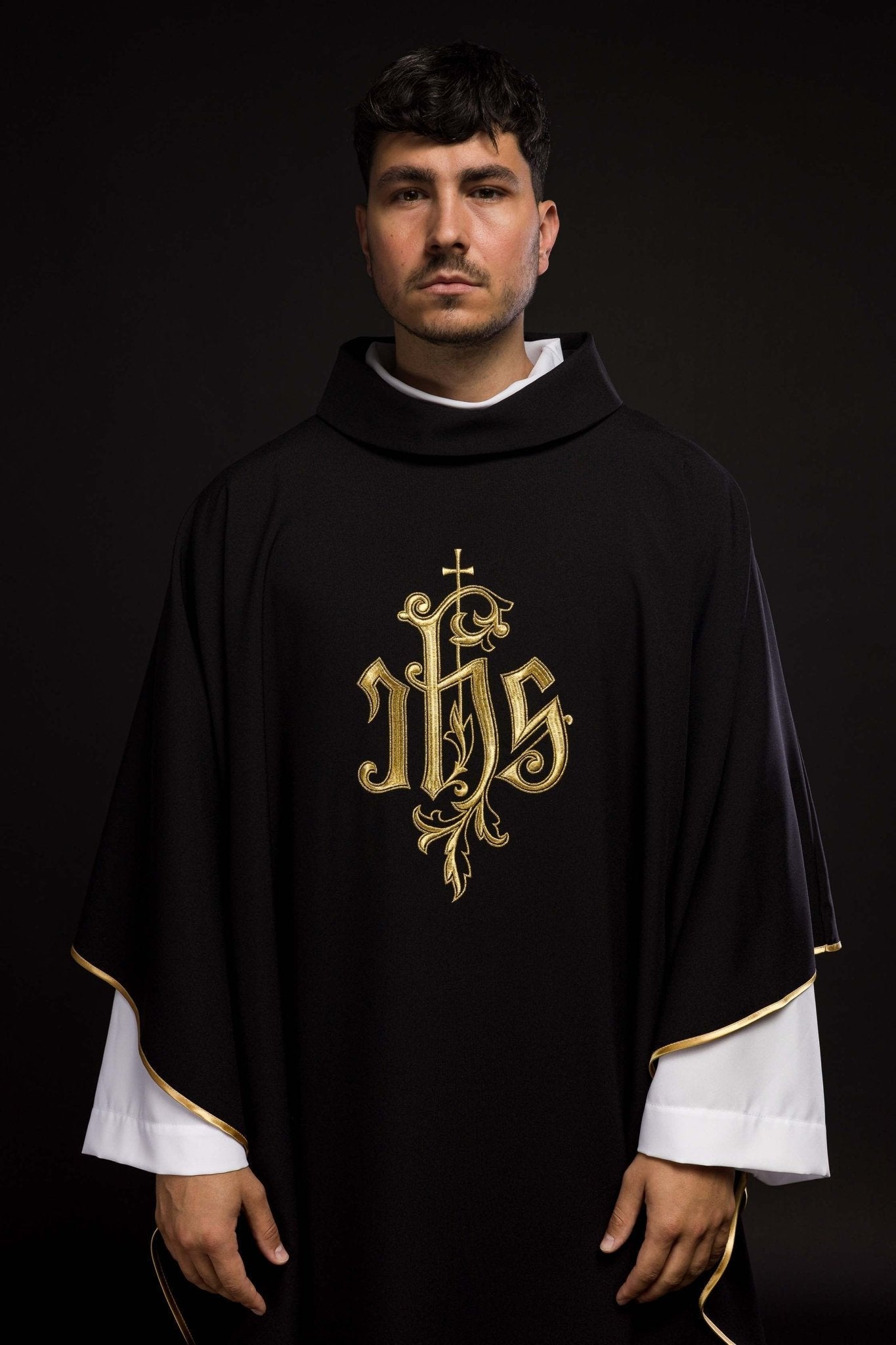
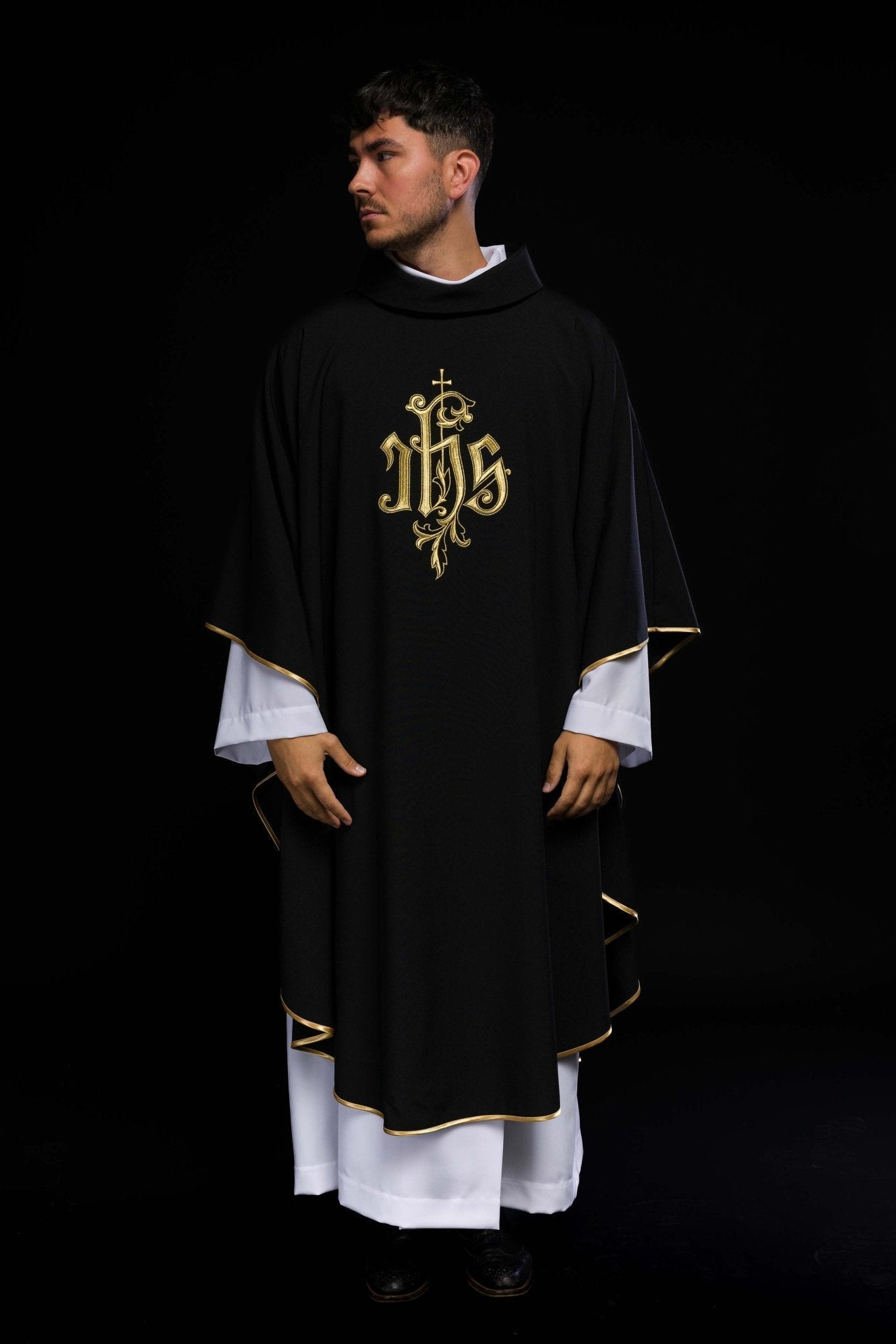
Black is traditionally associated with mourning and remembrance. Black chasubles may be worn during Requiem Masses, although violet is now more commonly used.
Gold Chasubles
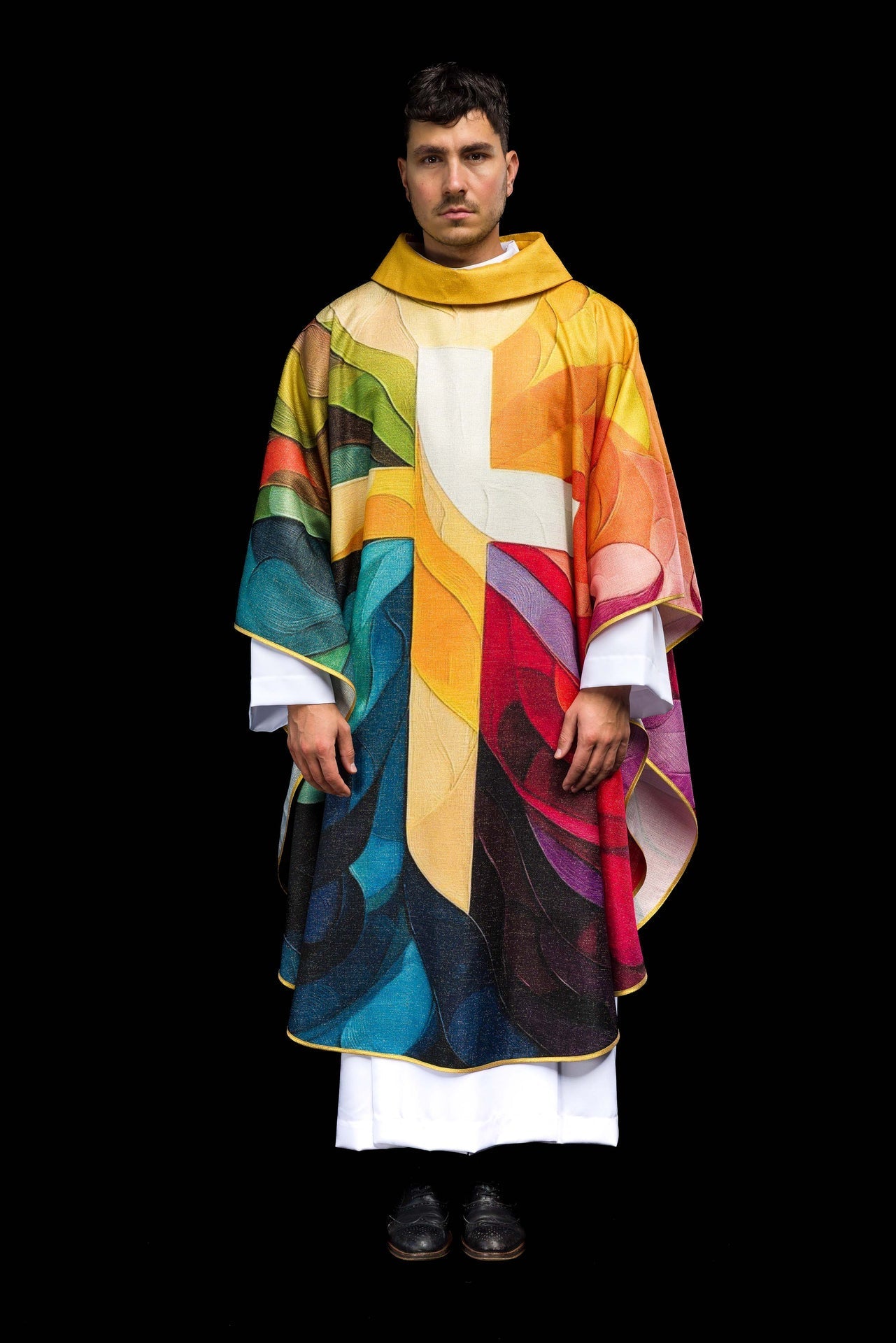
Gold can be used as a festive alternative to white, red, or green, signifying solemnity and celebration on major feasts.
Types of Chasubles: Gothic vs. Roman
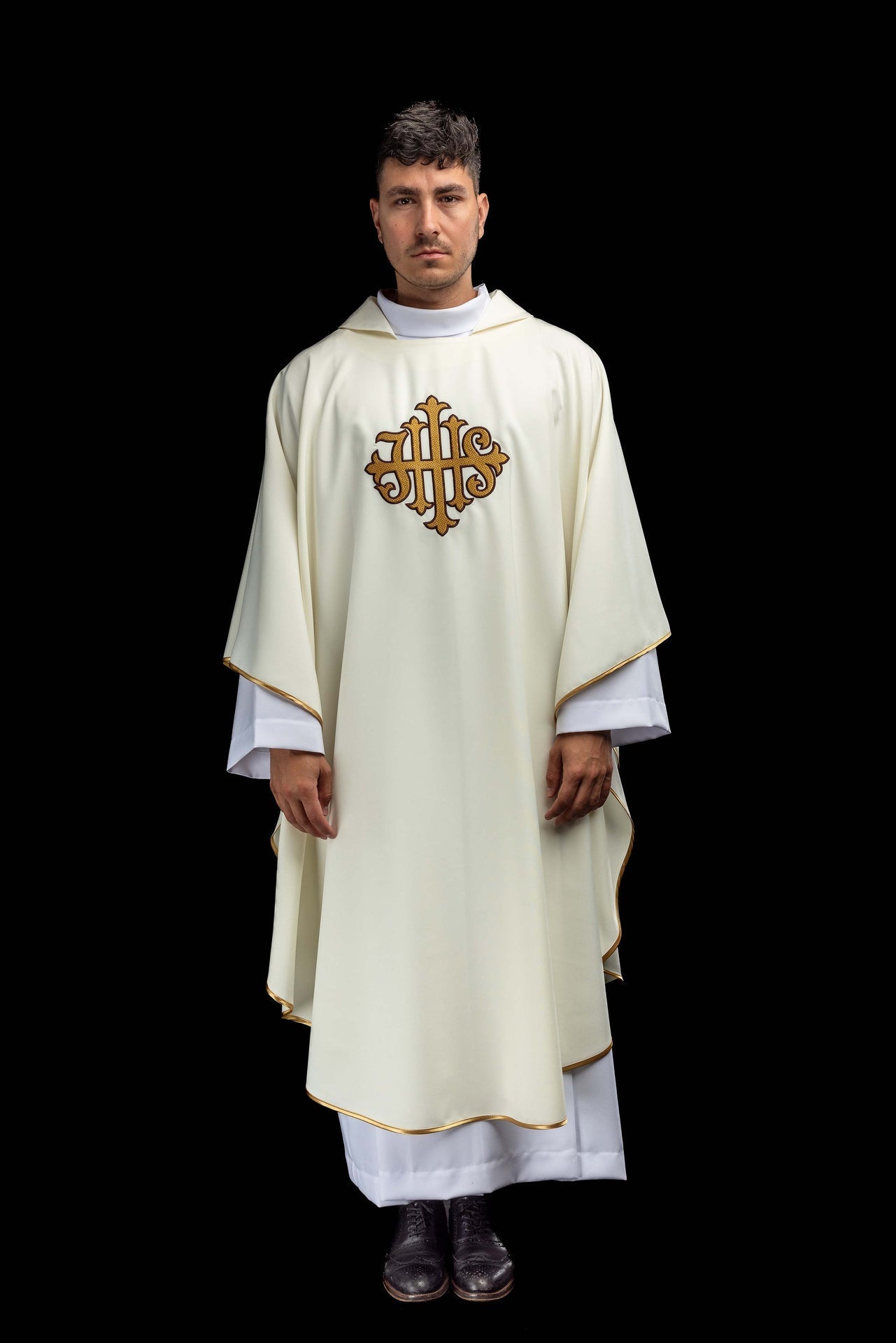
Priest chasubles serve as both functional and symbolic vestments during worship, playing a vital role in religious ceremonies. Vestments serve to enhance the worship experience and represent the faith of both clergy and congregation. Chasubles can be categorized by their design, including bell-shaped, fiddleback (Roman), and Gothic styles. The bell-shaped chasuble features a rounded, flowing silhouette; the fiddleback, or Roman chasuble, is known for its structured, ornate shape with a cutaway front; and the Gothic chasuble is characterized by its ample, pointed form and graceful drape. Each design serves to reflect distinct historical and aesthetic traditions within the Church.
Gothic Chasubles
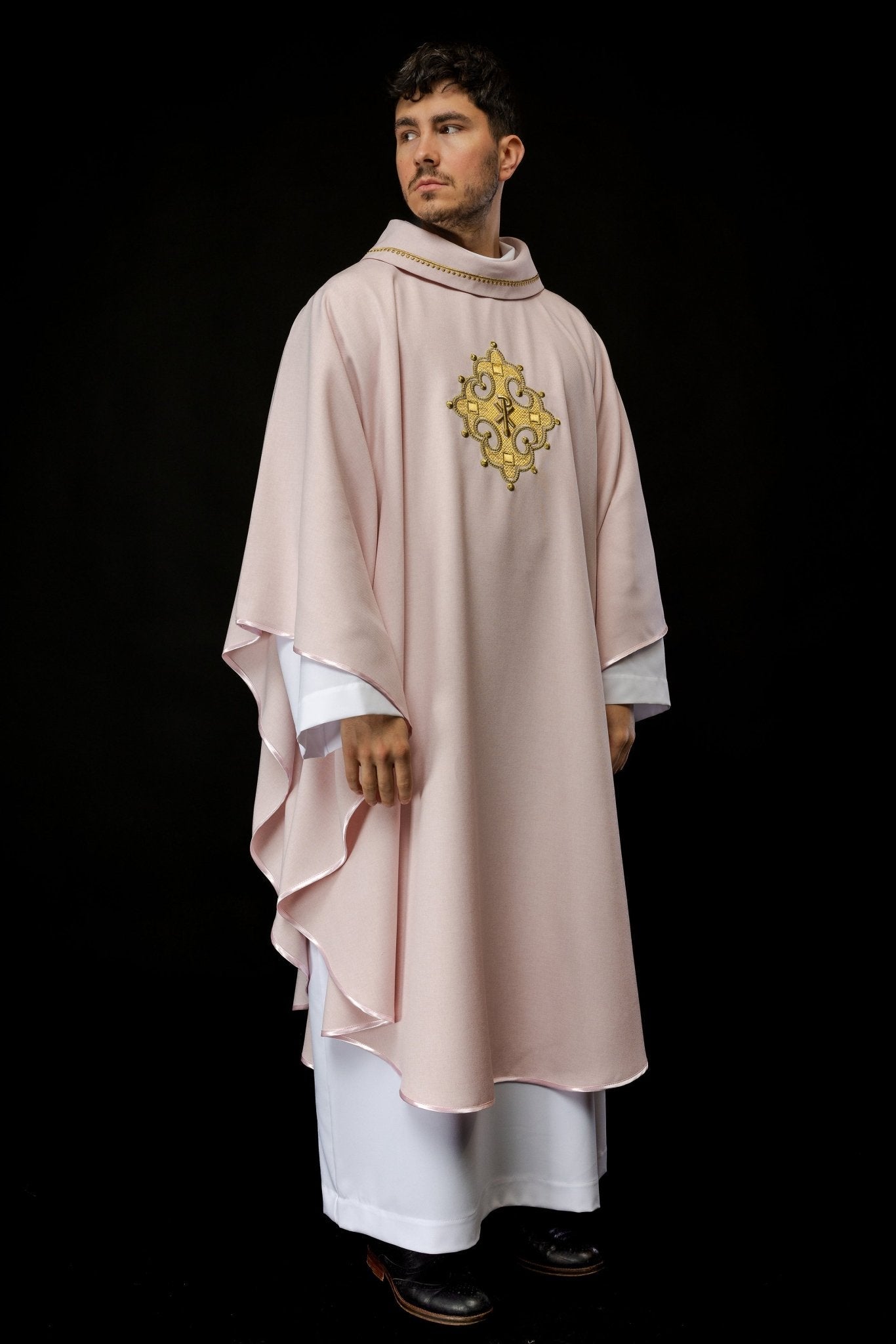
Gothic chasubles are characterized by their fuller, more ample shape, often extending to the wrists and ankles. This style provides a more flowing and dignified appearance. Gothic chasubles typically feature wider orphreys and more elaborate embroidery, reflecting the ornate artistic styles of the Middle Ages. They are often preferred for their traditional and majestic aesthetic.
Roman Chasubles
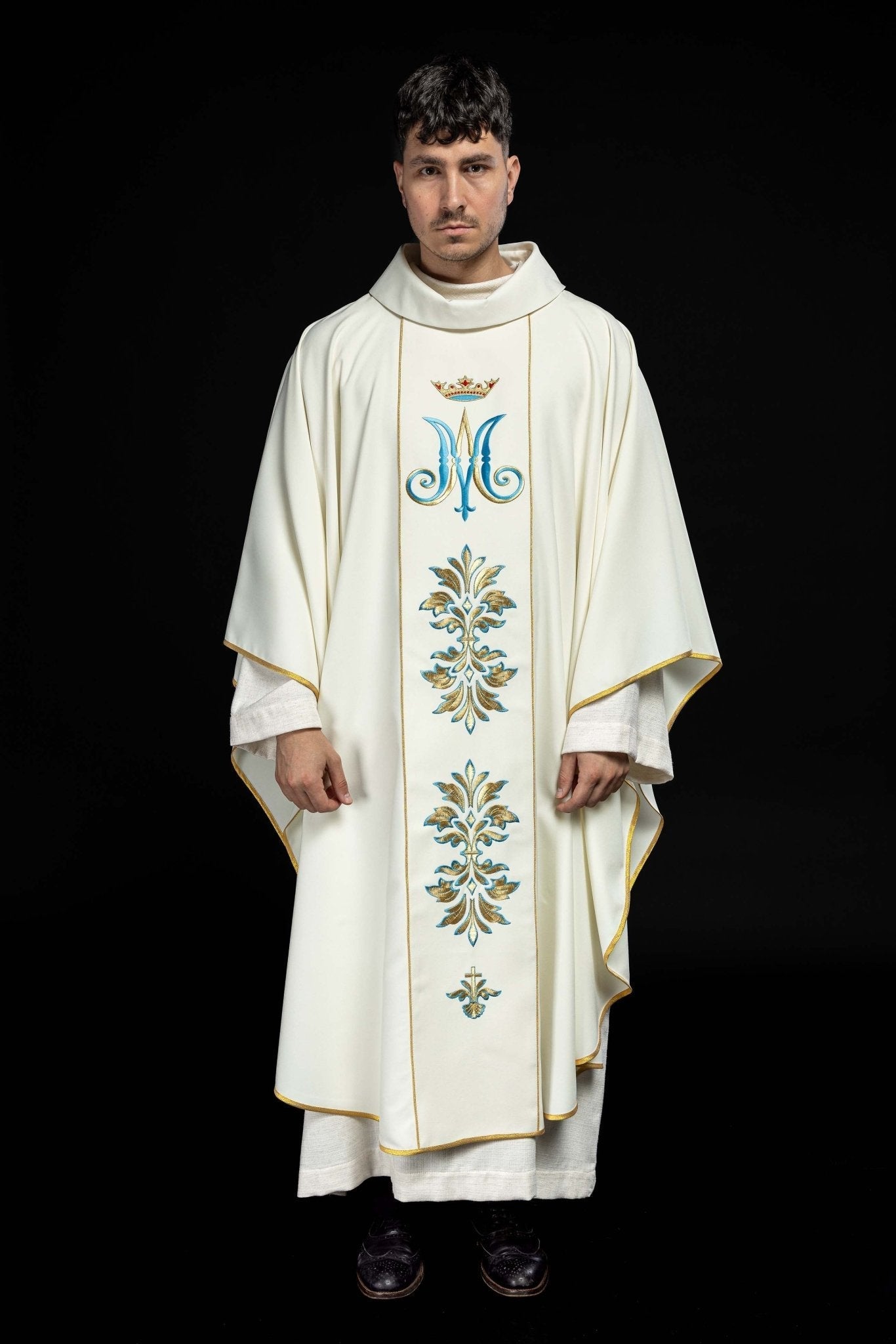
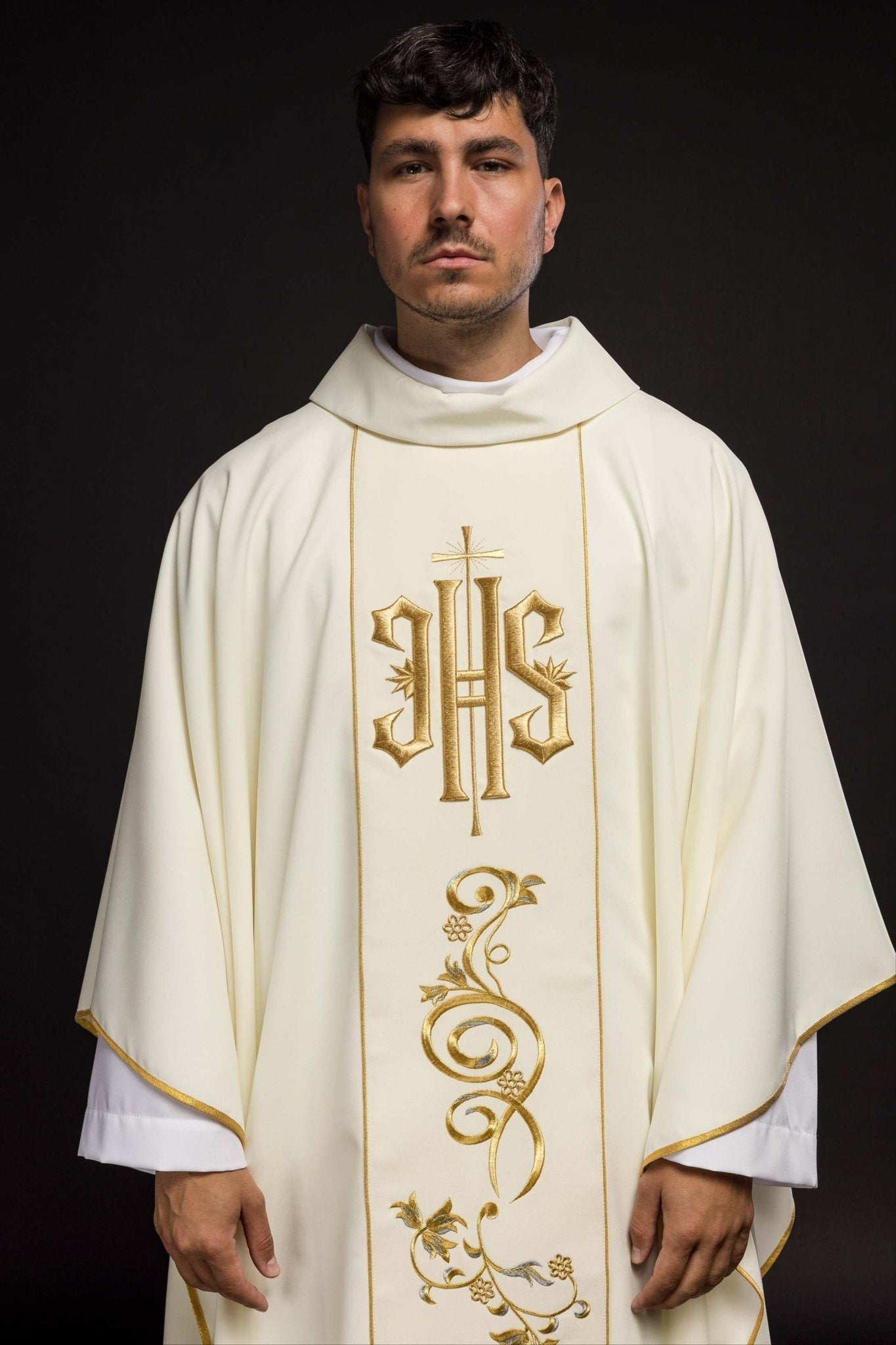
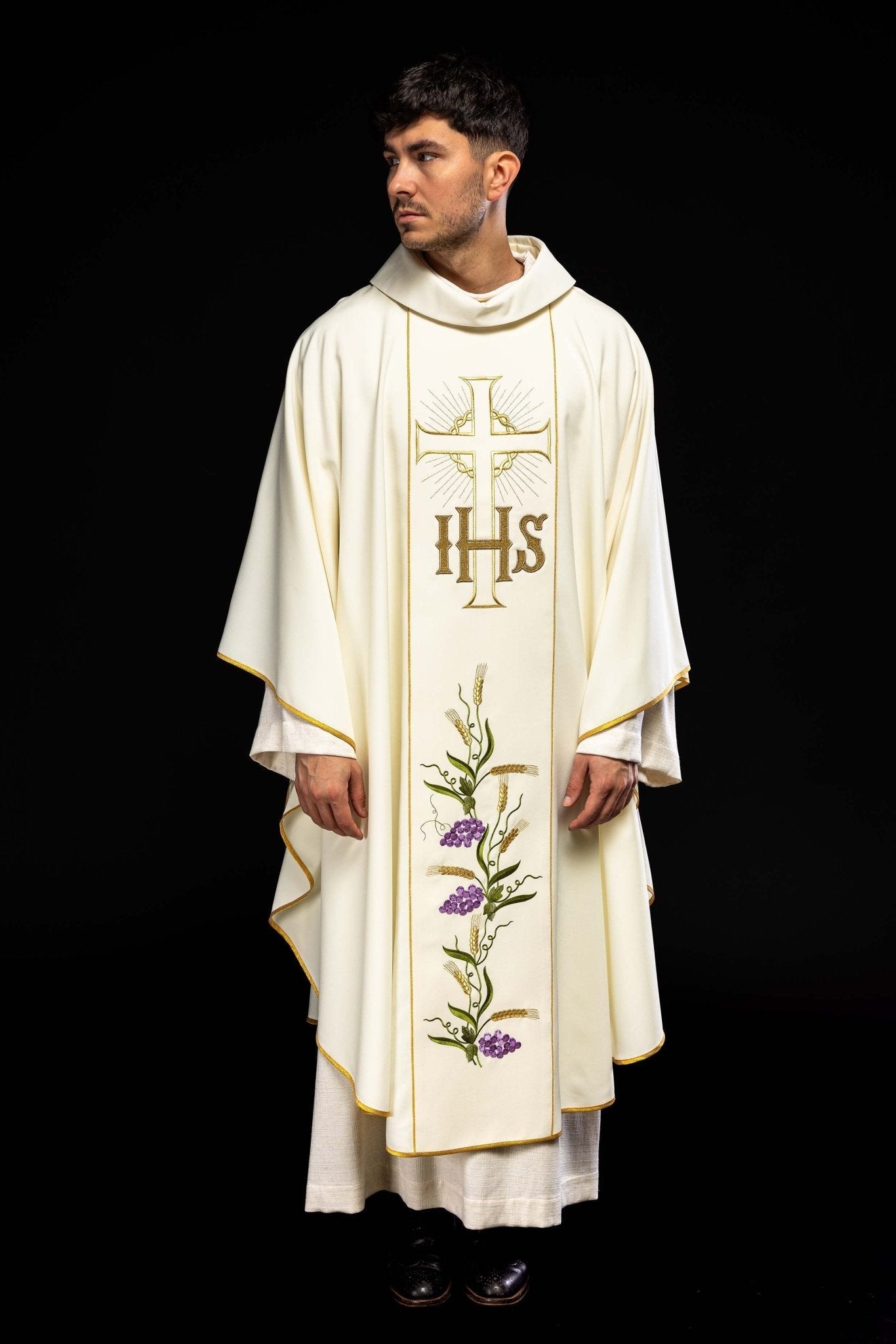
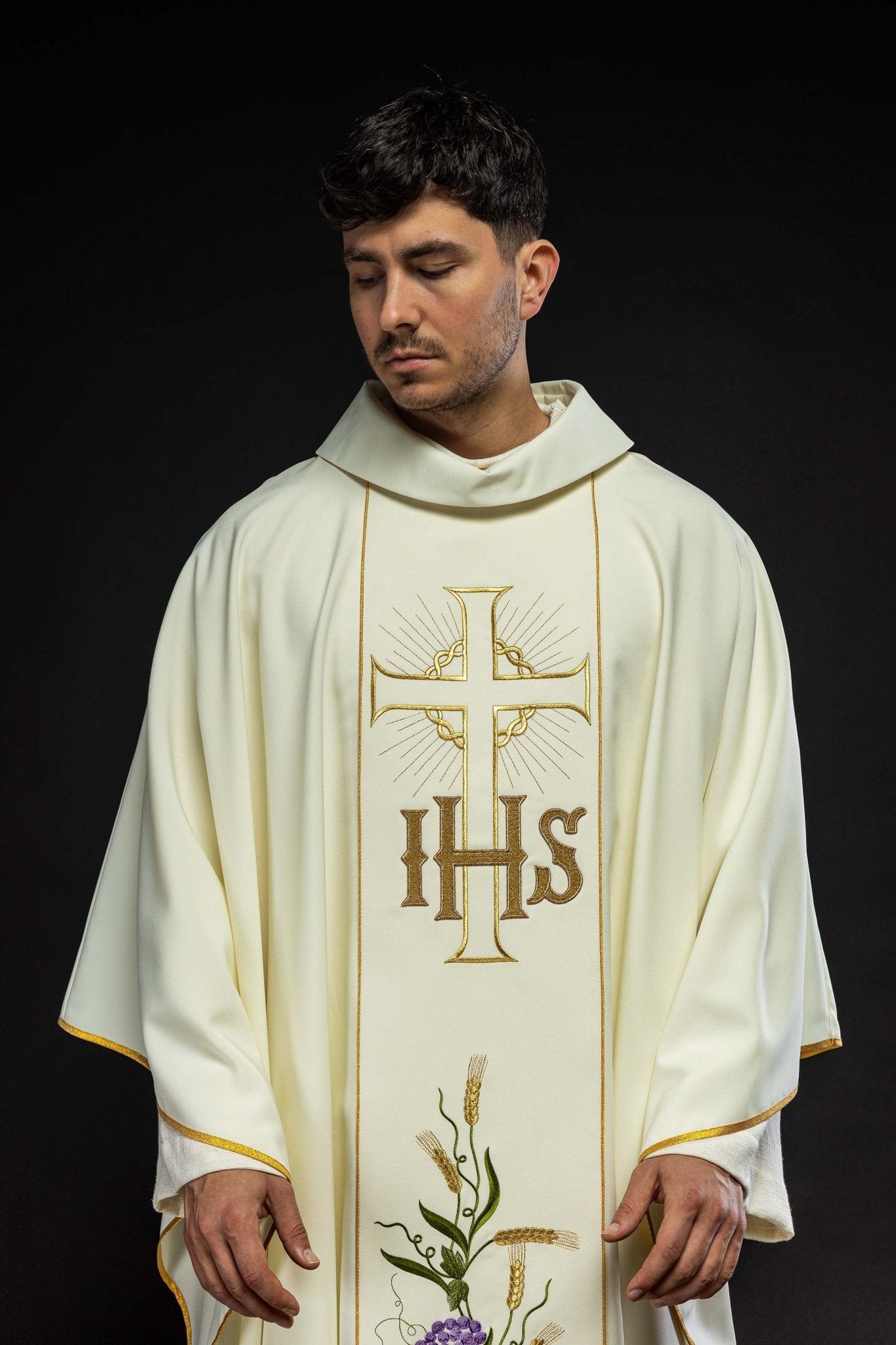
Roman chasubles are more streamlined and simplified in design, with a shorter length and less fabric. This style allows for greater freedom of movement and is often favored in warmer climates. Roman chasubles are typically characterized by ornate embroidery, frequently featuring symbols such as IHS and the Agnus Dei. There are two principal types of chasubles commonly recognized: the Roman and the French, with the Roman type being more ample and the French type often artificially stiffened. Roman chasubles typically have narrower orphreys and simpler ornamentation, reflecting a more classical and restrained aesthetic. They are often preferred for their practicality and elegance.
Materials Used in Chasuble Construction
Chasubles are crafted from a variety of fabrics, including polyester, silk, wool, cotton, and bamboo, each offering unique qualities for different seasons and occasions. Silk and brocade are often reserved for major celebrations due to their luxurious appearance and texture. Polyester chasubles are popular for their wrinkle resistance and ease of care, making them ideal for regular use throughout the liturgical year. Some chasubles are sewn or embroidered by machine, ensuring durability and consistency. The choice of material depends on the desired aesthetic, the liturgical season, and the budget.
Wool
Wool is a traditional and durable material that provides excellent drape and warmth. It is often used for Gothic chasubles and those intended for use in colder climates.
Silk
Silk is a luxurious and elegant fabric that offers a beautiful sheen and drape. It is often used for chasubles worn on solemn feasts and special occasions.
Linen
Linen is a lightweight and breathable fabric that is ideal for use in warmer climates. It provides a simple and natural look and is often used for chasubles worn during Ordinary Time.
Polyester
Polyester is a synthetic fabric that is durable, wrinkle-resistant, and easy to care for. It is a cost-effective option for chasubles that are used frequently.
Brocade
Brocade is a richly decorative fabric with woven patterns, often incorporating gold or silver threads. It is used for elaborate chasubles worn on major feasts.
Orphreys: Decorative Bands on Chasubles
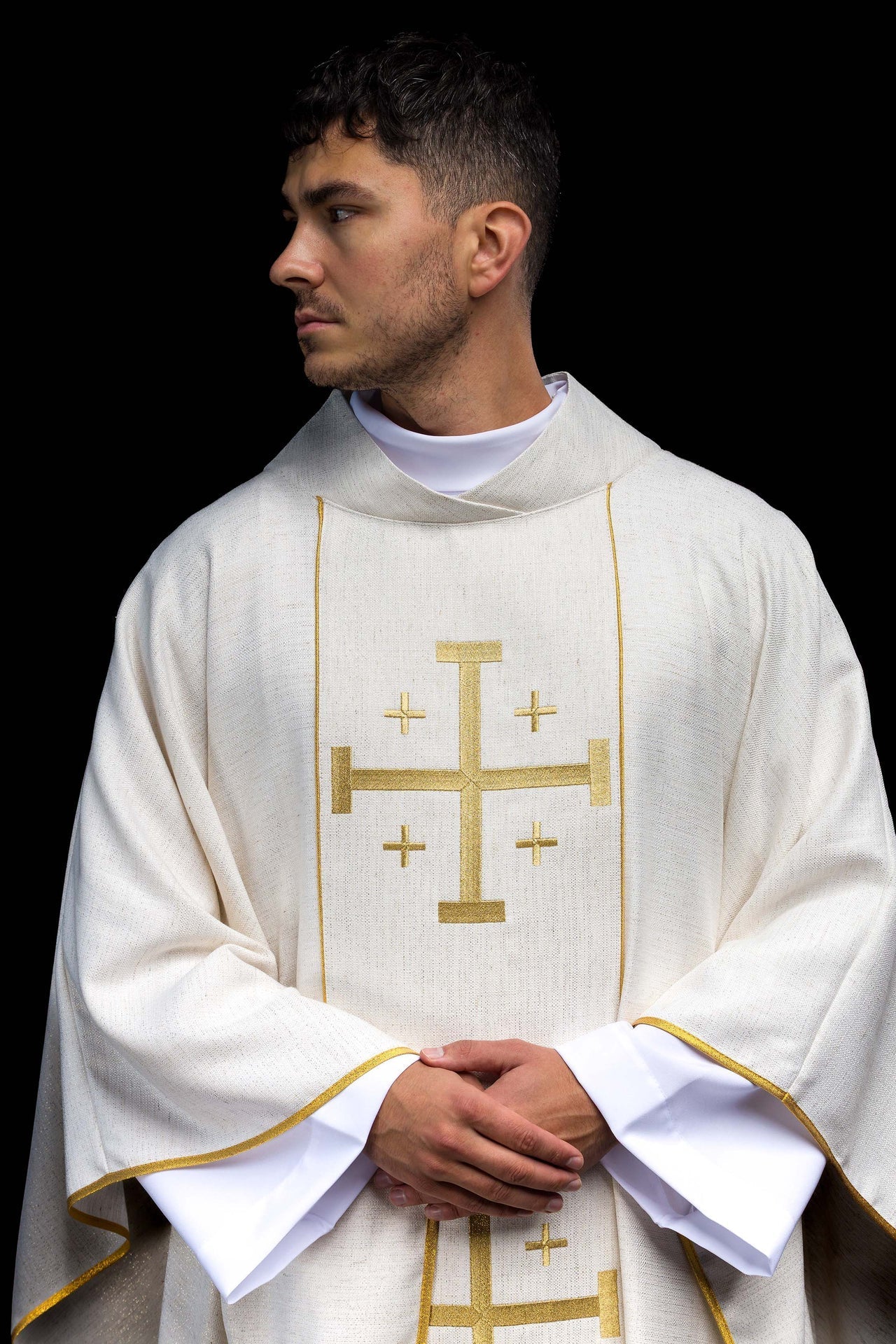
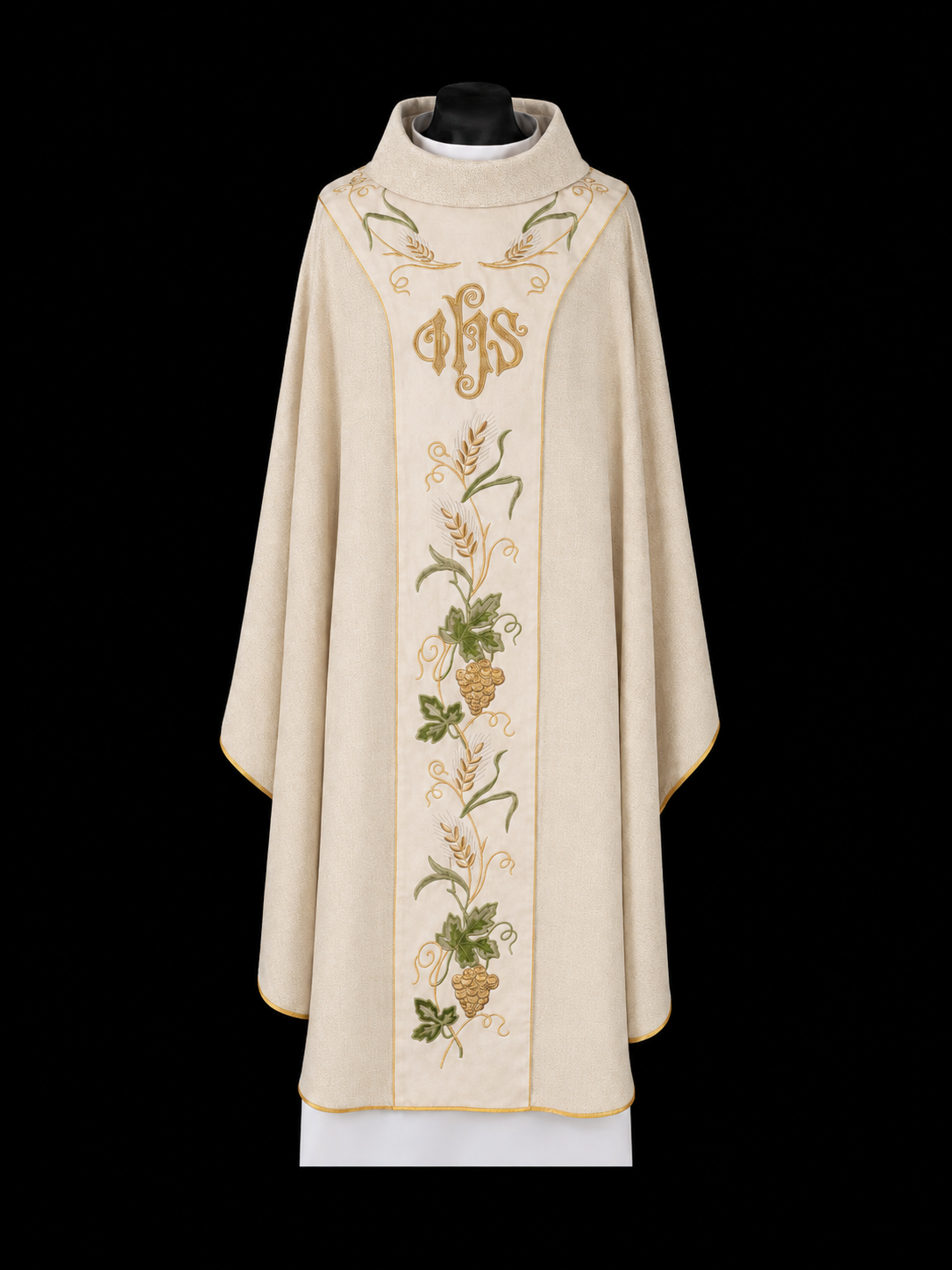
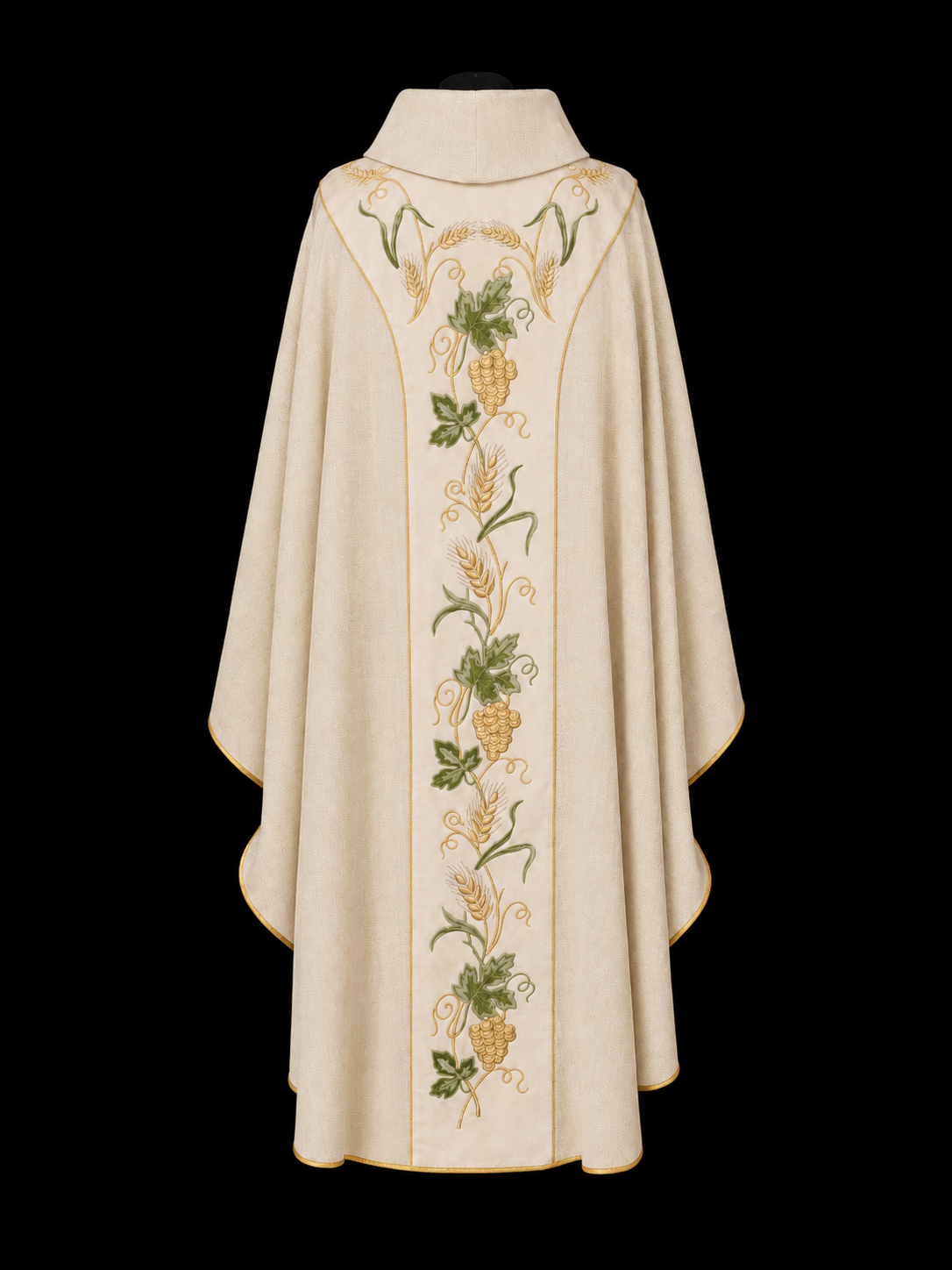
Orphreys are decorative bands that adorn chasubles, which are often richly decorated with elaborate embroidery and embellishments to enhance their sacred and visual appeal. They are typically made of contrasting fabrics and feature intricate embroidery or woven designs. Orphreys can be arranged in various patterns, such as a simple vertical stripe, a cross, or more elaborate geometric designs.
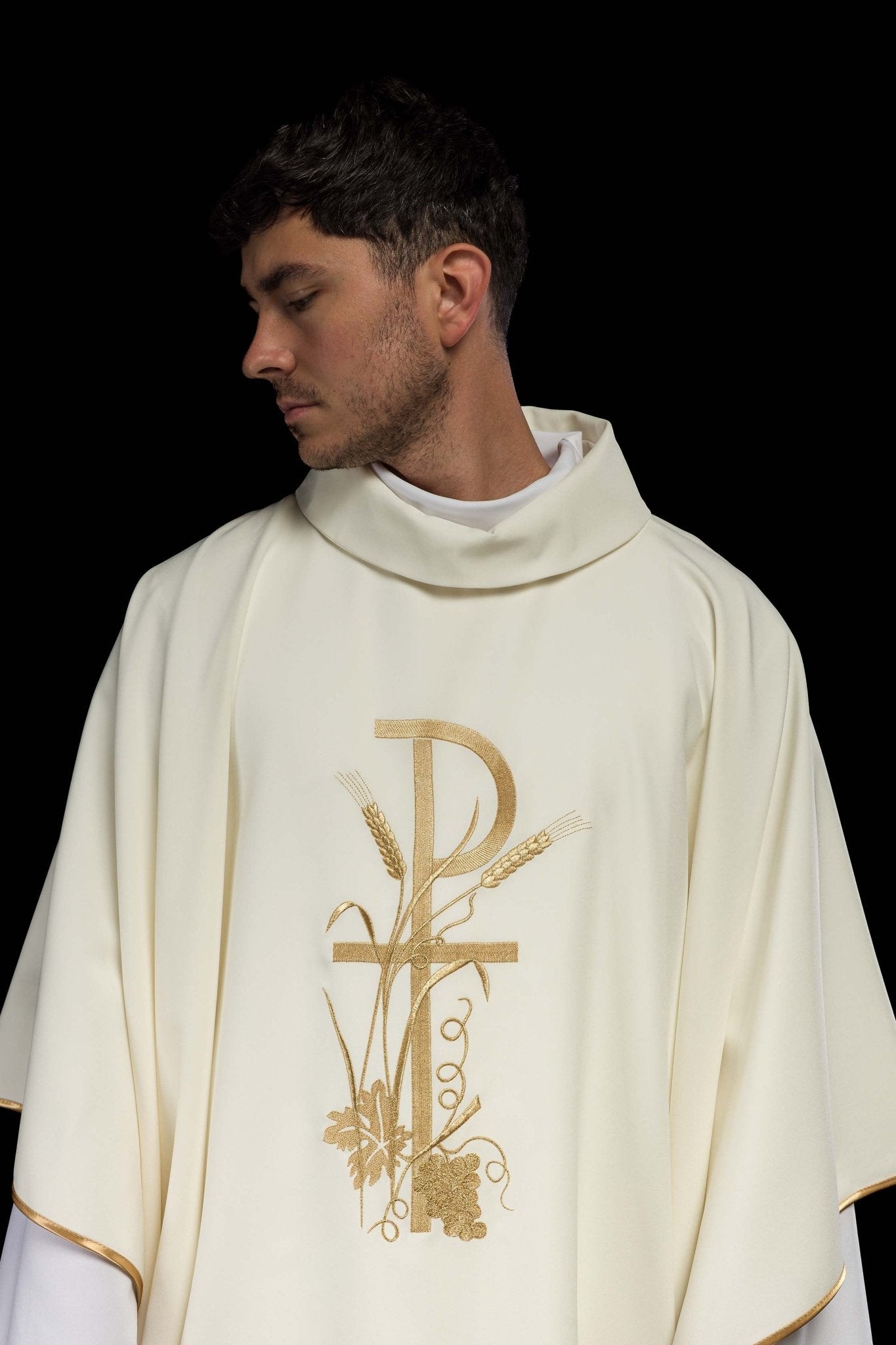
The designs on orphreys often depict religious symbols, such as the cross, the Chi Rho (a symbol of Christ), the Lamb of God, or images of saints. The colors and materials used in orphreys further enhance the chasuble’s symbolic meaning, reflecting the liturgical season or feast.
Embroidery and Embellishments on Chasubles
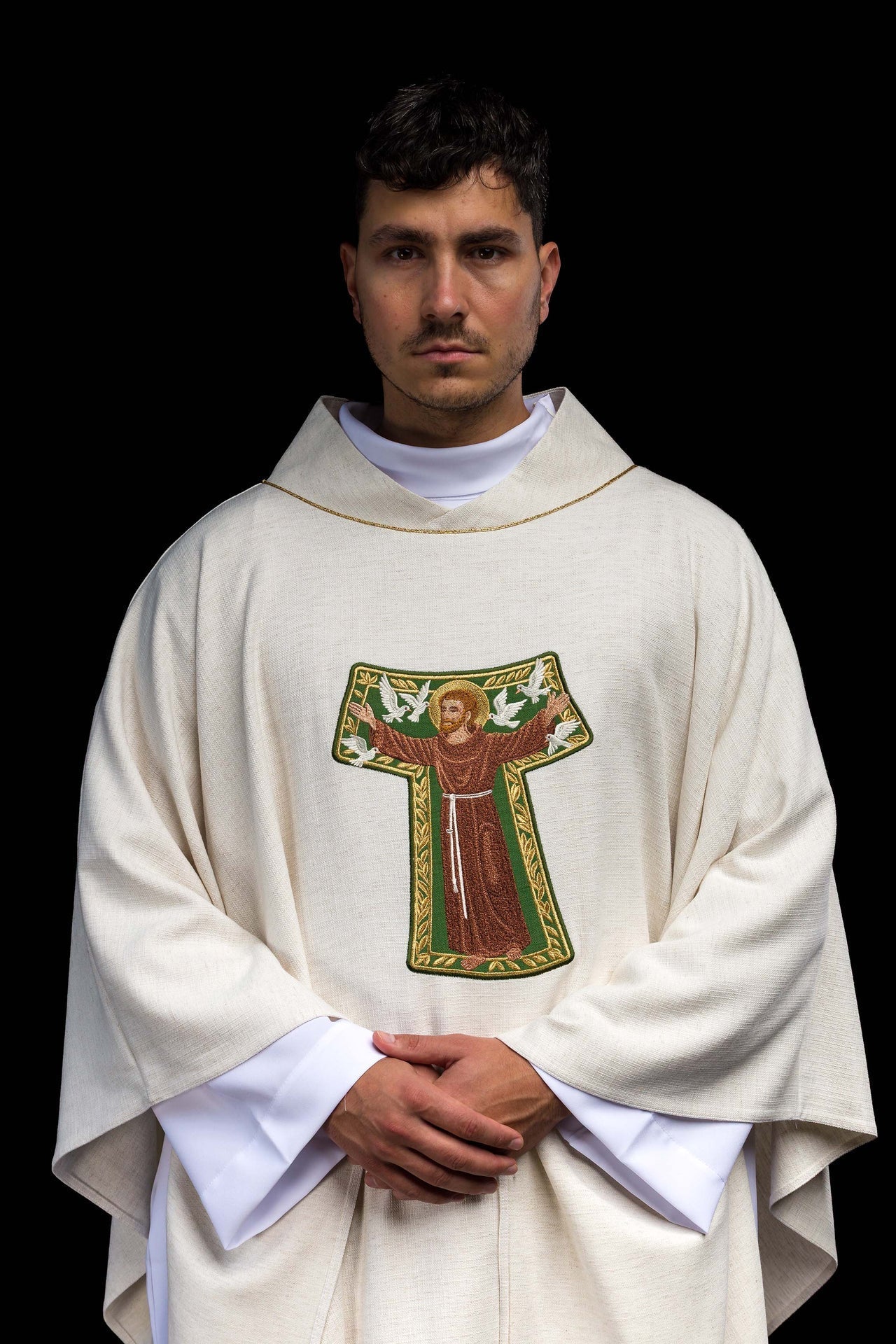
Embroidery is a common form of embellishment on chasubles, adding intricate detail and artistic expression. Skilled artisans create stunning designs using various embroidery techniques, such as goldwork, silk shading, and needlepoint. Some embroidery is done by machine, allowing for intricate and consistent designs. Embroidery can depict religious symbols, biblical scenes, or abstract patterns.
Other embellishments used on chasubles include appliques, gemstones, and metallic threads. These additions enhance the chasuble’s visual appeal and contribute to its overall solemnity and beauty.
Caring for Chasubles
Proper care is essential to maintain the beauty and longevity of chasubles. The specific care instructions will vary depending on the fabric and embellishments used. However, some general guidelines apply:
-
Always follow the manufacturer's care instructions.
-
Hand-wash or dry-clean chasubles made of delicate fabrics like silk or wool.
-
Use a mild detergent and avoid harsh chemicals.
-
Store chasubles in a garment bag to protect them from dust and moths.
-
Hang chasubles on padded hangers to prevent wrinkles and maintain their shape.
-
Address stains promptly to prevent them from setting.
-
Consider professional cleaning for heavily soiled or delicate chasubles.
Purchasing Chasubles: Factors to Consider
When purchasing chasubles, several factors should be considered to ensure a satisfactory purchase. These include:
-
Liturgical Needs: Consider the liturgical seasons and feasts for which the chasuble will be used. Choose colors and designs that are appropriate for the occasion.
-
Style Preference: Decide whether you prefer a Gothic or Roman chasuble, based on your personal taste and liturgical traditions.
-
Material Quality: Select a fabric that is durable, comfortable, and appropriate for the climate.
-
Embroidery and Embellishments: Consider the level of detail and artistry you desire in the embroidery and embellishments.
-
Fit and Comfort: Ensure that the chasuble fits properly and allows for comfortable movement during liturgical celebrations.
-
Budget: Set a budget and explore options within your price range.
-
Reputable Supplier: Purchase from a reputable supplier that offers high-quality chasubles and excellent customer service.
For further details, please refer to the related article or visit our product page for comprehensive information and guidance.
Finding the Perfect Chasuble
Selecting the right chasuble is a significant decision that reflects the priest's role as a sacred minister. By considering the historical significance, symbolic meaning, and practical aspects of chasubles, you can find the perfect vestment to enhance the beauty and solemnity of liturgical celebrations.
The Role of Chasubles in Modern Liturgy
In contemporary liturgical practice, chasubles continue to hold a place of honor and significance. While styles and designs may vary, the chasuble remains a powerful symbol of the priest’s sacred office and the solemnity of the Eucharist. Modern liturgical custom often includes specific directions for vesting, sometimes issued by church authorities such as the archbishop, to ensure proper use during Mass. Authoritative sources, such as those published by the Robert Appleton Company, provide detailed information on the history and significance of the roman chasuble. Cities like Paris and London have played significant roles in the development of ecclesiastical attire and liturgical practices, influencing both historical and modern customs. Modern chasubles often incorporate contemporary artistic designs and innovative materials, reflecting the evolving nature of liturgical art while preserving the traditions of the past.