Understanding the Symbolism of Red Chasuble
Red chasubles hold a prominent place in Christian liturgical vestments, particularly within the Roman Catholic, Anglican, and some Protestant traditions. The color red is rich in symbolism, representing a variety of profound concepts central to the Christian faith. Understanding this symbolism is crucial for appreciating the significance of the red chasuble in liturgical celebrations.
The Blood of Christ
The most prominent association of the color red is with the blood of Jesus Christ. This connection stems directly from the crucifixion, where Christ's sacrifice is seen as the ultimate act of love and redemption. The red chasuble, therefore, serves as a visual reminder of this sacrifice, emphasizing the price paid for the salvation of humanity.
Fire and the Holy Spirit
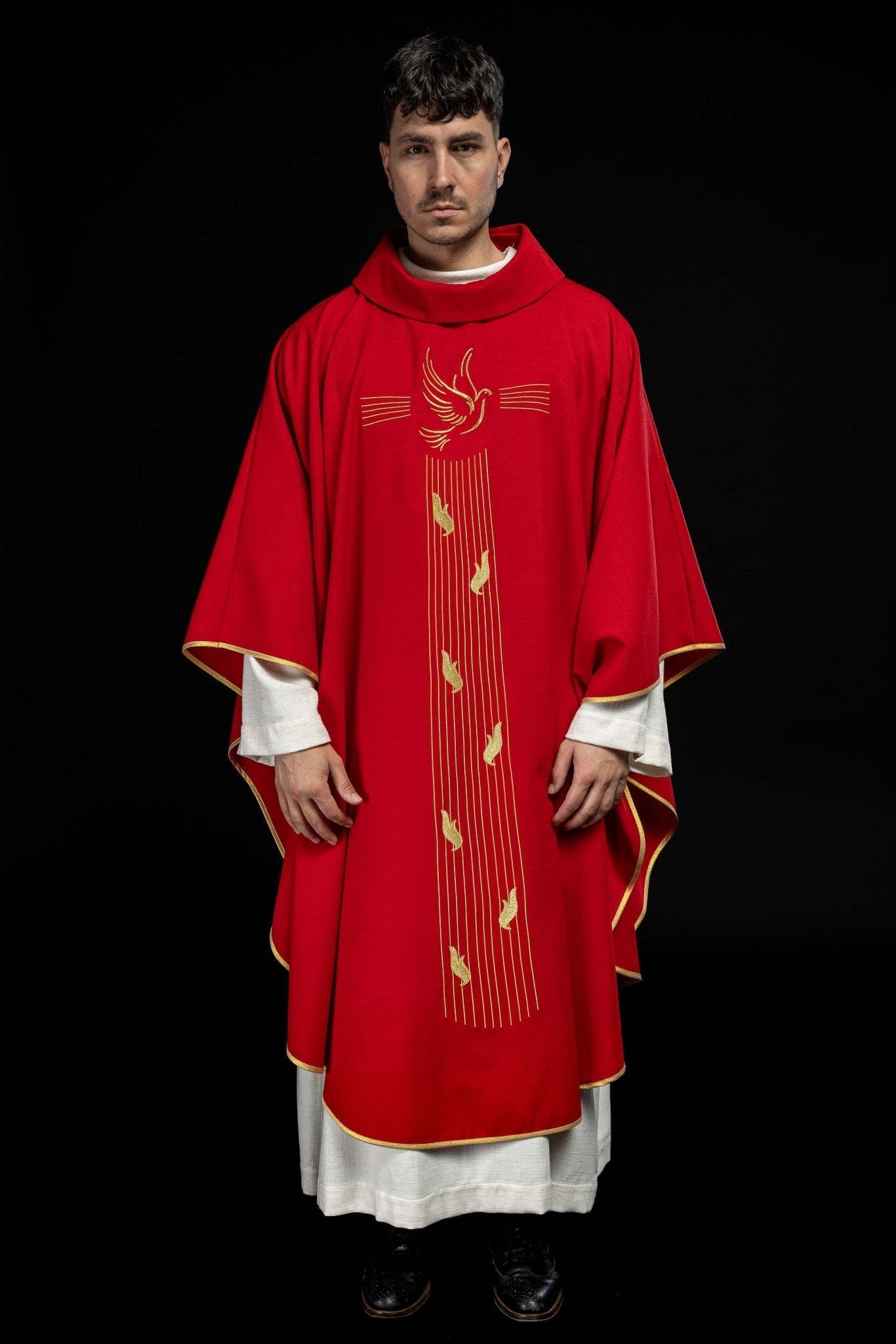
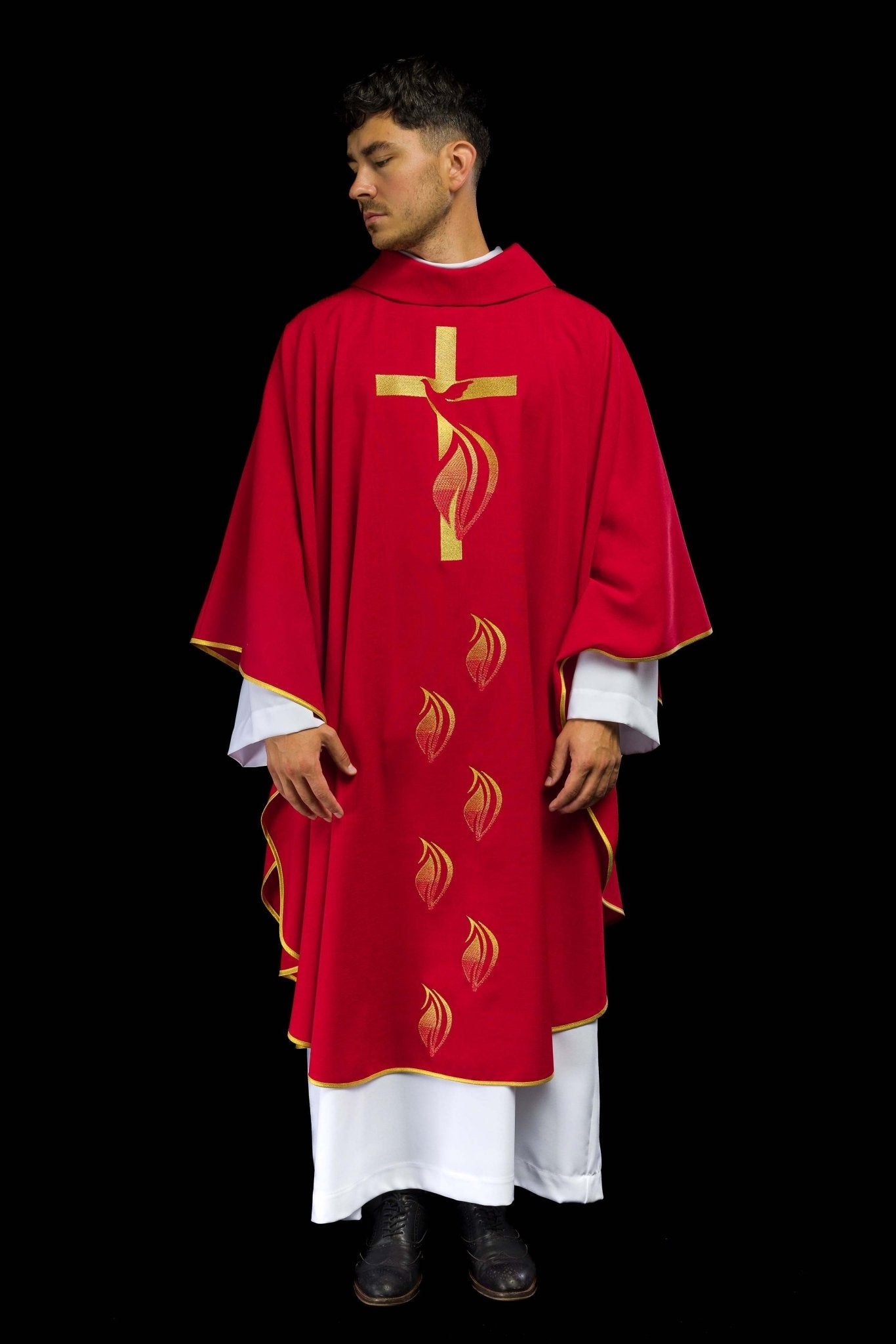
Red is also associated with fire, which in turn symbolizes the Holy Spirit. This connection is particularly evident during Pentecost, where the Holy Spirit descended upon the apostles in the form of tongues of fire (Acts 2:3). The red chasuble worn on Pentecost Sunday commemorates this event, highlighting the transformative power and presence of the Holy Spirit in the Church.
Martyrdom and Sacrifice
Throughout Christian history, red has been the color of martyrdom, representing the ultimate sacrifice made by those who died for their faith. Saints who were martyred are often depicted wearing red, and red vestments are frequently worn on their feast days. The red chasuble, in this context, honors the courage and dedication of these individuals, inspiring believers to emulate their unwavering commitment to Christ.
Love and Passion
Beyond sacrifice and martyrdom, red also embodies love and passion. This encompasses both God's boundless love for humanity and the passionate devotion of believers towards God. The red chasuble, therefore, serves as a symbol of the intense spiritual connection between God and His followers.
When to Wear Red Chasubles: Liturgical Seasons and Occasions
The use of red chasubles is carefully prescribed by the liturgical calendar, with specific seasons and occasions designated for their use. These guidelines ensure that the symbolism of red is appropriately emphasized during relevant celebrations.
Pentecost Sunday
As mentioned earlier, Pentecost Sunday is the primary occasion for wearing red chasubles. This feast commemorates the descent of the Holy Spirit upon the apostles, marking the birth of the Christian Church. The red vestments vividly represent the fire of the Holy Spirit, emphasizing its transformative power and presence.
Feasts of the Apostles and Martyrs
Red chasubles are also worn on the feast days of apostles and martyrs, honoring their sacrifice and unwavering commitment to Christ. These celebrations serve as a reminder of the cost of discipleship and the importance of standing firm in one's faith, even in the face of adversity.
Confirmation
In some traditions, red vestments are worn during the sacrament of Confirmation. This sacrament signifies the strengthening of the Holy Spirit within the individual, empowering them to live out their faith more fully. The red chasuble symbolizes the fire of the Holy Spirit, reinforcing the transformative nature of this sacrament.
Special Solemnities
Depending on local custom and the specific liturgical calendar, red chasubles may also be worn on other solemnities that emphasize the themes of sacrifice, love, or the Holy Spirit. The decision to use red vestments is often made in consultation with liturgical experts to ensure appropriateness and consistency.
Styles and Designs of Red Chasubles
Red chasubles are available in a wide variety of styles and designs, reflecting the rich artistic traditions of the Church. These variations allow for personalization and adaptation to different liturgical settings.
Roman Chasubles
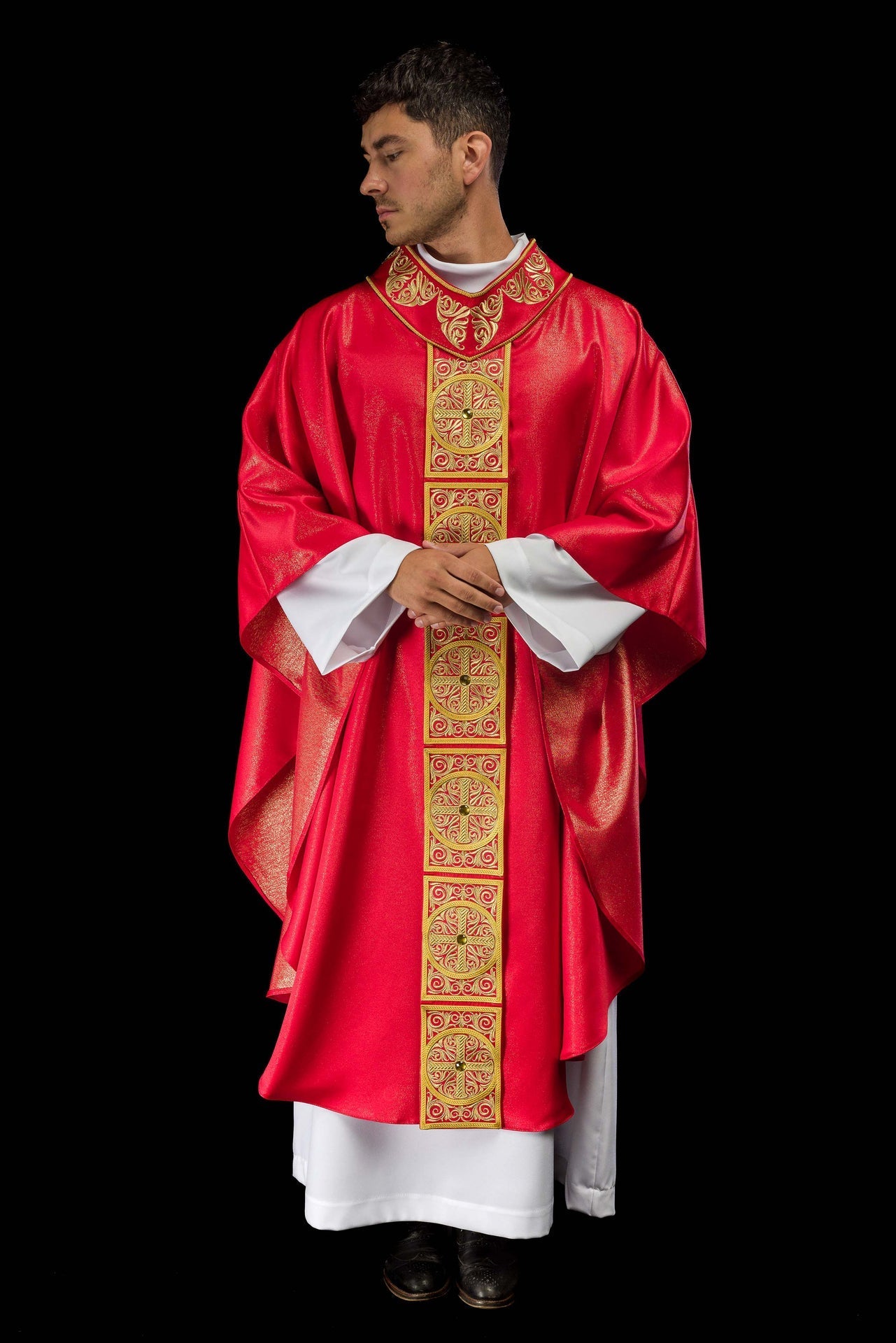
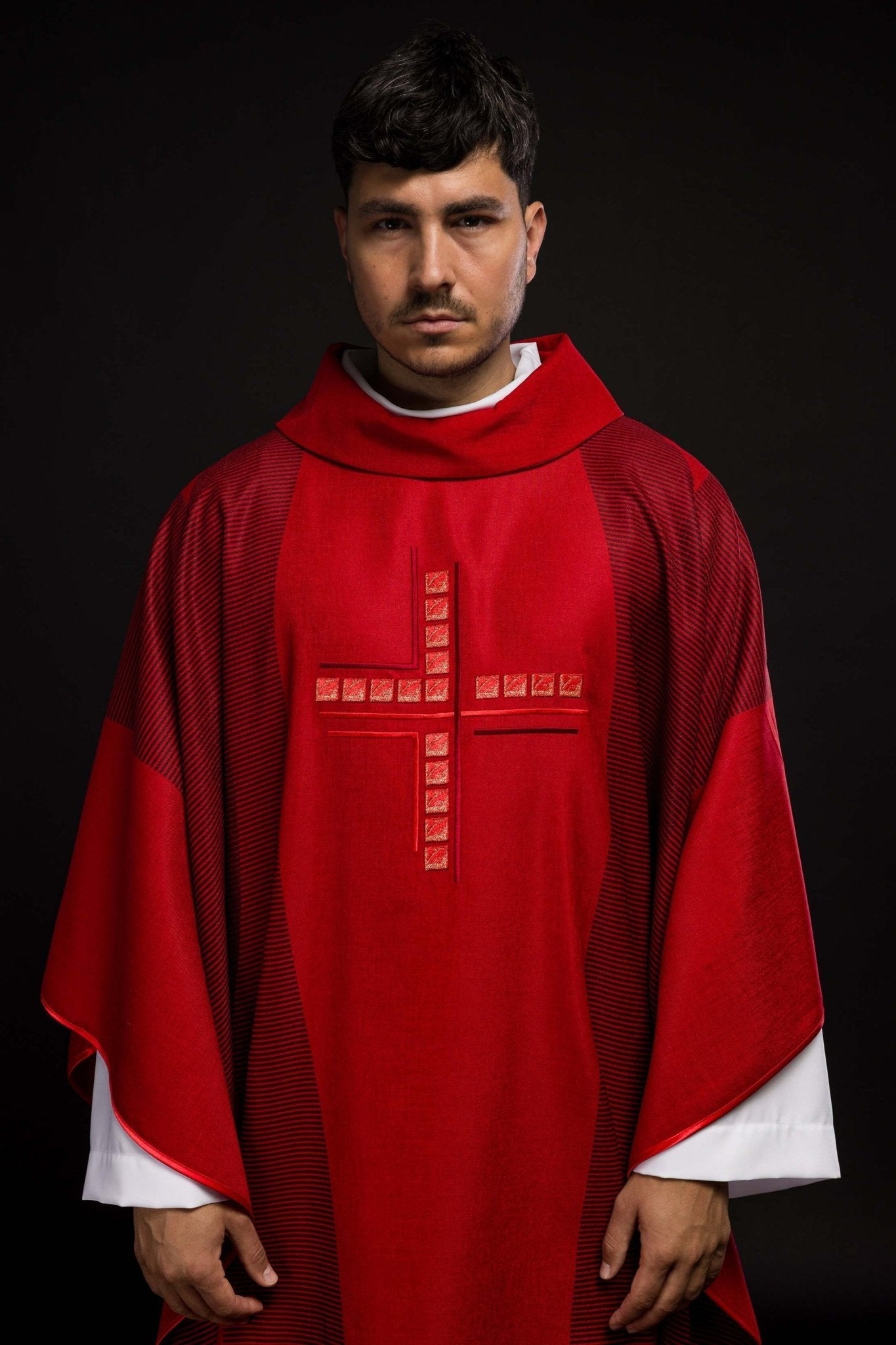
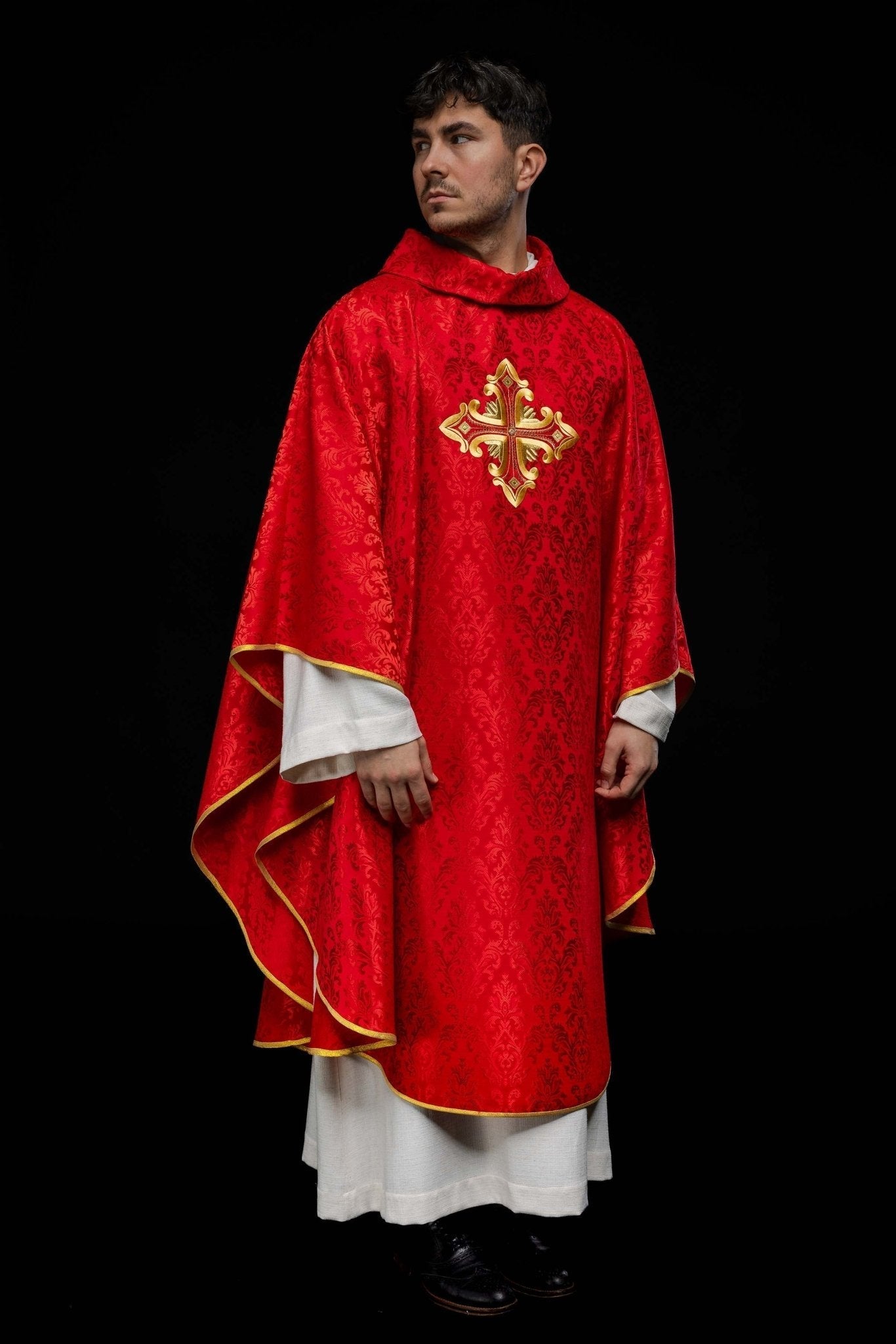
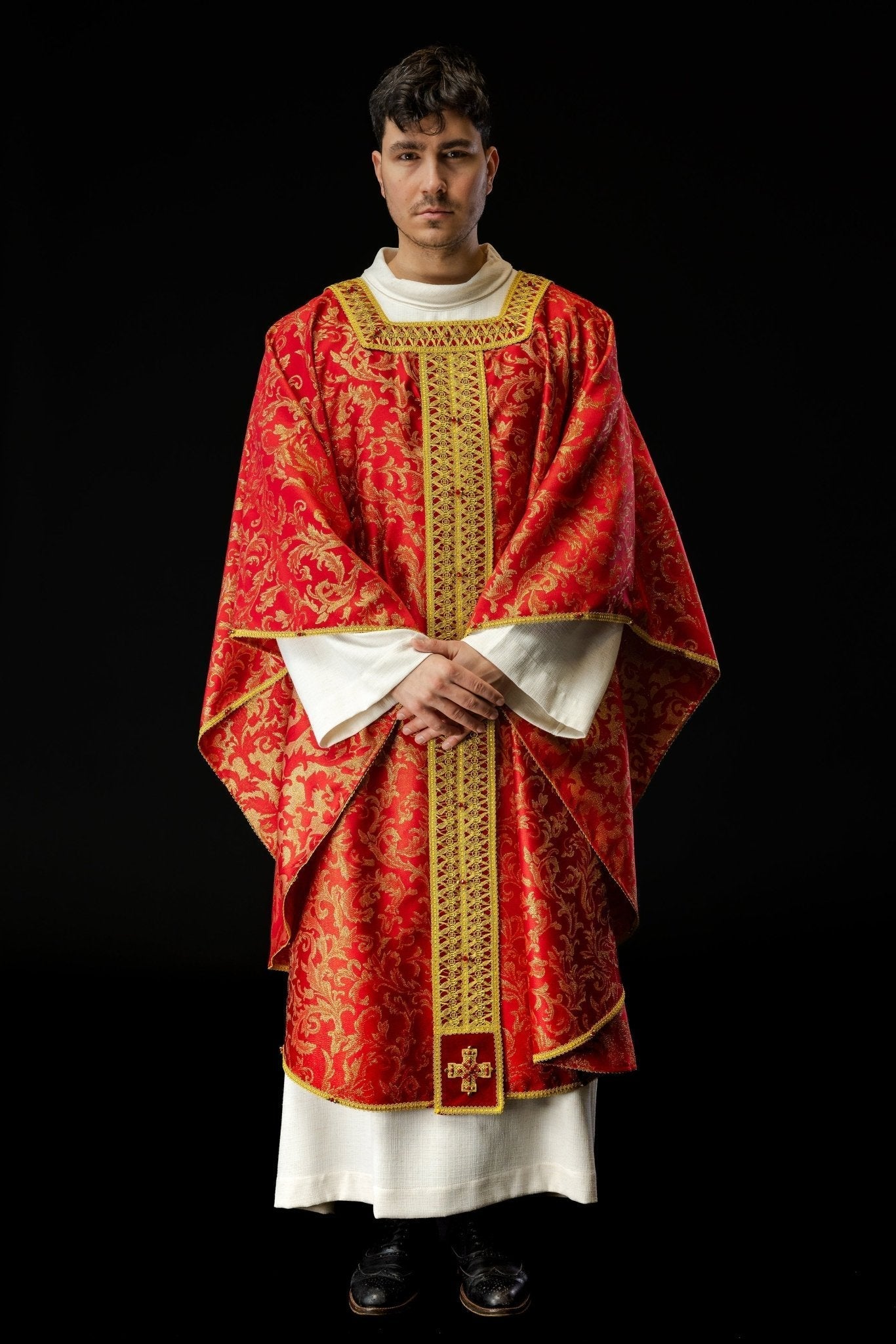
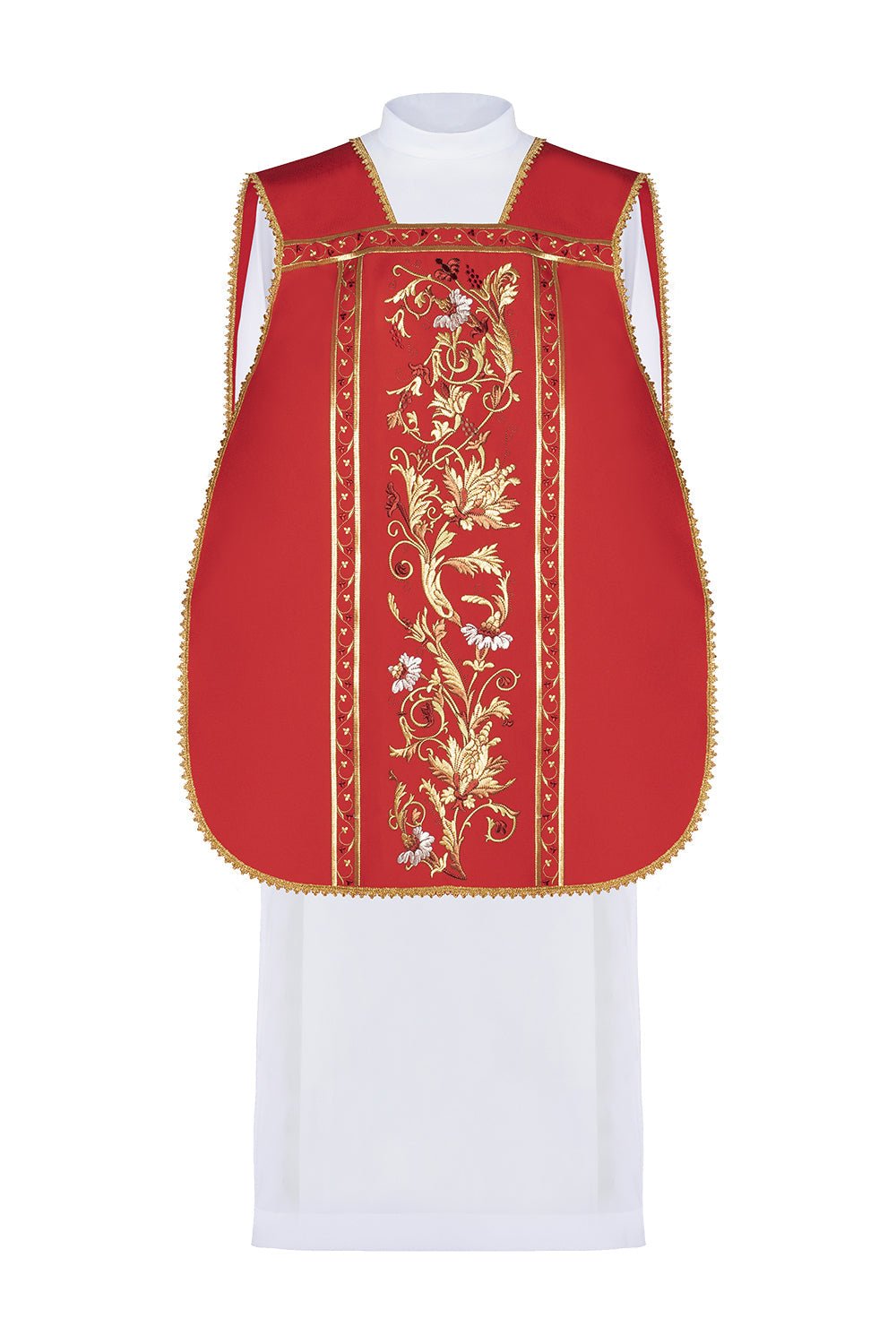
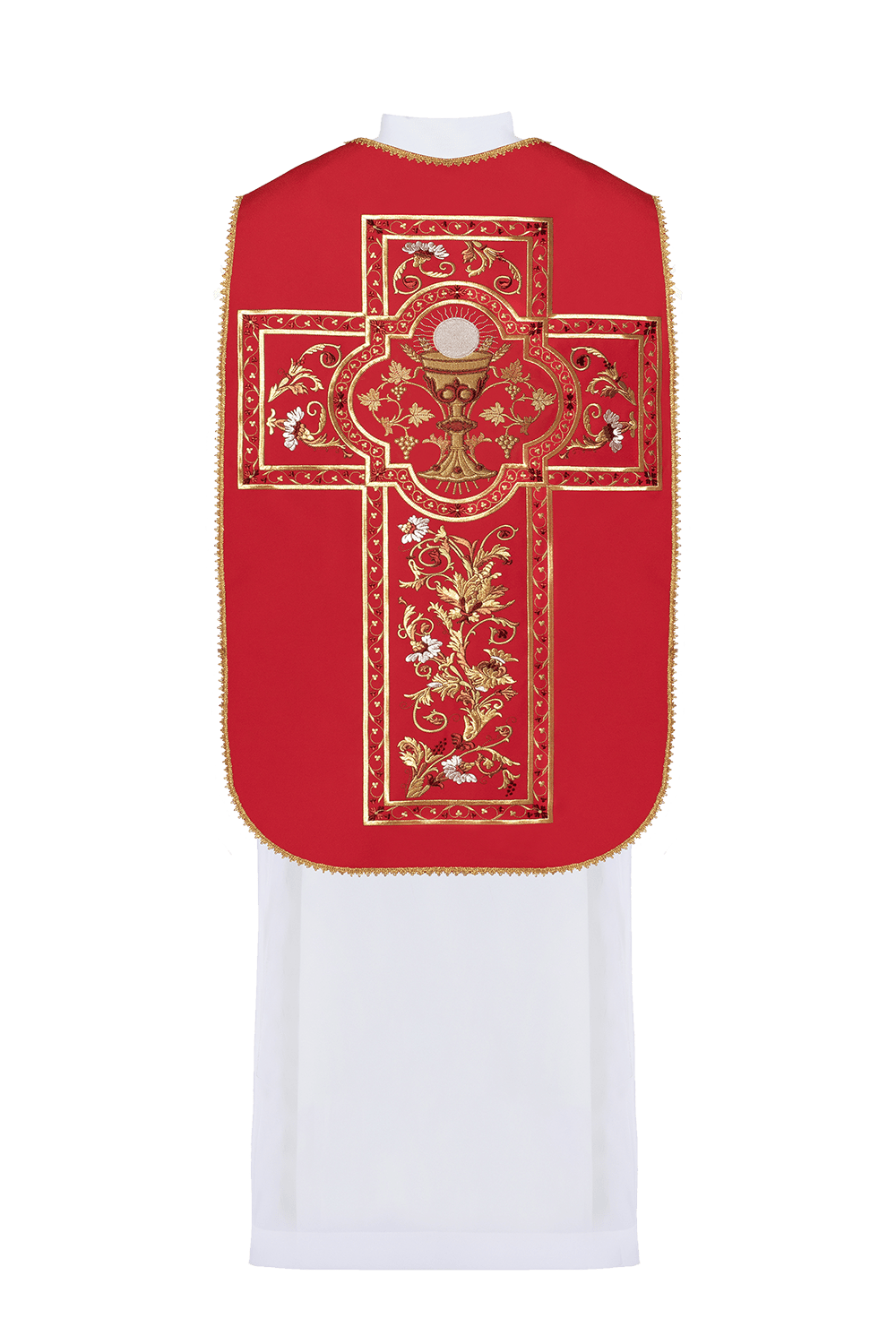
Roman chasubles are characterized by their ample width and length, draping gracefully over the priest's shoulders and extending to the wrists. They often feature elaborate ornamentation, including intricate embroidery, rich fabrics, and decorative banding. The Roman style is considered classic and traditional, often conveying a sense of solemnity and grandeur.
Gothic Chasubles
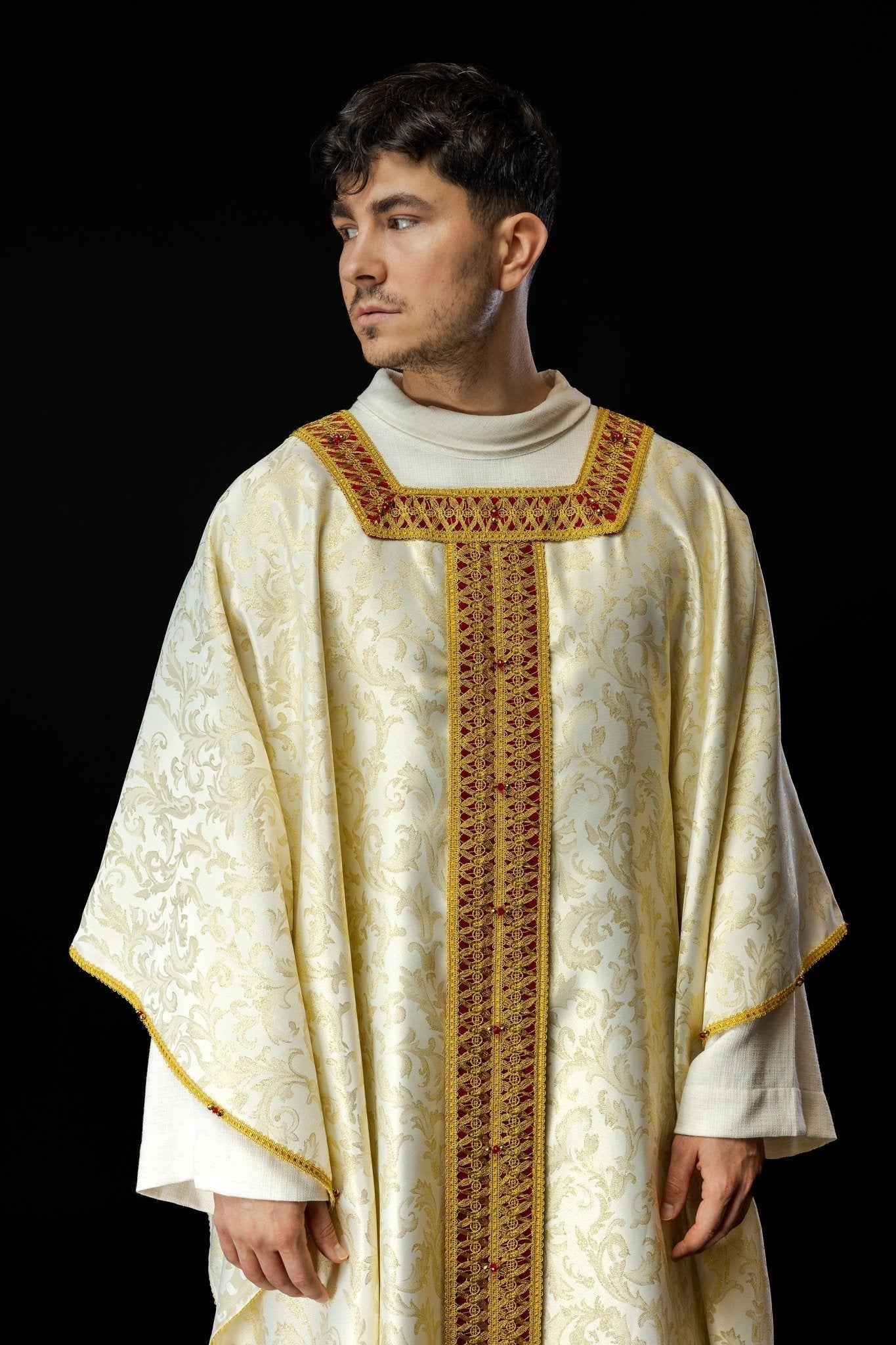
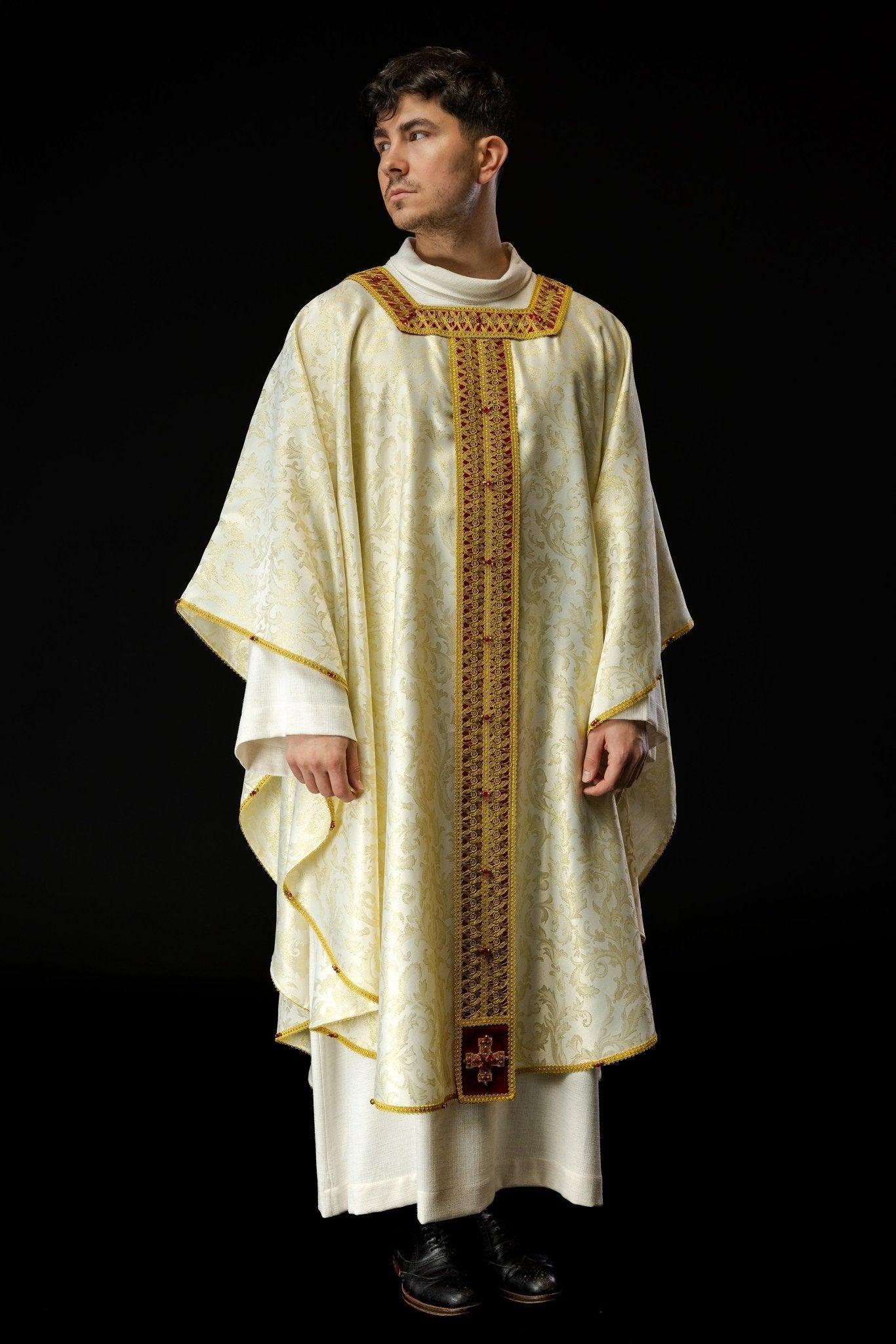
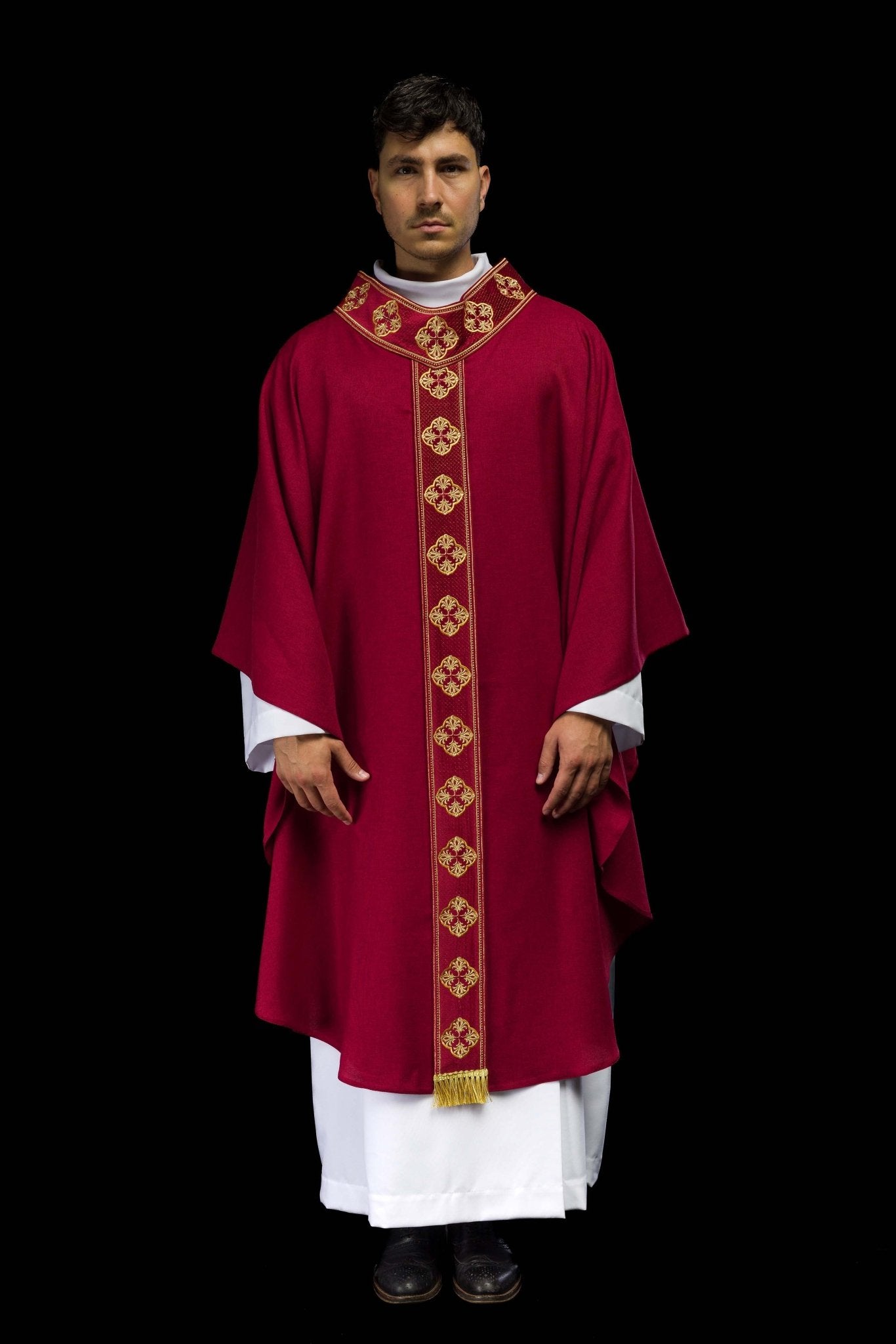
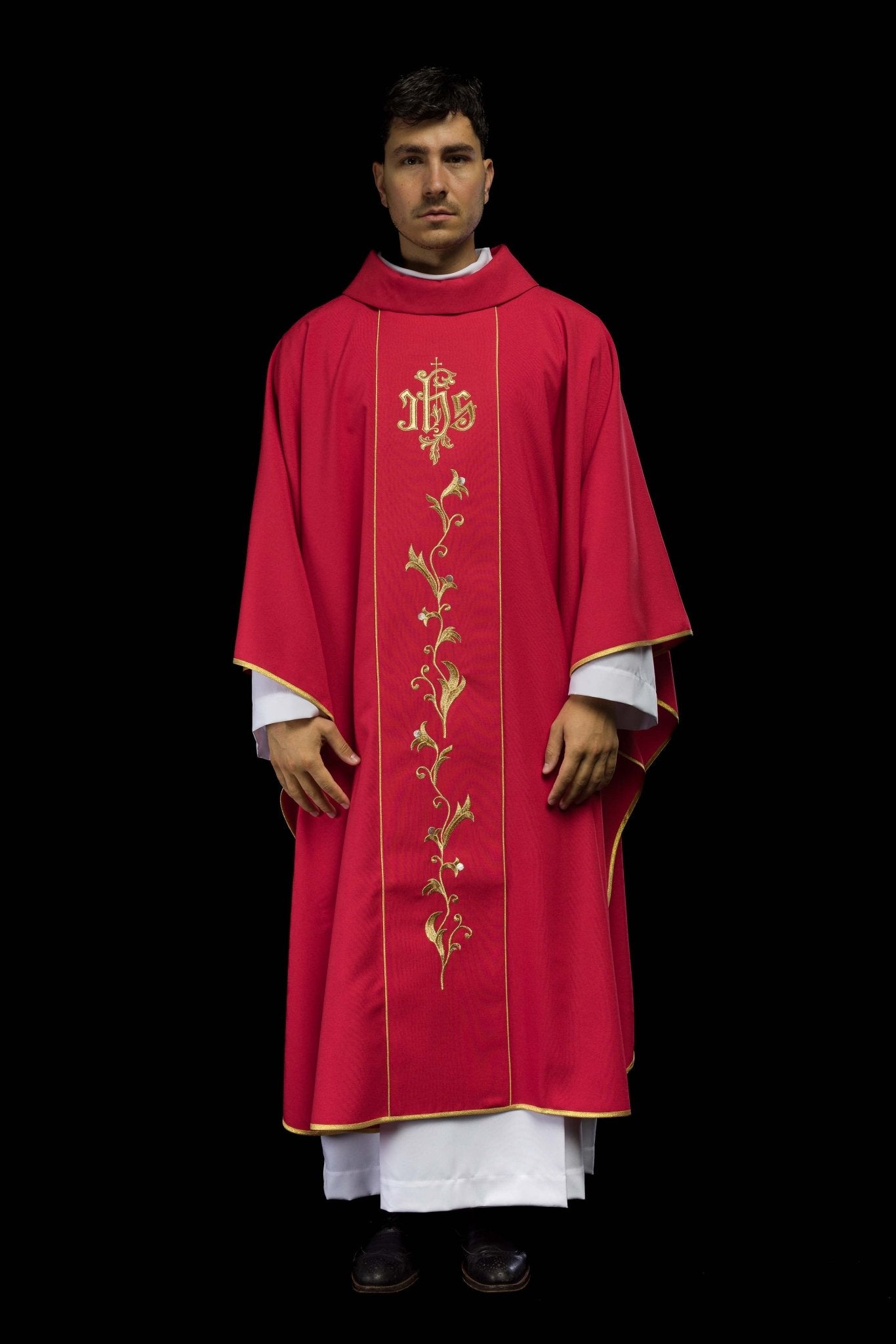
Gothic chasubles, in contrast, are typically narrower and more streamlined in design. They often feature a distinctive Y-shaped orphrey (a decorative band) that runs down the front and back of the chasuble. The Gothic style is known for its elegance and simplicity, often emphasizing the vertical lines and spiritual focus of the liturgy.
Semi-Gothic Chasubles
Semi-Gothic chasubles represent a hybrid style, combining elements of both Roman and Gothic designs. They offer a balance between traditional fullness and modern streamlining, appealing to those who appreciate both classic and contemporary aesthetics.
Marian Chasubles
While typically associated with blue, Marian chasubles can also incorporate red as a secondary color, particularly on feasts that commemorate Mary's role in salvation history. These chasubles often feature Marian symbols, such as lilies, roses, or the Star of David, interwoven with red accents to emphasize the connection between Mary's love and Christ's sacrifice.
Embroidered Chasubles
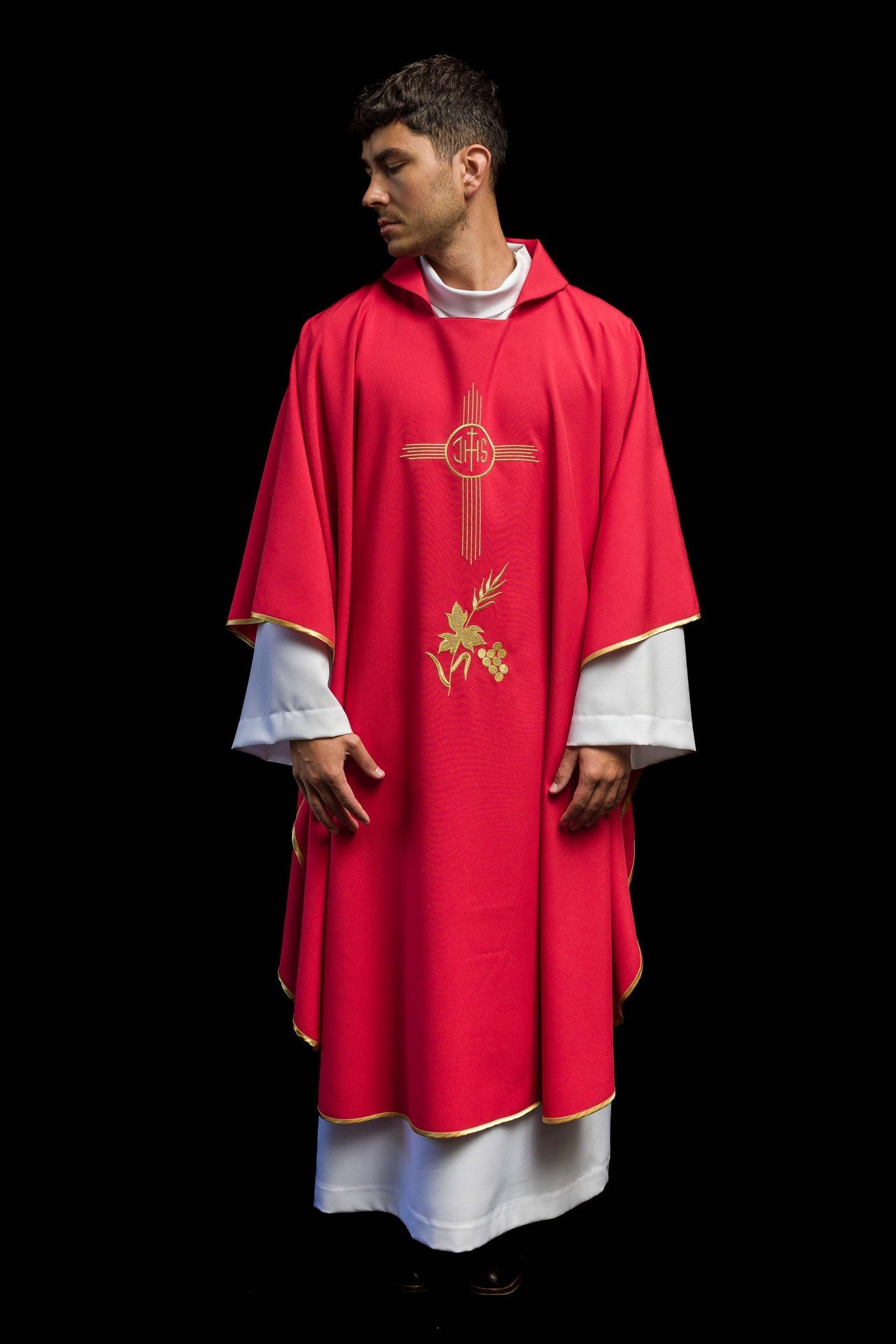
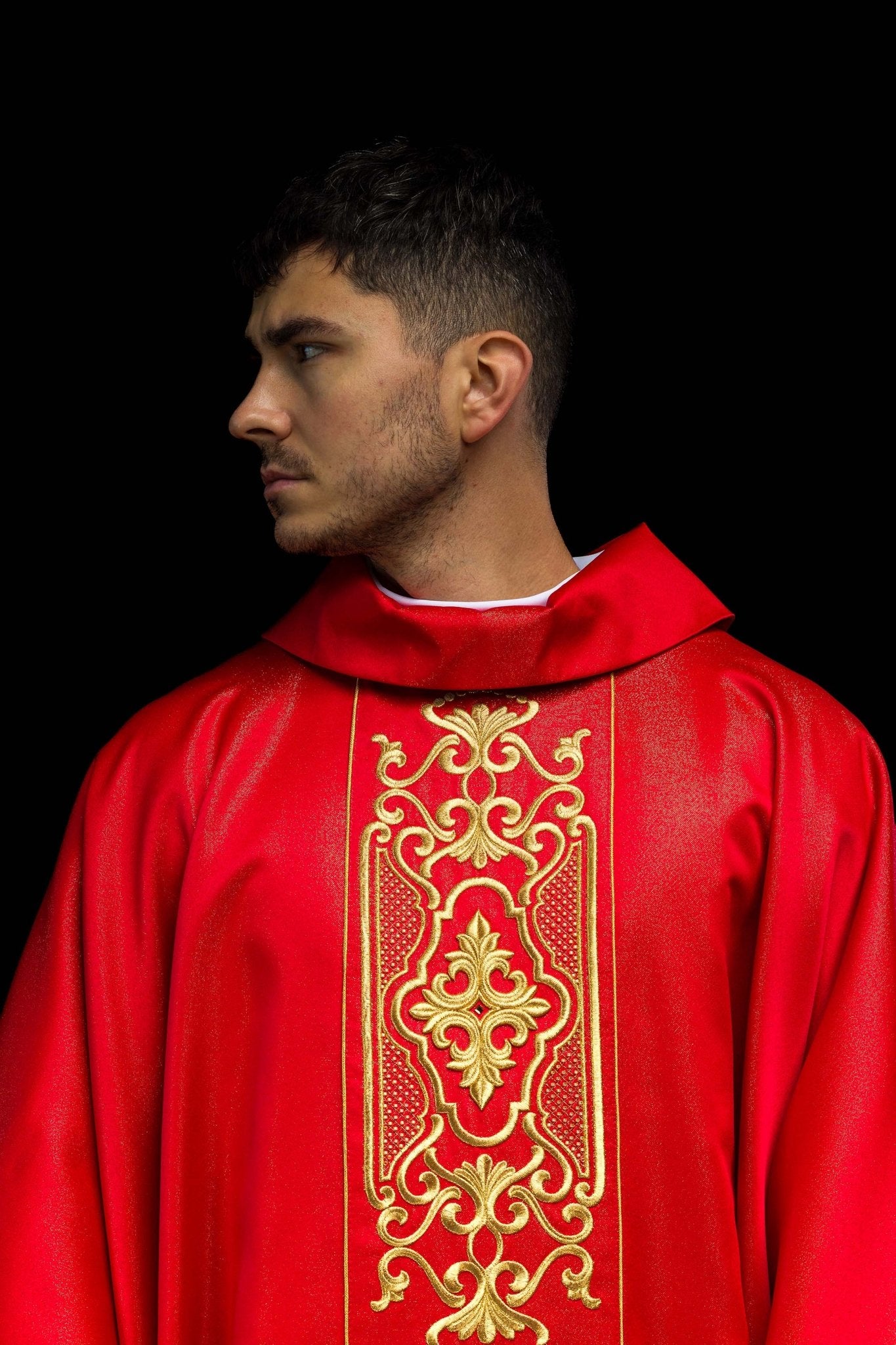
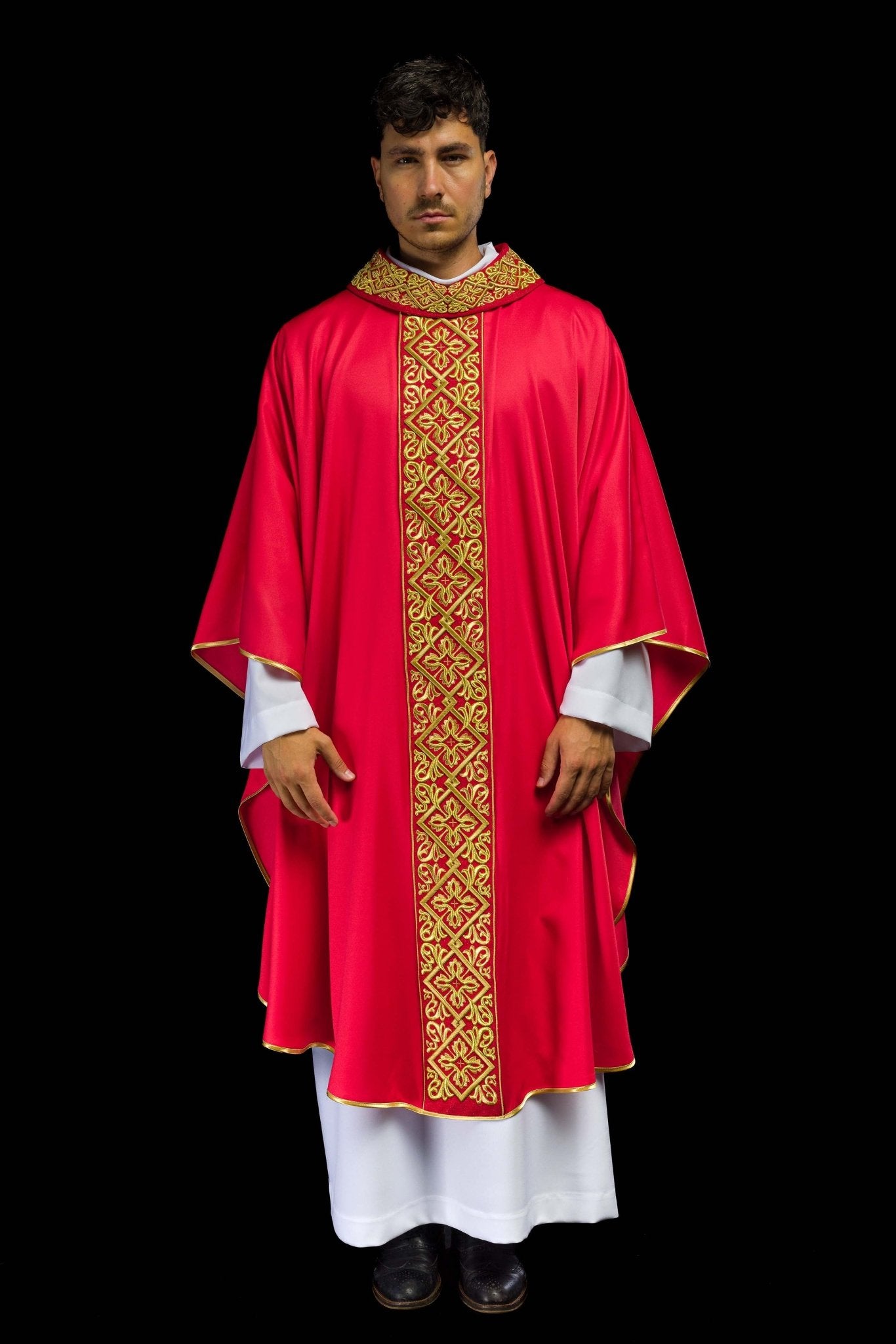
Embroidery is a common feature of red chasubles, adding visual interest and symbolic depth. Embroidered designs may include crosses, flames, doves (representing the Holy Spirit), or depictions of saints and biblical scenes. The quality and intricacy of the embroidery can vary widely, ranging from simple geometric patterns to elaborate, multi-layered compositions.
Fabric and Material Options
Red chasubles are crafted from a variety of fabrics, each offering unique aesthetic and practical qualities. Common choices include:
-
Silk: Known for its luxurious sheen and drape, silk is a popular choice for high-end chasubles.
-
Brocade: A rich fabric with woven patterns, brocade adds texture and visual interest to chasubles.
-
Damask: A reversible fabric with a subtle, woven pattern, damask offers a classic and elegant look.
-
Polyester: A durable and affordable option, polyester is easy to care for and resistant to wrinkles.
-
Wool: A natural fiber with a rich texture, wool is often used for chasubles worn in colder climates.
Choosing the Right Red Chasuble: Factors to Consider
Selecting the right red chasuble involves careful consideration of several factors, including liturgical appropriateness, personal preference, and budget. By taking these aspects into account, you can ensure that the chosen chasuble enhances the worship experience and reflects the solemnity of the occasion.
Liturgical Guidelines
The first step in choosing a red chasuble is to consult the liturgical guidelines of your specific denomination or diocese. These guidelines will specify the occasions on which red vestments are appropriate, as well as any specific requirements for style or design. Adhering to these guidelines ensures that the chasuble is in harmony with the liturgical season and the overall worship environment.
Personal Preference and Style
While liturgical guidelines take precedence, personal preference also plays a role in selecting a red chasuble. Consider your own aesthetic sensibilities and choose a style that resonates with you. Do you prefer the classic fullness of a Roman chasuble or the streamlined elegance of a Gothic design? Are you drawn to elaborate embroidery or simple, understated patterns? Selecting a chasuble that you find visually appealing will enhance your sense of comfort and confidence while celebrating the liturgy.
Fabric and Comfort
The fabric of the chasuble is another important consideration. Choose a fabric that is comfortable to wear, especially during long services. Consider the climate in which you will be wearing the chasuble and select a fabric that is appropriate for the temperature. Lightweight fabrics like silk or polyester are ideal for warmer climates, while heavier fabrics like wool may be more suitable for colder environments.
Budget
Red chasubles are available at a wide range of price points, depending on the materials, craftsmanship, and level of ornamentation. Establish a budget before you begin shopping and stick to it. Keep in mind that a higher price does not always guarantee a better chasuble. Focus on finding a chasuble that meets your liturgical needs, personal preferences, and budget constraints.
Quality and Durability
Invest in a red chasuble that is well-made and durable. Look for strong seams, high-quality fabrics, and careful attention to detail. A well-made chasuble will last for many years, making it a worthwhile investment in your liturgical wardrobe.